How to Create Conflict between Walkers and Cyclists

In a recent episode of Tracks and Trails on RTE, Aobhinn Garrihy and John Burke walked part of the Wicklow Way which was established by JB Malone in the late 1970s.

At one point they were looking at a map and realised that the way for walkers was segregated from the way for mountain bikers. John Burke remarked that keeping them apart was “great’ as he was sure “the bikers and walkers do not want to meet”.

The commentator then remarked that in that area, bikers and walkers were kept apart “for safety reasons”.  Further on Robin Seymour, the Irish international mountain biker, stated that there “probably was a lot of conflict before designated spaces”.

I do not know when it was decided to segregate the two but it is amazing that three ‘ordinary’ people recognise that mixing walkers and cyclists together give rise to conflict. In contrast organisations such as local authorities and Waterways Ireland which are responsible for the provision of cycle infrastructure see nothing wrong with force high levels of walkers and cyclists together on narrow footways and towpaths. This use of shared paths follows UK practice dating from the 1980s at a time when cycling was viewed as a child’s pastime – one that they would grow out of in adulthood when they would buy a car.  In Ireland we have chosen to follow the practice of the major European country with the worst modal share for cycling and where the modal share for cycling nationally is unchanged since 2000 rather than countries which enable high levels of cycling. It is hardly surprising then that levels of cycling nationally in Ireland remain low. In the Netherland and Denmark, the authorities recognise that walking and cycling are different modes and require their own space. We should emulate them.

NTA Makes Dog’s Dinner of Cycle Quality

The NTA have made a dog’s dinner of cycle facility quality. Yes they are concerned about quality and yes they refer to it in the National Cycle Manual but does anyone outside the NTA really understand it?

When people are booking a hotel, they have an understanding of the ‘Star’ system of ranking. They may not understand the difference between a 2 star and 3 star hotel but they understand that a 3 star hotel is more luxurious or offers better facilities than a 2 star one and would expect to pay more for it (all other things being equal).

So what is the story with the quality of cycle facilities? There are five levels of service – A+, A, B, C and D. Any cycle facility which does not fall into the first four is level D. Width is one of five determinants of quality the other being number of conflicts, percentage of HGVs on the route, pavement condition and journey time delay. (There has been some modification to pavement condition as a result of the development of the Greater Dublin Cycle Network but the amendments have not been incorporated into the written or digital Manual.) Width is by far the most important determinant, so what does the Manual say about width and level of service? The Manual assesses width in terms of the number of adjacent cyclists as shown below.

So is the width of Level C the same as Level D? And is the width of Level A the same as Level B? What is the width of a Level A facility? In Section 1.5.2, there are references to widths of five cycling regimes but the Manual does not state if the cycling regimes correspond to the Level of Service, and furthermore the exact meaning of different regimes is unclear and open to interpretation. For example what does basic two way mean?

Section 1.5.1 of the Manual on Determining Width includes the following
The designed width of a cycle facility is comprised of the effective width, i.e. the
space that is “usable” by cyclists, as well as the clearances that will be required in
different circumstances.

Effective width as opposed to designed or constructed width is a very important concept as it takes conditions on either side into account. This is important as local authorities often provide a 2m wide cycle track with kerbs adjacent to the footpath on one side and adjacent to a traffic lane on the other, which only has an effective width of 1m.

To make matters worse, the Manual defines the minimum width of a shared footway as 3m, but whether this is effective width or designed/constructed width is not clarified and it does not define whether this is one way cycling shared with two way pedestrians or two way cycling shared with two way pedestrians. The MAnual does not take the level of use into account. As 3m is the minimum standard in accordance with the National Cycling Manual, it is assumed that the level of service for cycling is the fifth and lowest category ie D. Then, just when you think that the NTA couldn’t complicate things further, they succeed.

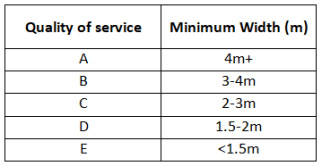
In 2015, they published a Permeability Best Practice Guide which also has five levels of service but in this case they are A,B,C, D and E. Section 3 of the Guide defines widths for the different Quality of Service (see below) but doesn’t define whether these are effective or constructed widths.

Permeability Quality of Service

The Best Practice Guide states that local authorities in urban areas should aim to provide a Level A quality of service for any pedestrian or cycle links between residential areas and destinations such as schools and shops. Not unreasonably, the document goes on to point out that Level A will often be unachievable due to constraints but at least sets out a high target.

So where does that leave the common situation that arises where one section of a route has segregated cycle facilities and the next section has a 3m wide shared footway? Using the permeability criteria, the shared section is ranked category B and C (second and third) but using the National Cycle Manual criteria, it is D (fifth). What would you think of an organisation which ranks a hotel as one star, three star and four star at the same time? The idea of a star ranking is good. It gives cycle campaigners, politicians and the general public a crude but convenient assessment of quality. However, the time to properly define its use is long overdue.

National Road Network Indicators 2016

The National Road Network Indicators for 2016 which was recently published by Transport Infrastructure Ireland (TII) makes for interesting reading.  The report is split into five parts – Network, Economic, Road Condition, Safety and Accessibility/ Environment.

Nat_Rd_Indicators_2016

 The first part deals with the extent of national roads, traffic levels, and level of service which essentially means whether a road is congested or not. Chart C1 shows the level of service during the morning peak and demonstrates that over the whole country the level of congestion is surprisingly low with congestion apparent only in the vicinity of the cities – Dublin, Cork, Limerick and Galway.  With a surprising degree of honesty, the report admits that

                Following the substantial investment in National Roads over the last decade, most route sections are operating to the highest standard of service. However, for certain roads such as the M50, further interventions such as demand management are required to ensure that higher levels of service are achieved.

So it concedes that most of the network is operating to a high standard and accepts that congestion will worsen on the M50 unless more measures such as demand management are introduced.  As the principle type of demand management is road pricing or a congestion charge, this will not be to the liking of government which is opposed to such measures. The most interesting sections are Charts E and F which show Trip Duration and Trip Distance for National and Regional Roads and which are based on national computer models. The main findings are

  • 28% of trips last less than 10 minutes
  • 11% of trips are for a distance of less than 5km
  • 38% of trips are for less than 10km
  • 24% of trips are less than 7.5km
  • In 2016 traffic growth was 4.6% across the network
  • In 2016 growth in the Dublin region was 6.9%.

The 24% of trips less than 7.5km show the potential for substituting trips by car for trips by bicycle. It demonstrates clearly that congestion will not be solved by building more roads but by providing for more efficient modes of transport in terms of space and speed.

The second part Economy deals with estimates of future levels of population, car ownership and vehicles kilometres. By 2050 the ESRI forecast that the population will increase to between 5 and 5.6 million while TII expects total car ownership to increase from 2.5 million in 2013 to 3.5-4.0 million. The number of vehicle kilometres travelled is also forecast to increase from just over 40 billion in 2013 to between 52.0 and 58.5 billion in 2050 depending on future growth rate. Obviously, TII don’t agree with the concept of Peak Car or Peak Car Use. It also appears not to agree with Smarter Travel targets for reduction in commuting by private car although Smarter Travel uses a short time frame to 2020 while TII forecasts take a longer time frame to 2050. Although traffic growth was 4.6% nationally (and 7.4 in the Mid East region ie the commuter belt), it assumes that traffic will grow at an average rate of about 1% between 2016 and 2050 but this still implies an overall increase of nearly 40%. Just where this traffic will go is unclear but it is likely to lead to an increase in demands for yet more investment in roads for motorised traffic. This is already apparent in calls by groups like the Small Firms Association for a new motorway, the Leinster Outer Orbital Ring, to be developed to supplement the M50 at the same time as TII complains about inadequate funding to maintain existing roads.

The final section looks at Accessibility/Environment and includes the statement “the key benefit of a quality road system is improved accessibility to jobs”. This statement can be interpreted in two ways. The benign view is that a quality road system will reduce congestion and reinforce economic development thereby leading to increased employment. The alternative view is that the development of a better quality road system will lead to an increase in congestion and longer commuter times due to induced demand ie more people choosing to travel further to jobs because of an improved road system. Now looking at Dublin and the other Irish cities, I wonder which view predominates?

Maynooth Cycling Campaign – September Notes

Who Benefits from High Quality Cycle Facilities?

This is a simple question – cyclists obviously benefit from cyclist facilities but who is a cyclist? The common perception is a male of a certain age dressed in lycra and helmet and riding a bike  with dropped handlebars but who really benefits from good quality cycling facilities?

               Families                                                         Dog walkers           Family (2)   WalkingDog

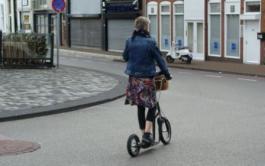
                        Disabled                                                                Skaters               Disabled          Skater                                                              


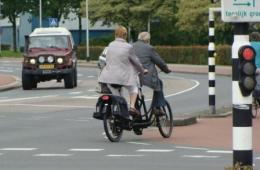
         Elderly                                                    Grandparents     

TandemElderly  Grandparents

                                              The Mobility Impaired

 MobilityScooter  Tricycle

Those on the School Run                                         

SchoolRun   SchoolAlternative

              Those in a Rush                             Those Getting a Lift from a Friend          

Veloxxx       Backie

                Travellers                                                               Lovers

Luggage          Lovers

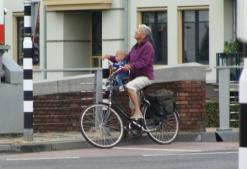
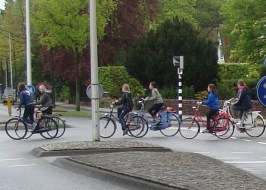
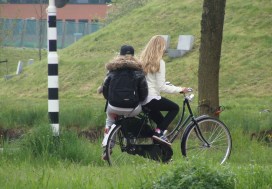
Everyone benefits from high quality cycle facilities. These picture from the Netherlands show high quality cycle facilities attracting a wide cross-section of the population. This same wide cross-section is starting to appear in London with the opening of the high quality superhighways. For the first time, parents feel subjectively safe in cycling  with young children and mobility scooters and skaters have started to appear without causing conflict with pedestrians.

It must not be forgotten that pedestrian too gain from this. Cyclists have a safe place to cycle away from pedestrians. Shopkeepers benefit if people do not have the expense of a second car. Finally motorists benefit – if people have the option of short trips by bicycle, the roads would be freed up for those who have no choice but to travel by car. This is our vision for Maynooth.

Maynooth Cycling Campaign is a non-party political cycling advocacy group. Further information on meetings and  activities is available on our website. We are affiliated to Cyclist.ie, the Irish Cyclist Advocacy Network and through it to the European Cycling Federation.

Vision for Straffan Road Maynooth

Rationale behind Allocation of Road Space

Maynooth Cycling’s vision for the Straffan Road is of a tree lined boulevard with traffic calming and high quality facilities for walking and cycling to encourage mass cycling and walking. The reduction in traffic arising from an active population would result in improved traffic flow for those who have no choice but to drive long distances.

This vision is very different from what was proposed for the North South Corridor under the Part 8 Public Consultation. The Straffan Road is much wider than most of the roads in Maynooth so there is scope to provide above average facilities for pedestrians and cyclists. The rationale behind our proposed allocation of road space and the difference with the allocation proposed under the Part 8 Consultations is detailed below. It is divided into the following sections

  1. Lane widths
  2. Partition verge
  3. Priority at junctions
  4. Bus stop design
  5. Postscript

1. Lane Widths

Appendix 1 shows how Maynooth Cycling would typically allocate road space.

The lane widths are very different from those proposed in the Part 8 drawings. They show the main drive lanes at 3.0m/3.25m and the turn lane at 3.0m. Maynooth Cycling proposes that the main drive lanes should be 3.0m and the turn lane 2.6m.

The 2.6m dimension is taken from the Traffic Management Guidelines Table 9.2 Typical lane widths for District Distributors and Local Collector roads. This compares to a minimum of 2.5m.

The Design Manual for Urban Roads and Streets gives a range of 6m to 6.5m standard carriageway widths for arterial and link streets with low to moderate design speeds. Maynooth Cycling favours the minimum in the interests of safety whereas the Transportation Department favours the maximum. As wider lanes results in higher speeds, we favour traffic calming and narrower lanes.

In the city of Assen in the Netherlands, Maria in Campislaan road is a two lane carriageway which is used by buses travelling to the city centre. The width of each lane is 2.8m. The road can be seen on Google Maps and it is clear that the profile of the road has not been changed for some time which indicates that the width does not prevent the road from functioning as it should. It fact it is likely that the road will be upgraded in the near future as the cycle facilities are outdated by Dutch standards.

In the US, details were recently published of a temporary traffic management measures. The cross-section shows 10’ or 3m wide travel lanes. Maynooth Cycling believes that if 3m is wide enough for cars in America, it should be wide enough for cars in Ireland but Kildare County Council thinks otherwise.

Appendices 3 and 4 show the proposed cross-sections at the Glenroyal and Parklands junctions respectively.

At the Glenroyal, there is additional public space available at the Harbour Field to provide high quality walking and cycling facilities.

At the Parklands junction, a verge of only 400mm means that the signal poles will impact on the adjoining cycle track but it is considered reasonable given the constraints on space. In the medium term with the construction of the ring road between the Celbridge Road and the Dublin Road, the turn right lane can be removed and the verge widened to 1.7m as elsewhere.


2. Partition Verge

The Straffan Road is 17.4m wide – so there is ample room to provide for pedestrians, cyclists and vehicles.  The general partition verge of 1.7m is designed for signage and traffic signal poles but could also be used for trees to give a boulevard appearance. It should not be grassed but should have a hard surfacing – one differentiating it from the carriageway and the cycle track.

As well as being for signage and services, the verge also eliminates pedestrian/cyclists conflicts at crossings by providing additional space for cyclists and pedestrians in which to wait and is in line with best international practice and the Design Manual for Urban Roads and Streets (DMURS).

Appendix 5 shows an example of a high quality Dutch cycle track with adjacent verge.


3.  Priority at Junctions

In relation to priority at junctions, pedestrians and cyclists should retain priority over side traffic in line with international best practice. This has been a long term practice in the Netherlands and within the last year has gained increasing acceptance in London and other parts of the UK.


 4.  Bus Stops

The National Cycle Manual contains 9 different designs. The first choice of Maynooth Cycling would be for Island type bus Option 1 as it minimises the pedestrian/cyclists conflict but any of 8 designs would be acceptable. The ninth, Kneeling Bus Option 1 is unacceptable, because it needless puts cyclists on road where there is a risk of cyclists/vehicle conflict. This is the current Part 8 proposal.

Island bus stops are generally called Floating Bus stops and have been used in the Netherlands for over forty years. More recently, they have been introduced in the UK and in the USA. In the last two years since 14 were constructed In Brighton, there has been no pedestrian/cyclist conflicts.

Appendix 1 also shows an example of an island bus stop.


POSTSCRIPT

Due to objections from the residents of Old Greenfield and Silken Vale, councillors voted to approve the Part 8 proposals as advertised subject to the retention of the right turn lanes at the railway station and elsewhere so the prospect of a Straffan Road boulevard is dead. As the residents of those estates were the winners, in our opinion, the losers were the other c13,000 residents of Maynooth.

For anyone familiar with cycle advocacy in the UK,  Maynooth  is another example of Groundhog Day  with non-cycling road engineers and non-cycling elected councillors that they knew  It took nearly twenty years until 2015 when they accepted that mass cycling needs high quality facilities and began t refused to cycle on porr quality


Appendix 1      Example of Boulevard Street with Verge and High Quality Cycle Track

                             (Netherlands)


Appendix 2: STRAFFAN ROAD – PROPOSED TYPICAL CROSS-SECTION


DIFFERENCES FROM PART 8 PROPOSALS

  • Where there are kerbs between the cycle track and drive lane/footpath, a width of 0.75m (0.5m+0.25m) is unused by cyclists.
  • Providing a 1.7m verge on the drive side and forgiving kerbs on the footpath side increases the effective width of cycle track to 2.0m from 1.25m (as per National Cycle Manual) so the standard (quality) of cycle track increases from class C to class A.
  • Space for verge is achieved by
    • Reducing the width of drive lane from 3.25m to 3.0m and
    • Reducing footpath on west side from 3.4m to 2.0m and on east side from 3.5m to 2.0m.


Appendix 3: LANE WIDTHS IN USA AT BROOKLYN

RED HOOK GREENWAY (NEW YORK)


Appendix 4: GLENROYAL JUNCTION – PROPOSED CROSS-SECTION

DIFFERENCES FROM PART 8 PROPOSALS

  • Where there are kerbs between the cycle track and drive lane/footpath, a width of 0.75m (0.5m+0.25m) is unused by cyclists.
  • Providing a 1.5m verge on the drive side and forgiving kerbs on the footpath side increases the effective width of cycle track to 2.0m from 1.25m (as per National Cycle Manual) so the standard (quality) of cycle track increases from class C to class A.
  • Space for a verge is achieved by
    • Reducing the width of drive lane from 3.25m to 3.0m
    • Reducing the width of turn right lane from 3.0m to 2.6m
    • Extending width on west side by 2.2m.
  • The effective width of the footpath is increased from 1.2m to 2.0m due to signals located in verge rather than the footpath.


Appendix 5: PARKLANDS JUNCTION – PROPOSED CROSS-SECTION


DIFFERENCES FROM PART 8 PROPOSALS

  • Where there are kerbs between the cycle track and drive lane/footpath, a width of 0.75m (0.5m+0.25m) is unused by cyclists.
  • Providing a 1.5m verge on the drive side and forgiving kerbs on the footpath side increases the effective width of cycle track to 1.95m from 1.25m (as per National Cycle Manual) so the standard (quality) of cycle track increases from class C to class B.
  • Space for a verge is achieved by
    • Reducing the width of drive lane from 3.25m to 3.0m
    • Reducing the width of turn right lane from 3.0m to 2.6m
    • Extending width on west side by 2.2m.
  • The effective width of the footpath is increased from 1.2m to 2.0m due to signals located in verge rather than the footpath.


Appendix 6   Priority at Junctions (1) (Netherlands)


Appendix 7      Priority at Junctions (2)

Extract from Leeds City Council Report on Leeds/Bradford Cycle Superhighway



Councillors endorse mediocrity for Maynooth

On a morning when traffic in Maynooth almost came to a standstill, the councillors of Maynooth Municipal District endorsed low quality walking and cycling facilities when they voted on the Part 8 Report for the Maynooth North South Corridor.

In the days before the vote, the issue of the right turn lanes came to the fore and we will return to this in the future. At the end of the day, the issue of removal or retention was not critical – what was critical was sufficient space to provide a high quality environment for pedestrians and cyclists and the approved scheme fails to do this.

In all countries but especially English speaking ones,  there is a lot of hype and spin associated with cycling schemes. Many claim to provide high quality facilities but few live up to the hype. Maynooth is no different in this regard.

  • The Straffan Road is wide enough to have high quality space for cyclists and pedestrians even with the retention of the right turn lanes by reducing the width of  the vehicle lanes. This would also have a second benefit of calming traffic. The reality, however,  is that at crossings, the space for pedestrians is reduced by more about 1/3. At other places, pedestrians are given extra space but not where they need it and space for cyclists is generally unchanged from a scheme designed some twenty years ago.
  • At Main Street, the cycle tracks are to be removed so that cyclists are expected to share the road with some 20,000 cars and trucks. This will be a particular problem for parents wanting their children to cycle to the Presentation Girls School and will encourage a continuation of traffic congestion due to the ‘school run’.
  • On Mill Street, everyone can see that on road cycle tracks are used for parking by cars and for loading by commercial vehicles especially in the mornings where children are going to school. The Part 8 proposals ignore this problem. Furthermore, the cycle lanes are located in a position where cyclists are hit by drivers  opening  their car doors and nothing has been proposed to improve the space for pedestrians  at the pinch point outside Dunnes.
  • Moyglare Road could have up to 2000 cyclists a day with the opening of the secondary schools. Not only is the proposed cycle track of the lowest quality standard – fifth class of five – the tracks are substandard by Irish and international standards. The proposed two way cycle tracks are also bad practice and are accepted internationally as creating a higher risk for cyclists than conventional uni-directional cycle tracks.

After Oslo’s recent announcement that it is going to ban cars from part of their city centre, Michael Colville Anderson, who has spoken on cycling in cities across the globe including Dublin and who has worked on the Dodder Greenway for Dublin City said that his advice to Oslo, would be to aim for high quality.  In the UK, there has been a sea change in opinion with London, Leeds and even Glasgow finally producing high quality designs that are in line with best international practice and which have won the support of cyclists. Against this background, it is a matter of regret that the people of Maynooth are to be saddled with 20th century mediocrity.

Encouraging Cycling?

(This article appeared in the October 2015 edition of the Maynooth Newsletter)

Maynooth Cycling welcomes new developments, especially ones that include partial construction of the ring roads around the town. Development on a green site should give an opportunity to provide cycle facilities in line with best international practice.   However, Maynooth Cycling has a number of concerns about what developers propose for the site between Lidl and Griffin Rath.

 Firstly, the proposed houses are mainly suburban residences with a front garden and space for car parking.  This creates potential conflict between reversing cars and cyclists using the cycle tracks. It will also lead to potential conflict between cars on the ring road and drivers exiting their property – think of reversing onto the Straffan Road. Best international practice for such a green field site would be either to have cyclists use a parallel road servicing the houses in question or to have an urban (as opposed to suburban development) without driveways to individual houses.

Secondly, the proposed cycle tracks stop at each side road junction which is not in line with current Irish design standards.  The method of prioritising cyclists over motorised traffic on side roads is currently a hotly debated subject in countries with low levels of cycling and one where Ireland lags behind best practice.

Thirdly the plans lodged with the council do not give any width for the cycle track so it is difficult to see how the council can adequately assess the quality of provision for cyclists.

Will these proposals encourage many people to take up cycling in Maynooth?  Regrettably, at a time when traffic congestion is increasing, demand on the health services is rising and the consequences of climate change are becoming more apparent, the answer is NO.

Maynooth Cycling is a non-party political cycling advocacy group. Its aims are to promote cycling as a healthy leisure pursuit and as a safe, enjoyable and efficient mode of transport for everyone in the Maynooth area. It recently made a submission on the North South Corridor and will be making a presentation on the deficiencies of the proposed Corridor at the October meeting of the Maynooth Municipal District.