Press Release from Love 30, the Campaign for Lower Speed Limits

Issued 6 April 2021

CALL FOR DEFAULT 30 km/h IN ALL URBAN AREAS

(A default limit does not prevent a different limit being introduced)

Maynooth Cycling Campaign joins Love 30, The Campaign for Lower Speed Limits, in calling  on the Oireachtas to provide for a default urban speed limit of 30 km/h in the forthcoming Road Traffic (Miscellaneous Provisions) Bill.

Ireland was a signatory in February 2020 of the Stockholm Declaration of the Third Global Ministerial Conference on Road Safety, which was subsequently endorsed by the General Assembly of the United Nations. Paragraph 11 committed to:

“mandate a maximum road travel speed of 30 km/h in areas where vulnerable road users and vehicles mix in a frequent and planned manner, except where strong evidence exists that higher speeds are safe, noting that efforts to reduce speed in general will have a beneficial impact on air quality and climate change as well as being vital to reduce road traffic deaths and injuries;”

Love 30 calls on the Minister for Transport, Eamon Ryan, and on the Minister of State at the Department of Transport, Hildegarde Naughton, to fulfil the commitment in the Stockholm Declaration by including provision for a default speed limit of 30 km/h in built-up areas.

 It will then be for councils to decide which roads should have a different speed limit. A default limit does not prevent a higher limit being introduced where it is deemed necessary and safe, but the ultimate benefit of a low speed limit would be a cleaner environment and improved safety for people walking  and cycling while also protecting our right to health and wellbeing.   30 km/h speed limits have long been recognised for the safety benefits they offer and in addition can assist in reducing noise and emissions and can help to make our towns and cities more pleasant places to live, work and play.

Many cities including London (20 mph), Brussels, Milan, Santander, Bilbao, Paris, Washington DC (20 mph), Boulder (Colorado, 20 mph), Wellington, have introduced widespread 30 km/h limits. Several countries are introducing default 30 km/h speed limits in all urban areas including Netherlands, Spain, and Wales (20 mph). Some locations have speed limits as low as 10 km/h. Love 30 believes that Ireland should follow this best international practice and legislate for a default 30 km/h limit in built-up areas.

Joan Swift of Love 30 Sligo said:  “Ireland needs to move quickly to implement the Stockholm Declaration and introduce default 30 km/h speed limits in all built-up areas. We have fallen behind our UK and EU neighbours where 30 km/h is increasingly becoming the norm in town centres and in residential areas. The Welsh Parliament has voted for a 20-mph default urban speed limit and more than a hundred French cities have introduced default 30 km/h limits.”

Mairéad Forsythe of Love 30 Dublin said: “We need 30 km/h speed limits on our residential roads, outside our schools and in the centres of our cities, towns, and villages so that people can move about more safely and enjoy a more people-friendly space. This is more important than ever during COVID-19 restrictions when there has been a surge in the number of people moving about outdoors on foot and by bicycle”

END

*************************************************************

  1. Who are we? Love 30 is an alliance of organisations and individuals who support the concept of lower speed limits in urban areas. We are campaigning for the introduction of more 30 km/h zones in urban areas, but particularly in town centres, residential areas, and near schools and other places of public assembly. You can find more information at www.love30.ie or contact us at info@love30.ie .
Kildare Co Co’s Transportation Dept (finally) reacts to Covid-19 Emergency

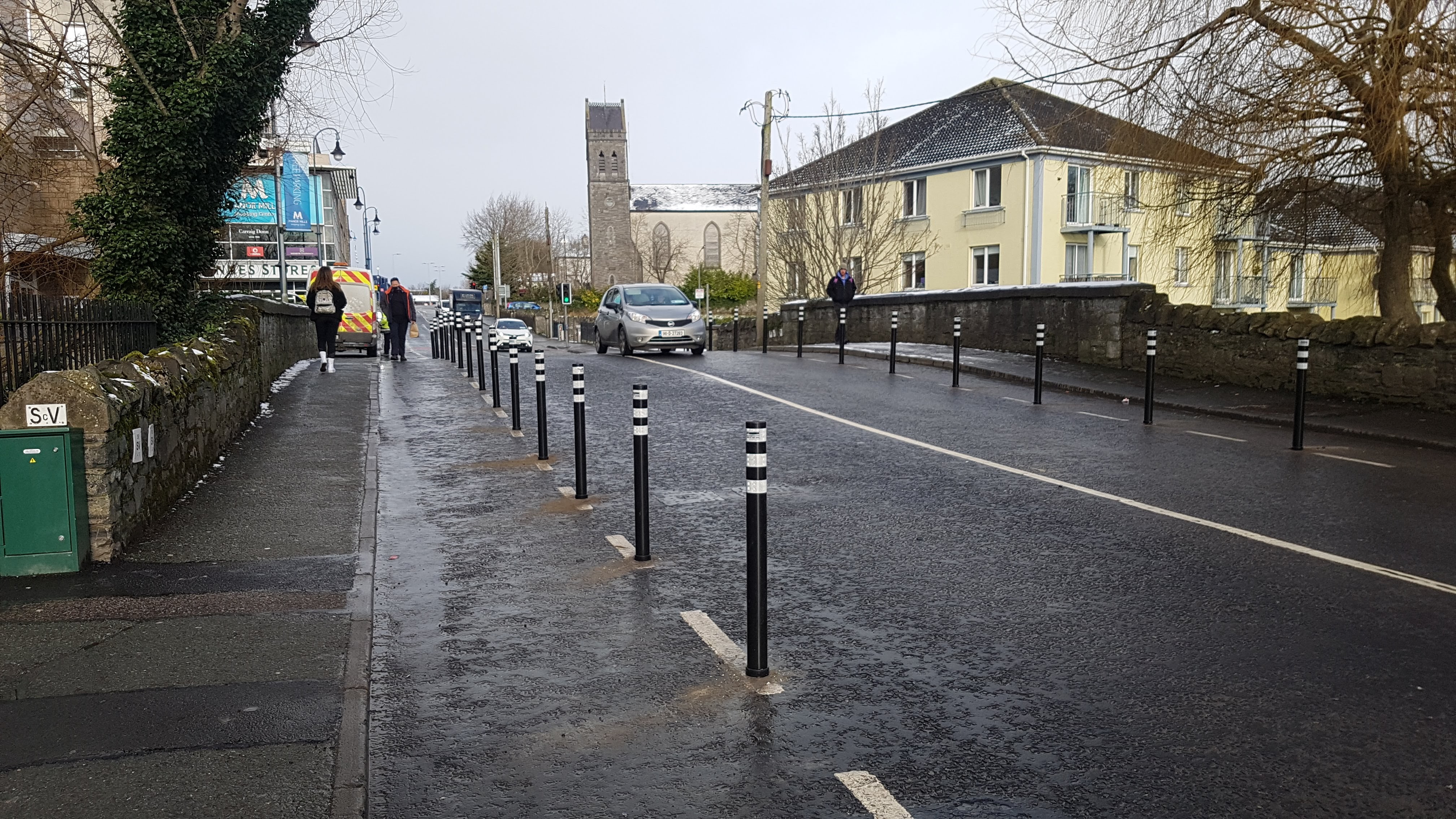
Maynooth has finally seen Kildare County Council’s Transportation Department react to the Covid-19 health emergency with works on the Dublin Road, Mill Street and Laurence’s Avenue

Although the Dublin Road work s limited, Maynooth Cycling Campaign welcomes the pop-up cycle lane which has appeared on part of one side of the road. While it will not attract many more cyclists, it will give more space to pedestrians and reduce the risk of a collision between cyclists and motorised vehicles – at least when they are travelling towards Carton Park Shopping Centre.

Bollards have also appeared on Mill Street to form a pop-up footpath at the Rye Bridge on Mill Street on space which had formerly been allocated for cycling. Several cyclists thought that it was a pop-up cycle lane. They were astonished to learn that the space was to be reallocated from cyclists to pedestrians and that cyclists were expected to move out to the traffic lane and “share the road” with cars. Most other councils are improving conditions for pedestrians AND cyclists, rather than pedestrians OR cyclists. Legibility is an important aspect of road safety. Legibility means that road users can “read” where they are supposed to go – be they pedestrians, cyclists or drivers. While he changes was intended to benefit pedestrians, it is doubtful that many cyclists will swing out into the traffic lane.

When the work was announced as part of the July Stimulus, a requirement was for the work to be completed before the end of November but was only carried out in February.  Thankfully Kildare’s Fire Service is more responsive to an emergency than the Transportation Dept.

The third edition of the Sustainable Safety vision

Cyclist fatalities in Ireland have been increasing over the last ten years. In the Netherlands, increased cycling led to a reduction in fatalities due to their high quality infrastructure and Sustainable Safety policies.

Bicycle Dutch's avatarBICYCLE DUTCH

Sustainable Safety is one of the corner stones of the Dutch road safety policies. Its ultimate goal is to make traffic so safe that everybody can get home safely. Not only fit able-bodied people or drivers in protected vehicles, but every road user – the schoolchild, the commuter, the commercial driver and the active senior, whether they walk, cycle or participate in traffic in any other way. I’ve published about Sustainable Safety before, in 2012 and in 2017, but the policy was updated in 2018. That is why I want to start this year with another look at Sustainable Safety. First, I would like to wish you all the very best for this new year! I also – as you will have noticed – updated the look of my blog.

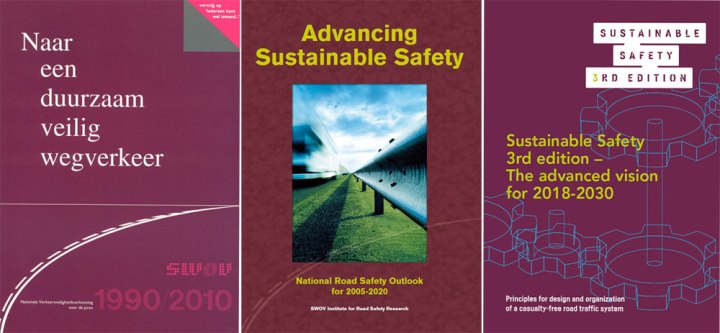
The three editions of the Dutch Sustainable Safety policies from the 1990s, 2005/2006 and 2018 respectively.

The Dutch Institute…

View original post 1,285 more words

Selective concern

The concerns of drivers in Horsham are similar to the concern of drivers in Maynooth. The reaction of politicians to the concerns are similar too.

In the time that they have developed six vaccines, Horsham Council has at least provided emergency pop-up cycle lanes, albeit on a temporary basis, whereas Maynooth is still waiting for its emergency cycle lanes.

aseasyasriding's avatarAs Easy As Riding A Bike

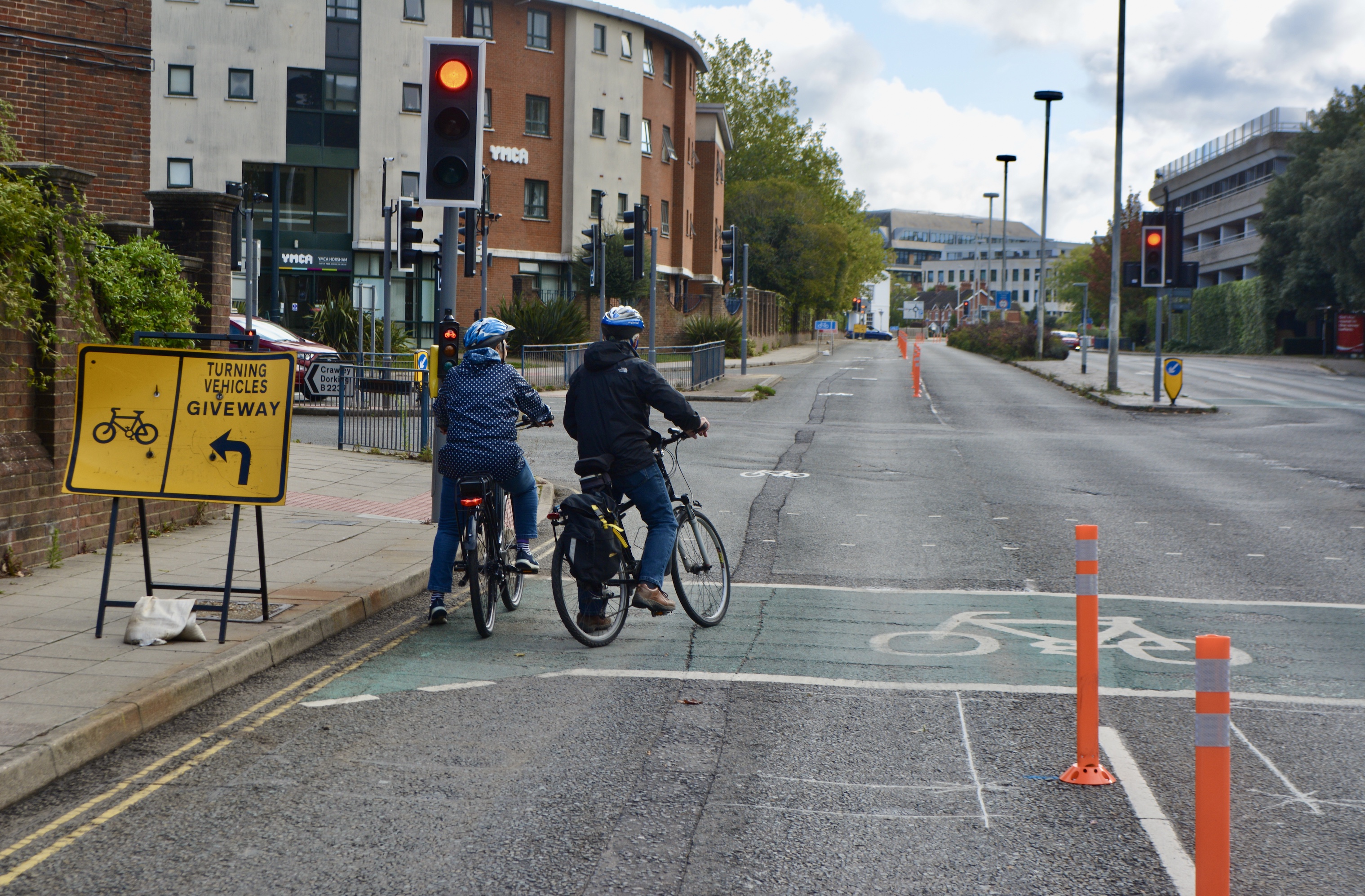
Between the end of September and the end of November this year, Horsham briefly had a pop-up cycle lane, created in the space of less than a day by the addition of some bolt-down plastic wands and painted markings, converting one lane of our four/five lane wide inner ring road into a cycle lane.

The Albion Way pop-up lane. Note that, thanks to a watering down of the original scheme, it only went in one direction, and was therefore unlikely to attract people who weren’t already inclined to cycle here before the protection was added.
The reaction to this scheme (and the others across the major towns and cities of West Sussex) was predictably vitriolic and the County Council, whose commitment to active travel is as shallow as a film of diesel on a puddle, rapidly announced they were removing every single one of them – spitefully, even the one…

View original post 1,034 more words

COVID-19 – RESPONDING TO AN EMERGENCY

Last January, the WHO declared the Covid-19 outbreak as a global health emergency. When it spread to western Europe in February and March, most governments imposed lockdowns, and encouraged people to avoid crowds and observe social distancing. They also encouraged people to walk or cycle where feasible and provided funding to improve facilities for active travel.

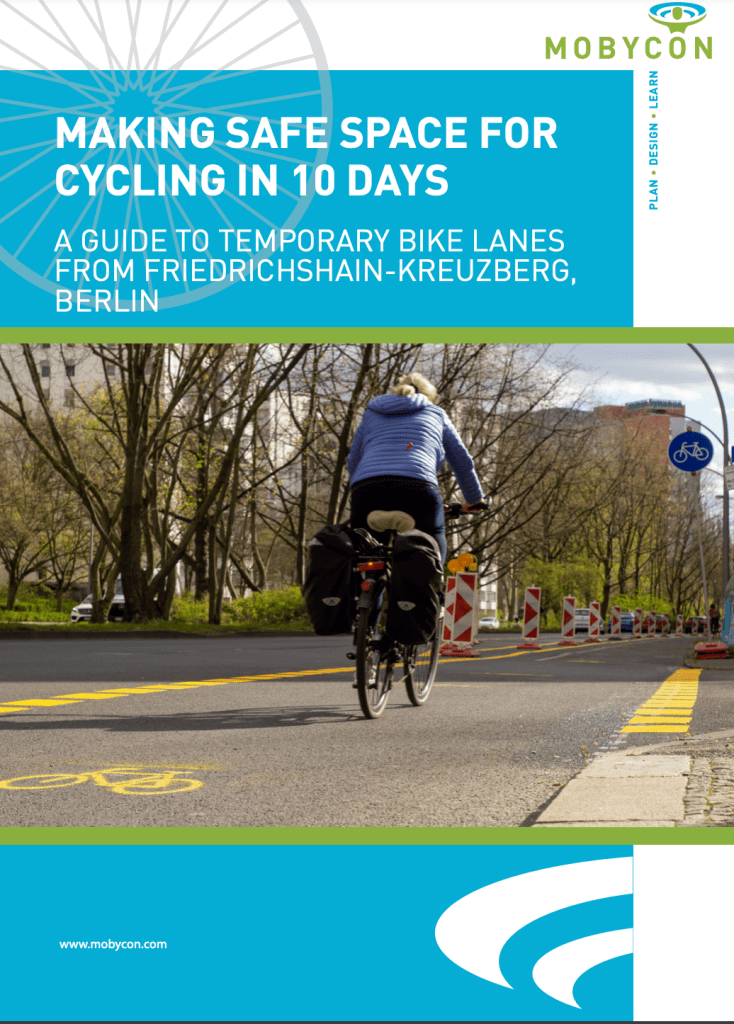
By the end of March, the Dutch engineering consultancy Mobycon, had produced guidance  Making Safe Space for Cycling in 10 Days: A Guide to Temporary Bike Lanes from Berlin. The title came from the time required for a German local authority to provide temporary bike lanes.

During the summer, the Irish government through the National Transport Authority provided funding to improve facilities for walking and cycling and invited applications for suitable schemes. Kildare County Council were awarded funding for a number of schemes for Maynooth and other Kildare towns which included temporary cycle lanes. The funding was conditional on the work being carried out by the end of November. (In reality, councils knew that they have until the end of January to complete them.) However, in the four months since July, no Covid works have taken place in the town. In contrast, Dublin City Council publishes progress reports on Covid-19 schemes on a monthly basis.

One would hope that in the case of an invasion, that the army in Kildare will react faster to an emergency than the council.

An Taisce Press Release – All Political Parties Must Commit to Deep and Rapid Emissions Cuts in Line with Science and Justice

AT                      27th April 2020

Much public and media discussion around the Green Party’s insistence on any future government committing to a minimum of 7% cuts in greenhouse gas emissions per annum appears to focus on the supposedly ‘unrealistic’ nature of these targets.

The former Minister for Climate Action Denis Naughten TD has, for example, been quoted as describing this reduction rate as “unsustainable and unachievable”. In so doing, Mr. Naughten appears to have forgotten that the government he represented fully signed up to the 2015 Paris Agreement, which commits Ireland to urgent and dramatic emissions cuts in line with the science and climate justice.

Prof Barry McMullin of An Taisce’s Climate Committee, noted: “It is thanks to political procrastination and predatory delay that today’s targets have become so challenging. Every year that vested interests and lobbyists, abetted by politicians with little care for science, have enabled inaction and delay on tackling the climate emergency has made effective action far more onerous than would have been necessary had we collectively acted in a timely manner. Sadly, we cannot simply turn the clock back and ‘start over’: we must deal with the much deeper crisis we have now created.”

Despite this reality, current media commentary continues to place the onus exclusively on the Green Party both to insist on the required emissions reduction pathway, and to explain in detail how this should be delivered on. An Taisce believes this is misleading and unhelpful. Rather than making a political “demand”, the Green Party is simply reflecting the overwhelming scientific consensus on the minimum steps needed to avoid catastrophic and irreversible climate change.*

[*Note that An Taisce is strictly non-party-political; these comments do not imply support or endorsement of any specific political party.]

Such targets, and the responsibility for measures to achieve them, do not ‘belong’ to any one party or group: they represent the clearest understanding of the scale of the challenge and the time frame within which global humanity, including here in Ireland, now has to respond.

The currently suggested figure of an overall emissions reduction compounding at a rate equivalent to at least 7% per year is based on the 2019 “Emissions Gap” Report from the UNEP (United Nations Environment Programme) which assessed the global average rate now required to maintain a plausible chance of limiting temperature rise within the 1.5°C goal of the Paris Agreement as being at least 7.6% from 2020 onward.

But it is critical to emphasise that this does not apply as an equal requirement for all countries.

For a relatively wealthy, high per-capita-emitting country like Ireland, the required annual reduction rate is now considerably higher, as this must reflect the “common but differentiated responsibilities and respective capabilities” between different countries.

Thus, it is An Taisce’s view not only that the suggested 7% per annum reduction rate is indeed the absolute minimum that must be included and actively endorsed by all partners in any proposed programme for government, but that the programme must commit to enshrining this in a new Climate Ambition Act, with full independent recourse by citizens to the courts to ensure enforcement, within the first hundred days of such a Government taking office.

Further, a restructured and rebalanced Climate Change Advisory Council, with appropriate expertise in physical climate science, ecological economics, international development and climate ethics, must be mandated to critically assess the further increase in mitigation ambition necessary for Ireland to play its fair share in this unprecedented global effort. This should be coupled to a properly scaled and resourced “national climate dialogue” process that gives the opportunity to every citizen to engage with and influence this immense national effort.

“We believe it is now incumbent on those parties and commentators who reject such commitments to declare openly and honestly whether they reject the science, or the ethics, or both”, added Prof McMullin.

In our view, you can’t claim to accept the expert diagnosis while rejecting the treatment path set out by those same experts. It is now beyond time to commit to “flattening the curve” on climate change, before our collective ability to respond is overwhelmed.

/ENDS

Where is the best place for congestion?

Quote

via Where is the best place for congestion?

Where is the best place for congestion? – Thoughtful article on the pointlessness of trying to build your way out of road congestion. Very relevant to proposals to add another lane onto the M4.

Is cycling priority on roundabouts a good idea?

Timely blog on cycle priority on roundabouts – the pros and cons. Important discussion on how the Dutch prioritise cycling over private cars in practice whereas in Ireland it is in theory.

Bicycle Dutch's avatarBICYCLE DUTCH

Roundabouts are much safer than regular intersections. There is not much debate about that fact in the Netherlands. But when it comes to the priority rules on roundabouts the opinions differ sometimes. Why does cycling need to get the right of way over motor traffic on roundabouts? This guideline from the Dutch Ministry of Transport, “causes many unnecessary victims among people cycling”, a small minority of opponents claims. Is that true? Or do Dutch road safety experts, cycling advocates and most of the authorities maybe look at a bigger piture?

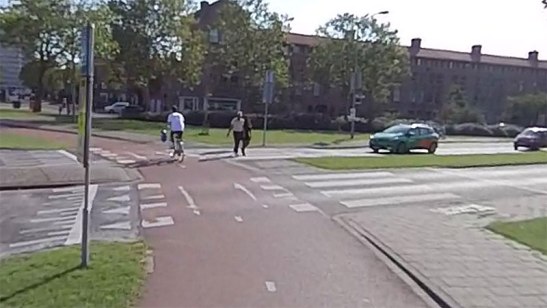
A pedestrian and a cyclist on a roundabout in ’s-Hertogenbosch, both have priority over the drivers who wait patiently for their turn.

Every now and then the discussion flares up about the priority of cycling on roundabouts. In the Netherlands the guidelines are clear: in the built-up area cycling must have priority over motor traffic and outside the built-up area…

View original post 1,676 more words

So Near, So Far — The Ranty Highwayman

Quote

I happened to be in Cambridge this week and I also happened to see some relatively new streets. You would think that in the UK city with the highest rate of cycling that I’d have seen some world class cycling infrastructure? Sadly not.OK, what I did see in the Eddington development, in the northwest of…

via So Near, So Far — The Ranty Highwayman

Railpark and Rat Running


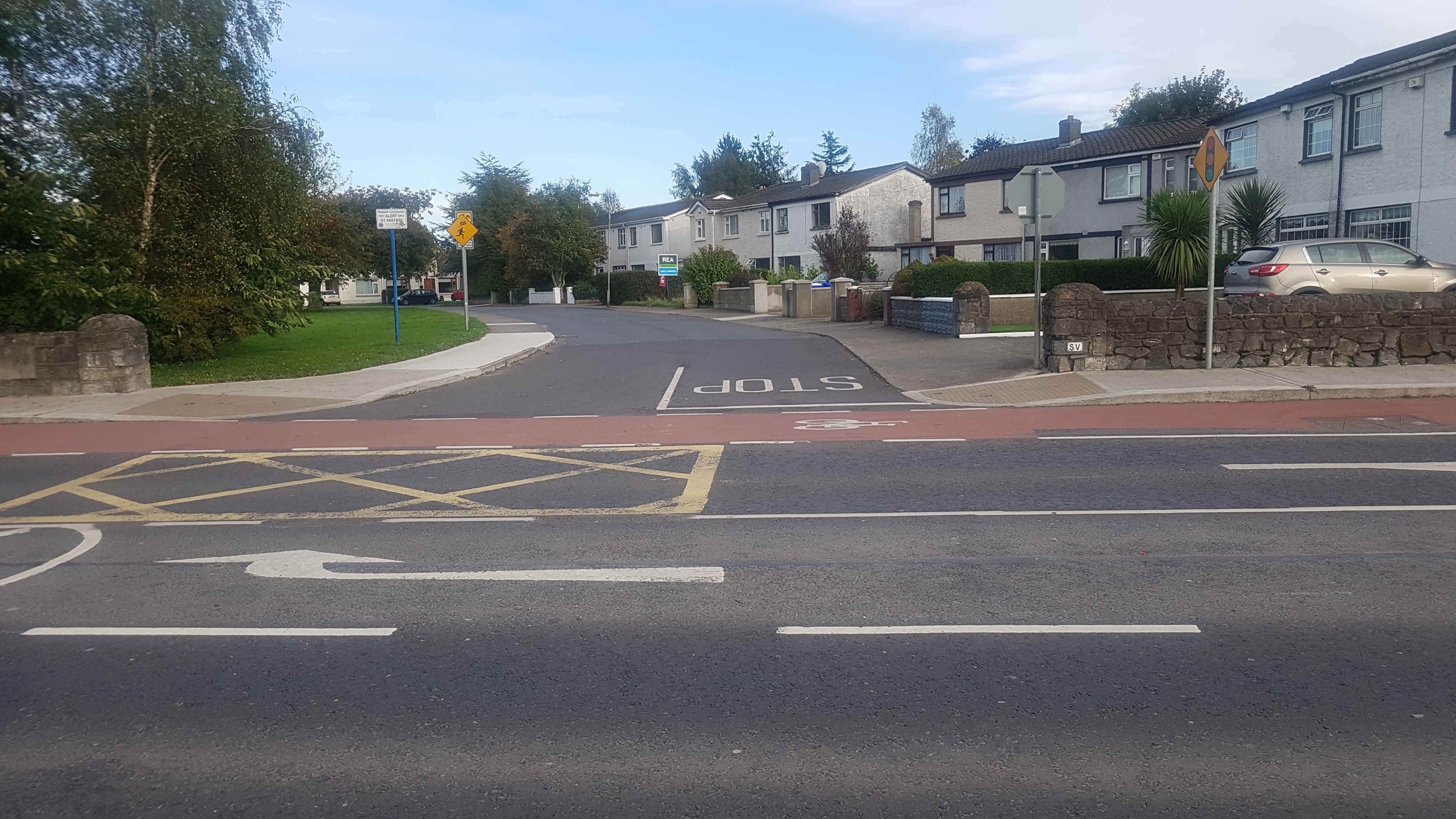
20191006_170313Since the removal of the slip lane  at the Staffan Road / Celbridge Road junction, the residents of Railpark have been concerned about the significant increase in motorised traffic which passes through the estate on a daily basis. Most of this traffic is only using the route for convenience – they are not stopping to visit. T hey are merely passing through and using the route as a “rat-run”. Traffic levels are reported  to be as in excess of 4000 vehicles (?) per day which is greater than the threshold for a “major” road, as defined in the EU Environmental Noise Directive.

Rat-running is not a new phenomenon and the way to eliminate it is cheap and readily available. It consist of stopping motorised traffic from passing through by blocking one or other entrance or by blocking passage in the middle. This is termed “filtered permeability” whereby pedestrians and cyclists are permitted to pass but motorised traffic is not and is widely used in other European countries.

Kildare County Council suggested that it would introduce filtered permeability at Railpark but a number of the residents objected to the proposal on the grounds that it would inconvenience driving. Other residents, who were concerned about the risk to children playing in the estate, supported the proposal. The position of councillors is unclear at this time – they appear to want to introduce filtered permeability but do not want to antagonise vociferous residents.

The Design Manual for Urban Roads and Streets (DMURS) establishes a road user hierarchy with pedestrians and cyclists at the top and private car users further down so filtered permeability is in accordance with the principles of DMURS. The position of Maynooth Cycling Campaign is clear – we consider that the safety of vulnerable rod users takes precedence over rat-running.

In the UK, the debate is framed about Healthy Streets where car use is discouraged as opposed to streets which cater for large volumes of traffic. Healthy Streets developed out of concerns about issues such as road safety, child obesity, air and noise pollution and lack of sustainable development – problems which all affect Maynooth. In particular, there is increasing concern nationally about the effects of air pollution from traffic and the EPA has estimated  that nearly 1200 premature deaths per annum are caused as a result.

The selfishness and sense of entitlement of some people who drive – that they would place their convenience of driving over the safety of their neighbour’s children – is mind-boggling but we have already seen such attitudes in parts of Dublin. In the 19th century, when local authorities decided that clean water and sewage systems were required to avoid preventable deaths, they did not have to consult with the public. One would have hoped that if they had, they would have ignored narrow self interest and thought of the interests of the wider community. Local politicians should do likewise today.