Fossil Fuel Dependency
Once again, conflict in the Middle East threatens to involve countries outside the immediate region. During negotiations for a peaceful resolution regarding Iran’s nuclear capacity, U.S. and Israeli forces attacked Iran. The resulting instability has impacted the economies of nearly all countries dependent on fossil fuels. At the time of writing, there is little sign of when this will end.
The “Oil Emergency” of the 1970s saw a significant surge in bicycle usage as people sought to reduce petrol consumption. However, this shift was short-lived. When fuel deliveries resumed, most countries—with the notable exceptions of the Netherlands and Denmark—reverted to their previous pro-fossil fuel policies. At that time, awareness of climate change was low, and Ireland lacked cycling infrastructure. We cannot use those excuses today, so it will be interesting to see if cycling receives a more permanent boost this time.
Grand Canal Greenway – Hazelhatch
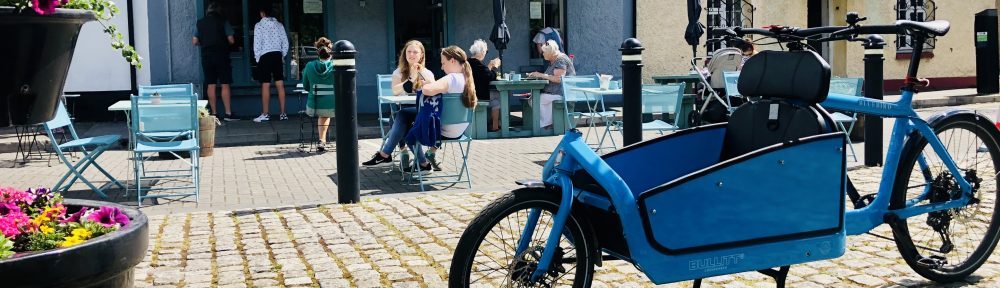
Maynooth Cycling Campaign welcomes the opening of the latest section of the Grand Canal Greenway between the 12th Lock (Adamstown) and Hazelhatch. This “missing link” completes the greenway between Dublin and Sallins/Naas. Unfortunately, beside McEvoy’s Pub at Hazelhatch, South Dublin County Council has installed a “kissing gate” that prevents larger bicycles, such as cargo bikes, from accessing the Kildare section of the route. A “cyclists dismount” sign has been erected at the barrier, along with a “no cycling” sign at the roadside entrance to the canal path. Such barriers to active travel should not be happening in 2026.
What is the fastest mode of transport in urban areas?
RTÉ recently held an 11 km “race” from Rathfarnham to St. Stephen’s Green between a cyclist, a public transport user, and a car driver. This was a repeat of a comparison held ten years ago, which was also won by the cyclist. This year, the cyclist remained the winner, completing the journey in approximately 40 minutes. The public transport user followed at one hour, noting that the bus was delayed by private cars in areas lacking dedicated bus lanes. The car driver finished third once again. The outcome is clear: for the fastest and most predictable travel times in urban areas, including Maynooth, cycling is the best option.
Ferries and Air Pollution
Transport & Environment (T&E), a clean transport advocacy group, recently reported on urban air pollution caused by cargo and passenger ferries. They found that Dublin is currently the most polluted port city in Europe, with more sulphur oxides (SOx) emitted from ferries than from road vehicles. This is set to change in 2027 when new regulations take effect. However, while the EU has introduced ambitious plans to transition ferries from fossil fuels to electric power, there is little evidence that significant outcomes will be realised before 2030.
Maynooth Cycling Campaign is an independent local lobby group for better cycling facilities in Maynooth and Kildare generally. If you would like to support our efforts, we welcome new members. Why not join us – you can find details here.
 Maynooth Cycling Campaign