Cyclist.ie Press Release – CLIMATE ACTION: MINISTER ROSS MUST INVEST IN CYCLING

The following press release appeared in the Examiner on 21st December.

The Government’s recently published Annual Transition Statement 2018 has ignored the potential for cycling to reduce transport emissions.  The legislation is designed to enable Ireland’s transition to a low carbon, climate resilient and environmentally sustainable economy by 2050. However, the section of the Statement dealing with the decarbonising of the transport sector  demonstrates a complete failure by Minister Ross and his Department to grasp the potential contribution that cycling can make to a reduction in carbon emissions.

Transport accounts for over 52% of energy used in Ireland and is increasing. It is one of the four key areas where a reduction in carbon emissions is required to meet our international obligations. Section 4.4 of the Annual Sectoral Mitigation Statement deals with decarbonising transport and states that this involves providing meaningful alternatives to the private car, continuing investment in sustainable transport and promotion of modal shift.

However, in the accompanying National Mitigation Plan Actions, a different narrative unfolds – one where rhetoric is divorced from anything remotely approaching meaningful action.

The Update Report on Actions contains a section entitled “Actions not delivered as planned”. It includes words like “publish”, “review”, and “strategy” rather than “fund” and “enable”. Six of the actions were due to be completed by the Department of Transport Tourism and Sport in 2017. These include “Publish a review of the National Cycle Policy Framework” which originally commenced in 2013 and which 5 years on has still not been completed.

Under Actions Complete, the Decarbonising Transport section lists five items.  The DTTAS were responsible for two – setting up a behavioural change working group and publication of a Greenway Strategy. Greenway funding is welcome but it is disingenuous to claim that publication of a strategy or the setting up of a working group will reduce emissions and it is noted that no estimate of emission reduction is included.

The recent IPCC report clearly spells out the urgent need to reduce carbon emissions in order to limit global warming to 1.5°C. To minimise environmental damage and  fines arising from the failure to meet Ireland’s climate change targets, Minister Ross must adopt much more ambitious actions than currently outlined. Cycling is the mode of transport for more than 40% of people in many progressive European cities.  Cycling will not solve the problem of climate change on its own, but as 57% of Irish journeys are less than 8 km, it can make a significant contribution as well as alleviating congestion, contributing to cleaner air, improving health outcomes and creating attractive neighbourhoods, For cycling to play its part however, Minister Ross must begin to properly fund high quality cycling infrastructure which will enable cycling for all.

“Cycling offers the best and quickest return on investment of all transport expenditure. We urgently need to invest a minimum of 10% of transport funding in cycling infrastructure, to give people a safe, attractive alternative to the car” says Gerry Dornan, Vice Chairperson of Cyclist.ie, the Irish Cycling Advocacy Network.

Nearly two thousand years ago, the Emperor Nero is reputed to have fiddled while Rome burnt. In the next few years we shall see if our current leaders will emulate him or take decisive action to stop climate change.

END

OPENING UP OF CARTON WALK – A POSITIVE DEVELOPMENT FOR MAYNOOTH

Rear_View copy

The Carton Walk Preservation Society (CWPS) has recently commented on the new cycling and walking link from Limetree Hall to the adjacent Carton Walk.

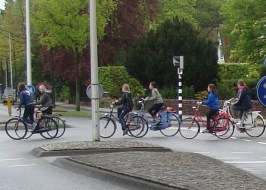
In particular, a spokesperson has been reported as stating that no-one would want a cycle link. Maynooth Cycling Campaign strongly support the provision of cycle facilities between the residential estates and Main Street as it would be a safe route for children attending the nearby school. The alternative route on the Dublin Road has no cycle facilities and would involve a road crossing. Judging from the above photograph, the pupils at Presentation Girls School would appear to agree with our view.

The CWPS also argue that there has been no consultation on the proposal. The proposed walking/cycling link was shown in the Maynooth Local Area Plan 2013–2019 which went to public consultation and was subsequently approved by county councillors. The work is not of a scale which warrants a separate public consultation so Kildare County County got it right this time. Opposition to improved walking and cycling is both mean spirited and detrimental to a more active community.

10% of Land Transport Budget – #Allocate4Cycling

budget submission_Twitter Photo

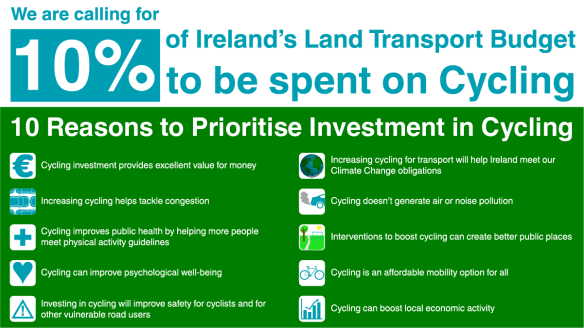
Cyclist.ie members, including Maynooth Cycling Campaign, have put together a strong budget submission addressed to Minister for Finance & Public Expenditure Paschal Donohue, outlining the deficiency in government funding supports to enable cycling to grow. Essentially we are calling for an immediate 10% of Land Transport Funding to be allocated to Cycling, to enable the government to meet its own target of 10% of modal share by cycling by 2020. Currently the modal share stands at only approximately 3% of trips by bike, and funding levels are at approximately 2% of Land Transport Funding!

The Cyclist.ie submission points out that the appropriate funding for cycling aligns with numerous government policies and initiatives across a variety of sectors such as Transport, Environment, Climate Change, Health, Business, and Education. Cycling, as a mode of transport, offers numerous well documented benefits to society, including:

  • Improved public health
  • Reduced congestion
  • Reduced greenhouse gas emissions
  • Reduced air and noise pollution
  • More liveable and sociable streets and communities, and
  • High rates of economic return

Unlocking these benefits requires targeted and sustained investment, and international evidence demonstrates that investing in cycling provides excellent value for money.

From available data we estimate that spending on cycling currently only amounts to approximately 2% of Transport capital spending. This compares to recommended targets of 10% for cycling, and present European levels of between 5% and 8%. This very low proportion is not commensurate with the benefits offered by cycling, or with the significant economic costs which car dependence imposes on Irish society. To encourage people to make more journeys by bicycle;

We call for 10% of the capital budget for land transport to be invested in cycling.

At the same time, an increase in current spending on a range of different objectives which can support a transition to a cycling friendly society is also required.

The full budget submission is available here and a short summary document here. We need YOU to contact your local representatives and make the case to increase funding for cycling. See https://www.whoismytd.com/ for the names and contact details of your local TDs.

IT NEEDS TO HAPPEN NOW!

National Road Network Indicators 2016

The National Road Network Indicators for 2016 which was recently published by Transport Infrastructure Ireland (TII) makes for interesting reading.  The report is split into five parts – Network, Economic, Road Condition, Safety and Accessibility/ Environment.

Nat_Rd_Indicators_2016

 The first part deals with the extent of national roads, traffic levels, and level of service which essentially means whether a road is congested or not. Chart C1 shows the level of service during the morning peak and demonstrates that over the whole country the level of congestion is surprisingly low with congestion apparent only in the vicinity of the cities – Dublin, Cork, Limerick and Galway.  With a surprising degree of honesty, the report admits that

                Following the substantial investment in National Roads over the last decade, most route sections are operating to the highest standard of service. However, for certain roads such as the M50, further interventions such as demand management are required to ensure that higher levels of service are achieved.

So it concedes that most of the network is operating to a high standard and accepts that congestion will worsen on the M50 unless more measures such as demand management are introduced.  As the principle type of demand management is road pricing or a congestion charge, this will not be to the liking of government which is opposed to such measures. The most interesting sections are Charts E and F which show Trip Duration and Trip Distance for National and Regional Roads and which are based on national computer models. The main findings are

  • 28% of trips last less than 10 minutes
  • 11% of trips are for a distance of less than 5km
  • 38% of trips are for less than 10km
  • 24% of trips are less than 7.5km
  • In 2016 traffic growth was 4.6% across the network
  • In 2016 growth in the Dublin region was 6.9%.

The 24% of trips less than 7.5km show the potential for substituting trips by car for trips by bicycle. It demonstrates clearly that congestion will not be solved by building more roads but by providing for more efficient modes of transport in terms of space and speed.

The second part Economy deals with estimates of future levels of population, car ownership and vehicles kilometres. By 2050 the ESRI forecast that the population will increase to between 5 and 5.6 million while TII expects total car ownership to increase from 2.5 million in 2013 to 3.5-4.0 million. The number of vehicle kilometres travelled is also forecast to increase from just over 40 billion in 2013 to between 52.0 and 58.5 billion in 2050 depending on future growth rate. Obviously, TII don’t agree with the concept of Peak Car or Peak Car Use. It also appears not to agree with Smarter Travel targets for reduction in commuting by private car although Smarter Travel uses a short time frame to 2020 while TII forecasts take a longer time frame to 2050. Although traffic growth was 4.6% nationally (and 7.4 in the Mid East region ie the commuter belt), it assumes that traffic will grow at an average rate of about 1% between 2016 and 2050 but this still implies an overall increase of nearly 40%. Just where this traffic will go is unclear but it is likely to lead to an increase in demands for yet more investment in roads for motorised traffic. This is already apparent in calls by groups like the Small Firms Association for a new motorway, the Leinster Outer Orbital Ring, to be developed to supplement the M50 at the same time as TII complains about inadequate funding to maintain existing roads.

The final section looks at Accessibility/Environment and includes the statement “the key benefit of a quality road system is improved accessibility to jobs”. This statement can be interpreted in two ways. The benign view is that a quality road system will reduce congestion and reinforce economic development thereby leading to increased employment. The alternative view is that the development of a better quality road system will lead to an increase in congestion and longer commuter times due to induced demand ie more people choosing to travel further to jobs because of an improved road system. Now looking at Dublin and the other Irish cities, I wonder which view predominates?

How much does Ireland spend on cycling?

Local and central governments are fond of ‘promoting cycling’. They have been promoting it for some twenty years with grants here and there, photo opportunities at the opening of cycle facilities, giving out hi vizjackets, exhortations to get on your bike, advertisements in the media and so on. In most of this time, cycling nationally has declined. Brendan Behan once suggested that in order to revive the Irish language, books which were banned for their sexual content in English should be printed in Irish. Perhaps local and central government should trying promoting car use – the outcome could hardly be worse!

There is a lack of knowledge of how much Ireland actually allocates to cycling.  It is difficult to be precise as cycling infrastructure can be provided  by funding from central or local government but can also be provided by private developers in the same way as other infrastructure such as road or sewers. Furthermore, some types of cycling infrastructure such as shared footpaths or greenways are provided to be shared with pedestrians so how do you determine the separate contribution for cyclists from pedestrians?

In most countries the critical figure is the amount of funding provided by central government. In 2014 in response to a question in the Dáil from Deputy Catherine Murphy, the Minister for Transport reported that a total of  €11.1 Million was allocated by his Department and gave a breakdown of the allocation to individual local authorities. However, this was only the direct budget allocation from the Department.  The National Transport Authority also provided funding of €8.2 Million to local authorities In the Greater Dublin Region and in May the government announced a Stimulus Programme which included funding of €10 million for greenway developments. Finally, in November, a supplementary budget was passed which included funding of €1.6 million also for greenways. Overall it is estimated that funding of €21.2 million was directly and indirectly provided for cycling by central government. With a population of 4.66 million, this equates to an expenditure of €4.55 per person for 2014.

How do we compare internationally? Well pretty badly. The Netherlands spends approximately €30 per person per annum. In the UK, politicians at Westminster estimate that expenditure of £10 per head per annum is required. Norway, with a similar population as Ireland has just announced an investment of almost €1 Billion in cycling infrastructure although it helps if you have extensive oil resources.  What is clear that unless spending is increased substantailly, the level of cycling in Ireland (outside of the capital) will remain under  3%.

Cycle Right – No Substitute for Infrastructure

Maynooth Cycling Campaign welcomes the launch of Cycle Right and congratulate Cycling Ireland and Celbridge’s Barbara Connolly on their leading role in its development. We now hope that the Department of Transport, Tourism and Sport will follow up with the second essential element to achieve mass cycling to school – increased funding for the provision of high quality infrastructure. Being able to cycle is not the same as willing to cycle and unless the road environment is made safe for all ages the Minister’s hope for support from parents and for more children to choose cycling will remain that – a hope.

In his press release, the Minister also expresses a hope  that the initiative will ‘show his commitment to improving road safety and reducing the number of fatalities’. Considering that the bulk of fatalities involved drivers and pedestrians, it is hard to see how cycle training will improve road safety generally.  His use of ‘we’  as in  we must … remember to take particular care around vulnerable road users such as pedestrians and cyclists… reveal with which group of road users his empathies lie. While details of the rollout of Cycle Right have not been revealed, the key figure will be the outcome of cycle training – that is the increase in the number of children cycling to school. This will show the Minister’s true level of ambition and commitment to cycling.

Most countries provide cycle training to children as a means of encouraging cycling. In the Netherlands, having learnt how to cycle from their parents at a young age, children undergo a cycle test at the age of eleven so the test is in reality a confirmation of their ability rather than the acquisition of a new skill. In the UK, most parents do not cycle and it is likely that many feel that they do not have the skills to teach their children. While children there are being trained in large numbers, this does not lead to them cycling. Conditions on UK streets simply remain too unpleasant and too dangerous for more than a very small proportion of parents to allow their children to cycle. Unless additional funding for infrastructure is provided, the mistakes in the UK will be repeated in Ireland.

Stop Climate Chaos -Discussion on Strategy

The Letter below was sent to the Stop Climate Chaos members including Cyclist.ie (of which Maynooth Cycling Campaign is a part) on a Draft Strategic Plan which was discussed on Thursday 12th January.
From: Oisin Coghlan – Friends of the Earth <oisin@foe.ie>
Date: Tue 10 Jan 2017 at 17:47
Subject: [SCC members] Document for discussion and decision at Thursday morning’s meeting in Concern
To: stopclimatechaos@googlegroups.com <stopclimatechaos@googlegroups.com>

 
Dear all,

You will remember last year that our coalition decided that we should review our ambition and our structure in the light of the increased urgency of climate action on foot of the Paris Agreement and our own Climate Action Act.
A small Review Group was set up last summer: Lorna from Trocaire, Phil from An Taisce, Sorley from Christian Aid and myself. We were mandated to look at what was happening in England and Scotland, consult various external stakehoders, and come back to you the members with a proposal.
That proposal is now attached in the form of a draft Strategic Plan and Thursday’s meeting is to consider it and the next steps.
The Plan takes as its starting point the campaign vision we agreed last year: “That Ireland makes a rapid and just transition to a carbon free future”.
It proposes three strategic objectives, in the following areas
1) Growing the climate movement
2) Influencing policy
3) Engaging the widest possible public audience
Thursday’s meeting will be asked to approve each of these objectives.
The second part of the Plan is about about “Delivering our Vision”
That involves a proposal for an independent chairperson as our chief spokesperson, clear governance procedures and a process to enable us to increase SCC’s staff capacity from about 0.6 FTE (i.e. around one person on average 3 days a week) to about 1.8 FTE (full-time equivalent).
The last element of this is the financing, which has two dimensions. Firstly, a renewed and if possible enhanced buy-in from the member organizations of SCC. And secondly a proposal that SCC should for the first time apply for institutional grant funding. Lorna will outline the first opportunity for this at the meeting on Thursday for your consideration.
I’ve often said that Stop Climate Chaos is the smoothest running and most effective coalition I have ever worked in. That is down to the enthusiastic participation of many members over the years and the rock solid trust and commitment of all members. The current climate policy landscape in Ireland means there are big opportunities for our coalition. Thursday’s meeting is about gearing up to make the most of them, rather that risk missing them. We very much hope you can join us at 10am on Thursdsay in Concern in Grantham Street.
Yours,
Oisin
on behalf of the SCC Review Group

Maynooth Cycling Campaign – September Notes

Who Benefits from High Quality Cycle Facilities?

This is a simple question – cyclists obviously benefit from cyclist facilities but who is a cyclist? The common perception is a male of a certain age dressed in lycra and helmet and riding a bike  with dropped handlebars but who really benefits from good quality cycling facilities?

               Families                                                         Dog walkers           Family (2)   WalkingDog

                        Disabled                                                                Skaters               Disabled          Skater                                                              


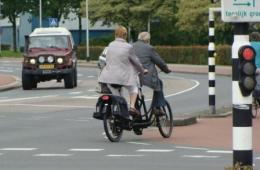
         Elderly                                                    Grandparents     

TandemElderly  Grandparents

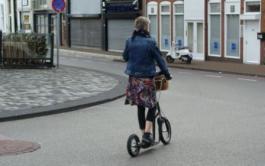
                                              The Mobility Impaired

 MobilityScooter  Tricycle

Those on the School Run                                         

SchoolRun   SchoolAlternative

              Those in a Rush                             Those Getting a Lift from a Friend          

Veloxxx       Backie

                Travellers                                                               Lovers

Luggage          Lovers

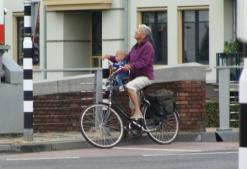
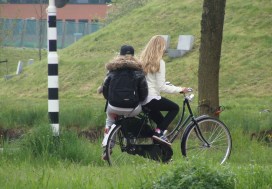
Everyone benefits from high quality cycle facilities. These picture from the Netherlands show high quality cycle facilities attracting a wide cross-section of the population. This same wide cross-section is starting to appear in London with the opening of the high quality superhighways. For the first time, parents feel subjectively safe in cycling  with young children and mobility scooters and skaters have started to appear without causing conflict with pedestrians.

It must not be forgotten that pedestrian too gain from this. Cyclists have a safe place to cycle away from pedestrians. Shopkeepers benefit if people do not have the expense of a second car. Finally motorists benefit – if people have the option of short trips by bicycle, the roads would be freed up for those who have no choice but to travel by car. This is our vision for Maynooth.

Maynooth Cycling Campaign is a non-party political cycling advocacy group. Further information on meetings and  activities is available on our website. We are affiliated to Cyclist.ie, the Irish Cyclist Advocacy Network and through it to the European Cycling Federation.

Stop Climate Chaos

Maynooth Cycling Campaign and Cyclist.ie has joined Stop Climate Chaos – a coalition of civil society organisations campaigning to ensure Ireland plays its part in preventing runaway climate change. Current members include development, environmental, youth and faith based organisations. A full list of members is available here.

Stop Climate Chaos calls for action under four headings:

  • Introduction of a climate change law to reduce greenhouse gas emissions.
  • Limiting the rise in global temperatures to 2 degrees or less.
  • Support for developing countries in adapting to climate change.
  • Ireland’s response to the challenge of Climate Change.

According to Andy Storey reported in the Dublin Inquirer, Ireland is falling behind in its commitments to combat climate change. We are supposed to have cut greenhouse-gas emissions by 20 percent by 2020 (relative to 2005) but the Environmental Protection Agency reckons we will come in with a cut of just 6 percent to 11 percent. It may be even worse than that – last year the rest of the EU cut emissions but Ireland increased them by 5.3 percent.  All this is pointing to Ireland facing E.U. fines of the order of €600 Million per year.