Just a quick reminder that the Maynooth Cycling Campaign AGM will be held in the ICA Hall Leinster Street Maynooth at 8:00pm tomorrow Tuesday 11th November.
The agenda will be as follows:
Attendance/Apologies
Confirmation of Quorum
Presentation of Annual Report
Financial Statement
Elections to Management Committee
Climate Community Fund
Strategy 2026
AOB
If any member would like to join the Management Committee, please let me know in advance of the meeting at maynoothcycling@gmail.com. Everyone welcome.
Is the Railpark housing estate the worst place to live in Maynooth? (Spoiler: It isn’t.) Then why, at a number of public meetings during the summer, did some Maynooth residents imply a feature that is working well in Railpark would mean a host of problems if applied to other areas?
The meetings were called to discuss the impact of proposals in the Maynooth and Environs Local Area Plan 2025-29. The Local Area Plan (LAP) covers a broad range of issues related to the future development of Maynooth. It includes proposals that are designed to contribute to Ireland meeting its commitment to reduce carbon emissions by 50% by 2030. However, many of the discussions focused on pedestrian and cycling permeability – the retrofitting of active travel access through existing adjacent developments, mainly housing estates.
One such proposal linked the Kilcock Road and Crewhill — a new high-density development to the north-west of the town via Maynooth University and the unconnected residential estates of Moyglare Abbey and Moyglare Village.
It was claimed that retrofitting an active travel access would lead to increased anti-social behaviour and increased littering. One attendee quoted an unnamed member of the Garda Síochána who had warned that opening up estates would lead to increased crime. It was claimed that a direct link between Moyglare Abbey and the university would lead to Moyglare Abbey turning into a car park for students. But no such link was even proposed in the LAP. Concerns were also expressed that the openings would be so wide that cars would also be able to use them and that drivers would not see cyclists at a junction due to inadequate sightlines. (For clarity – cars will not be able to use the access points.)
This proposal was designed to provide an alternative to Moyglare Road where, at peak times, there is heavy congestion on crowded footpaths, and many secondary school students cycle on the road instead of an adjacent shared path. At school closing time, traffic queues stretch to nearly a kilometre from the Kilcock Road junction to beyond the GAA clubhouse. It was pointed out that improving permeability would be good for health by reducing air and noise pollution. The high level of traffic congestion would also be reduced, but the mood of the majority who attended the meeting was to oppose the permeability links regardless of any benefits that they might bring.
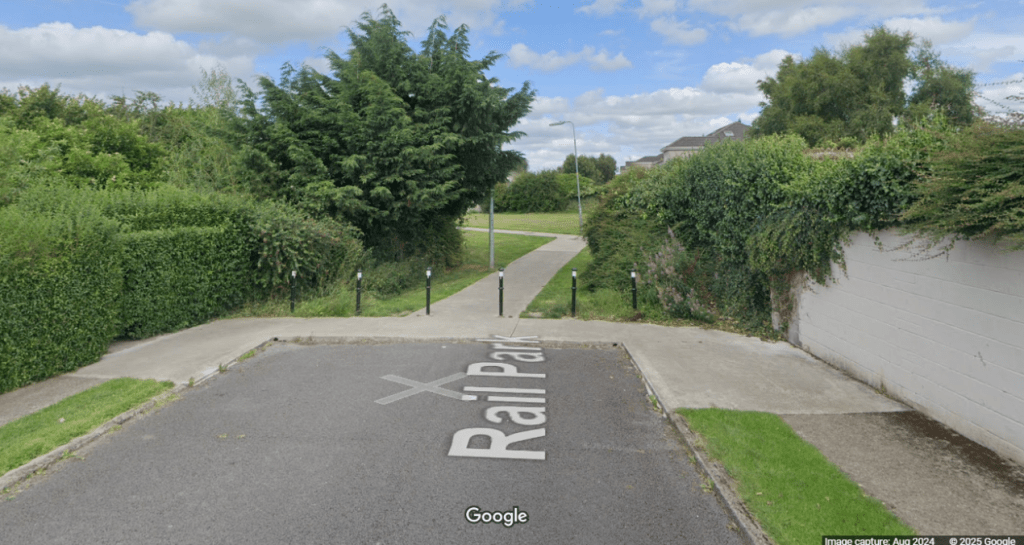
The irony is that Maynooth residents don’t have to go too far to see good examples of active travel permeability. Most of the estates off the Straffan Road are permeable. On the west side, Kingsbry, Beaufield and Greenfield estates are linked. Parson Hall and Ashleigh are also linked. On the east side, Railpark estate is particularly good as it is linked to both Rockfield and Parklands, as well as having a pedestrian link to the Straffan Road.
If the fears expressed by Moyglare residents are valid, Railpark must be the worst place to live in Maynooth. In fact, it is estates like Moyglare Abbey and Moyglare Hall that are badly designed in regard to mobility. So, the LAP presents a rare opportunity to mitigate the poor outcomes of past planning decisions.
Public consultations are an important part of local democracy. However, democracy is not just about the number of submissions for and against a scheme. The proposal to provide greater permeability and increase active travel has implications for climate change and road safety as well as health in Maynooth. This concerns all the people of Maynooth and not just those who reside close to the proposed openings. The provision of permeability links is a very modest proposal to reduce our carbon emissions.
The backdrop to this includes Ireland still recovering from one of its most severe storms that was linked to two deaths, other European countries suffering extreme climate events involving multiple fatalities, and 2024 was confirmed as the warmest year on record globally. It’s also at a time when the consensus between Europe and the USA on climate is under threat like never before.
Given that the addition of a “relatively” small number of people cycling and walking provokes such opposition from people who are opposed to change and happy with the current status quo, then what will happen when people are asked to make major changes to their lifestyle?
In a recent appeal against a refusal for a proposed wind farm in Laois, the High Court stated that “rapid, far-reaching and unprecedented changes to all aspects of society and the economy” and “an immediate end to business as usual” by consenting authorities is required to cut greenhouse gas emissions and ensure planetary survival.
Maynooth University is an important institution in the town. It is one of the Irish universities that is noted for research on climate change and lecturers there collaborate with their international colleagues. It is disappointing that the university authorities did not consider the LAP important enough to make a submission. It is particularly disappointing as the university is also the biggest single generator of traffic in the town.
Ireland was fortunate to rely on expert medical advice during the Covid epidemic rather than on non-experts. Expert advice on the LAP from the university authorities could have reassured a lot of people who are fearful of or opposed to change.
Local councillors are responsible for approving Local Area Plans, and while they have a responsibility to represent the views of the public, they also have a responsibility to show leadership. Central government ministers and their departments primarily fund local government. Central government also sets down national policies so their views cannot be ignored by local government.
Prior to Christmas 2024, in their submission of amendments to the Draft LAP, the Office of the Planning Regulator, which reviews the performance of planning authorities, recommended that all the permeability links deleted by councillors be reinstated. However, on February 17th, at the meeting of the municipal district on the LAP, councillors voted to proceed with deleting 12 of the 34 walking links and 1 of the 3 cycle links that had been proposed to be abandoned.
With only five years until the next local government elections and one year after that to the 2030 target of a 50% reduction in carbon emissions, the decisions of current councils nationwide will decide where Ireland will stand by the key target date. Kildare is just the latest council to demonstrate the disconnect between government policy and the actions of local councillors. Many groups and individuals will be watching to see how this saga plays out.
This article was edited post publishing to correct an error in the numbers of links for abandonment.
The LAP has not yet been finalised. The amended LAP with the removal by councillors of most permeability measures went to public consultation last autumn.. The Chief Executive’s report noted the recommendation of the Planning Regulator to reinstate the measures and recommended that Proposed Material Alteration No. 33 should not be adopted by councillors
Transport is one of the most contentious sections of the LAP. Maynooth University is one of the primary generators of traffic in the town and, at the same time, is involved in research on climate change. It is particularly disappointing that the University authorities failed to make a submission on either the draft or amended Maynooth and Environs LAP.
Climate Change
In January, fierce wildfires in the Los Angeles area of California caused more than 28 deaths and billions of dollars in damages to buildings. Fires are a normal risk to California during the summer months but this is the first time that they have been so serious during the winter season. Meanwhile In Arizona, Phoenix has had no rain since last August and groundwater supplies are so depleted that the state announced that all future housing developments in the desert would have to find some other source of water – either by purchasing or importing their supply. January 2025 also saw Donald Trump sworn in as American president for the second time. Among his first executive orders, one was for the United States to give notice of withdrawal from the Paris Agreement on limiting climate change. We shall see if his policy of “Drill, baby, drill” will end up as “Burn, baby burn”.
Ireland has not escaped weather extremes either – with Storm Eowyn causing one death and nearly 20% of the population being left without power north and south. In the future something that will affect people everywhere is the increased cost of insurance. Insurance companies are facing a greater risk of extreme weather and will require higher premiums to enable higher payouts.
“An Immediate End to Business As Usual“
In a challenge to a decision of An Bord Pleanála to refuse an application for the construction of a proposed wind farm in County Laois, the High Court delivered a judgment quashing the decision and sending it back to the Bord for a fresh determination.
In a decision which will have implication for many future developments, the High Court has stated that “rapid, far-reaching and unprecedented changes to all aspects of society and the economy” and “an immediate end to business as usual” by consenting authorities is required to cut GHG emissions and ensure planetary survival. The Court went on to find that the pattern of refusals of proposed windfarm developments is “sabotaging” the compliance by the State with its national and international climate commitments.
Programme for Government
Maynooth Cycling Campaign congratulates Darragh O’Brien who has been appointed as the new Minister for Transport. However, it is disappointing that the agreed Programme for Government has reduced the focus on active travel which includes cycling and instead has emphasised the construction of new roads.
Road Fatalities
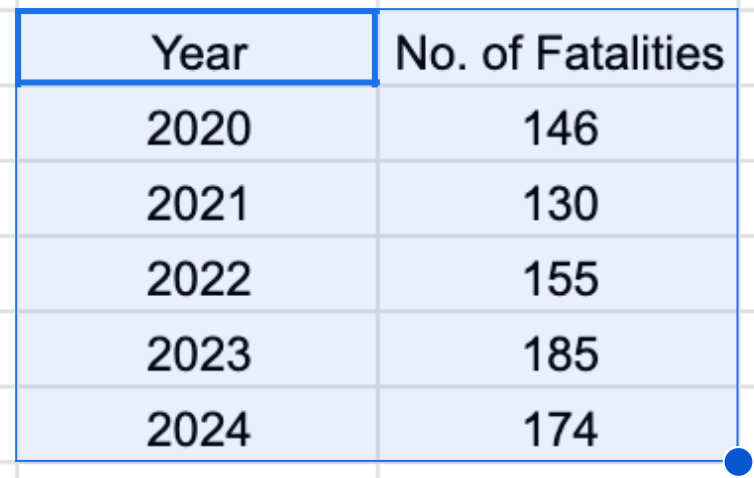
The provisional figures for road fatalities in Ireland in 2024 was 174. Under the RSA definition of road fatalities, this excludes cyclists who die more than two days after the collision or other incident. While the Road Safety Authority has spun this outcome as a 4% reduction, the figure was still the worst since 2016.
In order to reduce the number of fatalities, the government has announced that default speed limits will be reduced on urban and rural roads in 2025, Changes to the default speed limit on rural roads will be reduced from 80 kph to 60 kph on 7th February. It is proposed that the default speed limit in urban roads will be reduced later in the year. Local councillors will still have the power to retain higher speed limits if it is decided to be appropriate.
Cycling Without Age – St Brigid’s Day
This year the government has introduced a new public holiday celebrating the life of St. Brigid’s. As part of the festivities, Maynooth Cycling Campaign has been asked to take part in a Pedal Parade in Sallins on Monday 3rd February at 11:30am which promotes active travel. If you are attending the parade, we hope that you will give a shout to the Maynooth Cycling Without Age trishaw. More details are available here.
Maynooth Cycling Campaign is a non-party independent local lobby group advocating for better cycling infrastructure in Kildare.
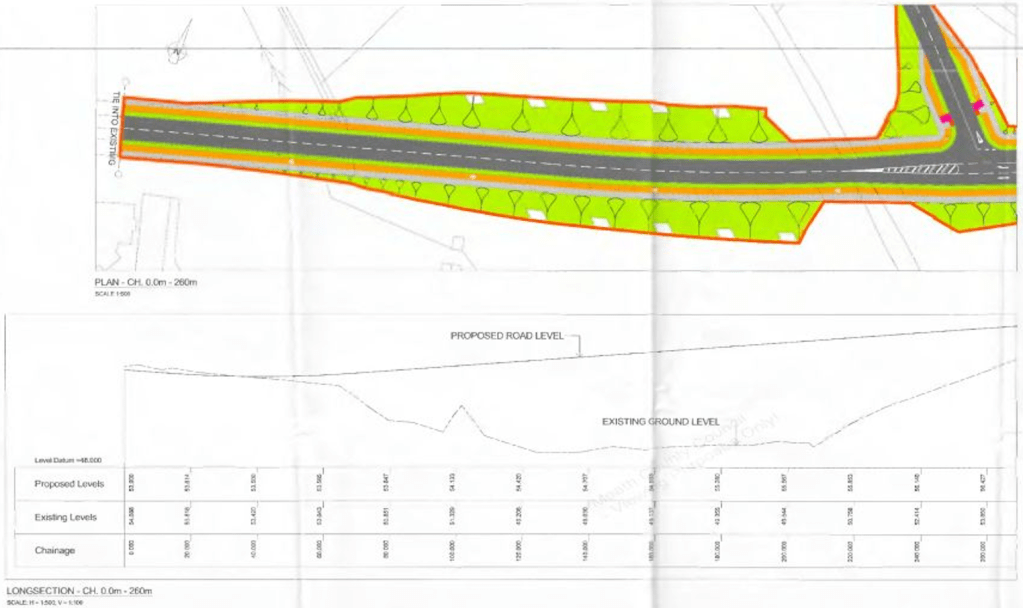
I wish to make the following submission on the proposals for the Meadowbrook Cycle Scheme:
GENERAL
Newtown Road, which links Maynooth town centre to Castle Dawson and other residential estates to the south west of Maynooth, is a narrow regional road with inadequate footpaths and no cycle facilities. While it is outside the area of the proposed works, the proposals fail to address traffic management in the wider Meadowbrook-Newtown area which has implications for the junction radii and the road crossings by vulnerable road users. The Council should bring forward plans for area wide traffic management in conjunction with cycle proposals for the Meadowbrook Road and Beaufield Close.
Any contemporary discussion about the environmental, health and social problems associated with mass car use will inevitably turn to electric vehicles (EVs). Plainly there may be some advantages to their use compared to that of current petrol or diesel (ICE) cars – but how much? More importantly, does the focus on EVs overall hold the potential for being a major diversion from where our concerns should be, rather than their use being some kind of step forward. Will EVs turn out to be a part of the problem rather than its solution?
The big lie of road design is that designs are future proofed to take account of future demand. It is true that they are future proofed but they are future proofed on the assumption that use of private vehicles will increase. They are not future proofed in accordance with government policies to decarbonise transport or on health objectives.
Approximately eight years ago, the Department of Transport, Tourism and Sport (DTTAS) in Ireland developed a suite of papers which led to the Strategic Framework for Investment in Land Transport (SFILT) and in 2015 the Strategic Investment Framework for Land Transport (SIFLT). Both SFILT and SIFLT largely reflected 20th century thinking on investment in transport with a roads first policy. This was despite active travel having been identified as a major contributor to combating obesity and growing concern among public health experts about sedentary lifestyles and the impact on both adults and children. The suite did include a paper on climate change but the paper was published before the 2015 Paris Agreement and the 2018 Citizen’s Assembly report.
In 2016, the DTTAS published the Common Appraisal Framework for Transport Projects and Programmes. Its purpose was
….. to develop a common framework for the appraisal of transport investments that is consistent with the Public Spending Code (PSC) and also elaborates on the Public Spending Code in respect of the appraisal of transport projects and programmes to assist scheme promoters in constructing robust and comparable business cases for submission to Government.
In essence, it set down the parameters for the assessment of road schemes based on the roads orientated SFILT/SIFLT. Needless to say, the Department of Transport, Tourism and Sport (DTTAS) had identified a large number of major road schemes across the country and in 2018 the Common Appraisal Framework was used to justify their inclusion in the National Development Plan.
After the general election in 2020, the new Programme for Government included an unprecedented increase in funding for walking and cycling for which all government parties deserve credit. However, since then there has been pushback by officials and politicians who continue to prioritise roads. The Department of Public Expenditure and Reform published a Review of the National Development Plan (Review to Renew) in which the Strategic Investment Priorities list National Roads as the second priority behind Housing and Sustainable Urban Development, but ahead of Environmentally Sustainable Public Transport in fourth place, Climate Action in eighth place and Education, Health and Childcare in tenth place.
The cross-party Joint Oireachtas Committee on Transport adopted a similar line. The Committee claims to accept the objective of decarbonisation of transport to meet national targets and/or that the carbon impact of projects should form part of project appraisal. However, in a submission to Review to Renew, the Chair of the Committee, Kieran O’Donnell T.D., listed the priorities as
(i) The national road network,
(ii) Environmentally sustainable public transport and
(iii) Airports and ports.
The Committee claims that the national road network is the key to regional connectivity, not only for motorised vehicles, but also for cyclists. (Only the 1% of cyclists “brave cyclists” would agree with that statement.)
The Committee also expressed concern that the current Minister for Transport had revised SIFLT and that the revision, now called the National Investment Framework for Land Transport in Ireland (NIFTI) was already being used to assess projects. The Committee welcomed the commitment from the Minister that the NIFTI will go to public consultation and will be approved by the government before finalisation of the Review to Renew but it put down a marker that it intends to engage further with the Minister and his Department on this strategy.
In planning future transport needs, two key steps are the use of databases to estimate current car trip generation and the extension of car trip generation to future decades. In plain English, this means estimating how many trips will result from a proposed development in the current year and how many additional trips will result in the future, typically a period of twenty or thirty years.
Irish engineers generally use a largely UK database such as TRICs to predict the number of journeys generated by private vehicles. However, the result of Ireland emulating a country with one of the highest car dependency rates in Europe (rather than a country such as the Netherlands with one of the lowest), reinforces the status quo and in Ireland in the last twenty years has contributed to flatlining in the proportion of people cycling nationally.
TII sets out the calculation of future demand on national roads for the next 30 years in its Project Appraisal Guidelines for National Roads Unit 5.3 – Travel Demand Projections. As it specifies a growth rate in future years of between 1% and 3% per annum depending on the county and assumed growth rate, TII are in theory designing roads on the basis of up to 90% more trips in 2051 than at present. In recent years, the TII has published National Road Indicators annually which report the actual growth of traffic on the national road network. The results are shown in Table 1:
Year
2015
2016
2017
2018
2019
Annual Growth
4.1%
4.6%
3.0%
0.5%
2.5%
Table 1: Annual Growth of Traffic on the National Road Network
So between 2015 and 2019, the actual annual growth of traffic on national roads is even greater than the TII’s highest prediction with some regions of the country experiencing rates in excess of 5% per annum. This gives rise to questions about the sustainability and cost benefit analysis of current road plans.
Phil Goodwin is emeritus professor of transport policy at a number of UK universities and some twenty years ago was one of the first academics to report on the phenomenon of “evaporating” or “disappearing traffic“. In an article last year on the appraisal of road schemes,he challenged the cost of carbon used in the cost benefit analysis of new roads and how the increase of carbon emissions from cars using new roads is minimised by comparison to the percentage of overall carbon emissions. This is in contrast with employment, where additional employment, whether for 10 or 1000 new jobs, is welcomed as a positive thing rather than comparing the increase as a percentage of overall employment levels. In response to the largest ever road building programme in the UK, he wrote
The new decarbonisation strategy requires that we will use cars less, by a substantial amount.
A similar reduction is required in Ireland. The Appraisal Guidelines refers to four scenarios – Sustainable & Urban Communities, Global Communities, Dispersed Communities and Car focussed Communities but it appears that local authorities, which are responsible for planning transport infrastructure only concentrate on the last scenario – Car Focussed Communities – in developing their Transport Strategies.
Neither the Department of Transport nor the Joint Oireachtas Committee on Transport acknowledges in a meaningful way the central role of transport in creating unhealthy communities and the financial burden it imposes on society. If this government is to be successful, the current road projects in the National Development Plan must be reviewed with revised appraisals and realistic models to ensure that future investment is in accordance with current government objectives rather than ones that belong in the past.
(A default limit does not prevent a different limit being introduced)
Maynooth Cycling Campaign joins Love 30, The Campaign for Lower Speed Limits, in calling on the Oireachtas to provide for a default urban speed limit of 30 km/h in the forthcoming Road Traffic (Miscellaneous Provisions) Bill.
Ireland was a signatory in February 2020 of the Stockholm Declaration of the Third Global Ministerial Conference on Road Safety, which was subsequently endorsed by the General Assembly of the United Nations. Paragraph 11 committed to:
“mandate a maximum road travel speed of 30 km/h in areas where vulnerable road users and vehicles mix in a frequent and planned manner, except where strong evidence exists that higher speeds are safe, noting that efforts to reduce speed in general will have a beneficial impact on air quality and climate change as well as being vital to reduce road traffic deaths and injuries;”
Love 30 calls on the Minister for Transport, Eamon Ryan, and on the Minister of State at the Department of Transport, Hildegarde Naughton, to fulfil the commitment in the Stockholm Declaration by including provision for a default speed limit of 30 km/h in built-up areas.
It will then be for councils to decide which roads should have a different speed limit. A default limit does not prevent a higher limit being introduced where it is deemed necessary and safe, but the ultimate benefit of a low speed limit would be a cleaner environment and improved safety for people walking and cycling while also protecting our right to health and wellbeing. 30 km/h speed limits have long been recognised for the safety benefits they offer and in addition can assist in reducing noise and emissions and can help to make our towns and cities more pleasant places to live, work and play.
Many cities including London (20 mph), Brussels, Milan, Santander, Bilbao, Paris, Washington DC (20 mph), Boulder (Colorado, 20 mph), Wellington, have introduced widespread 30 km/h limits. Several countries are introducing default 30 km/h speed limits in all urban areas including Netherlands, Spain, and Wales (20 mph). Some locations have speed limits as low as 10 km/h. Love 30 believes that Ireland should follow this best international practice and legislate for a default 30 km/h limit in built-up areas.
Joan Swift of Love 30 Sligo said: “Ireland needs to move quickly to implement the Stockholm Declaration and introduce default 30 km/h speed limits in all built-up areas. We have fallen behind our UK and EU neighbours where 30 km/h is increasingly becoming the norm in town centres and in residential areas. The Welsh Parliament has voted for a 20-mph default urban speed limit and more than a hundred French cities have introduced default 30 km/h limits.”
Mairéad Forsythe of Love 30 Dublin said: “We need 30 km/h speed limits on our residential roads, outside our schools and in the centres of our cities, towns, and villages so that people can move about more safely and enjoy a more people-friendly space. This is more important than ever during COVID-19 restrictions when there has been a surge in the number of people moving about outdoors on foot and by bicycle”
Who are we? Love 30 is an alliance of organisations and individuals who support the concept of lower speed limits in urban areas. We are campaigning for the introduction of more 30 km/h zones in urban areas, but particularly in town centres, residential areas, and near schools and other places of public assembly. You can find more information at www.love30.ie or contact us at info@love30.ie .
Maynooth has finally seen Kildare County Council’s Transportation Department react to the Covid-19 health emergency with works on the Dublin Road, Mill Street and Laurence’s Avenue
Although the Dublin Road work s limited, Maynooth Cycling Campaign welcomes the pop-up cycle lane which has appeared on part of one side of the road. While it will not attract many more cyclists, it will give more space to pedestrians and reduce the risk of a collision between cyclists and motorised vehicles – at least when they are travelling towards Carton Park Shopping Centre.
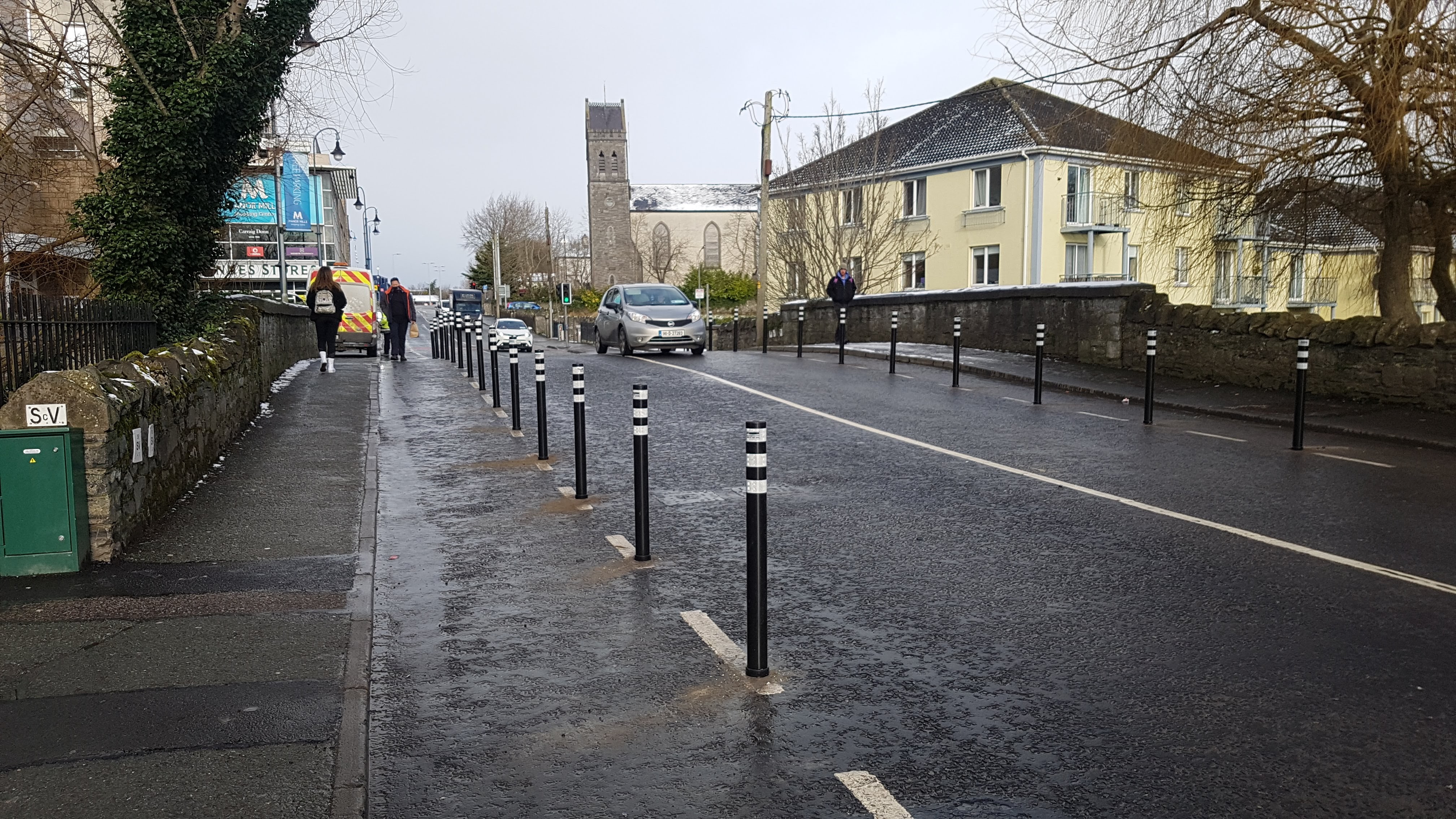
Bollards have also appeared on Mill Street to form a pop-up footpath at the Rye Bridge on Mill Street on space which had formerly been allocated for cycling. Several cyclists thought that it was a pop-up cycle lane. They were astonished to learn that the space was to be reallocated from cyclists to pedestrians and that cyclists were expected to move out to the traffic lane and “share the road” with cars. Most other councils are improving conditions for pedestrians AND cyclists, rather than pedestrians OR cyclists. Legibility is an important aspect of road safety. Legibility means that road users can “read” where they are supposed to go – be they pedestrians, cyclists or drivers. While he changes was intended to benefit pedestrians, it is doubtful that many cyclists will swing out into the traffic lane.
When the work was announced as part of the July Stimulus, a requirement was for the work to be completed before the end of November but was only carried out in February. Thankfully Kildare’s Fire Service is more responsive to an emergency than the Transportation Dept.




 Maynooth Cycling Campaign