Greyways – An Irish Solution to an Irish Problem

A Greyway?

It is with some concern that that we read about “Greyways” in the details of the government’s July Stimulus package. We googled “Greyways” and found no reference to Greyways pertaining to cycle infrastructure. There is also no reference to Greyways in the National Cycle Manual, the Design Manual for Urban Road and Streets or Rural Cycleway Design. So it appears to be yet another Irish solution to an Irish problem. Lack of quality cycle infrastructure is not an Irish problem – it is a world wide problem in many if not most countries.

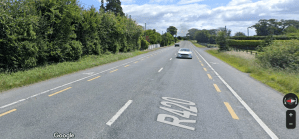
Converting hard shoulders to cycle infrastructure is not a recent idea. Back in 2012-13, the Department of Transport funded a number of such schemes. An example was the R420 between Tullamore and Clara in Offaly.

As far as I am aware, one of the requirements for the scheme was that local councils had to include counters to measure the effectiveness of the scheme but there appears to never have been any publication of the results. Nevertheless, although there was no official announcement of its failure, the initiative was soon abandoned and the Department made clear that they were not going to fund such infrastructure in the future.

The July Stimulus package claims:

             “This would provide better and safer cycle facilities, between towns and villages,         facilitate modal shift and also help to reduce vehicle speeds because of reduced    carriageway widths. “

The addition of cycle logos has been proven not to protect vulnerable road users. While such hard shoulders are used by road cyclists, most people perceive them not to be safer especially where the speed limit is 80 or 100 km/hr?  They also do nothing to facilitate modal shift. They may help to reduce vehicle speeds of the majority of drivers but what is the evidence that they reduce the vehicle speed of the fastest drivers? We may be premature in jumping to conclusions about the quality of proposed infrastructure but we will wait and see.

Model for Cycling in Rural Ireland now needs Cash Injection

Clon Bikes

Today, Clonakilty is best known for its black pudding and its characteristic Irish architecture. It possesses no greenways or cycle lanes but despite this, the people of Clonakilty have come together as a community to promote cycling in a way that would put to shame government supported SmarterTravel towns such as Westport or Dungarvan. It holds an annual Bike Festival (just over) which went global this year. It has its own community bike workshop ‘The Bike Circus’ which also runs an active apprenticeship program. The town has a chapter of Cycling without Age/Wind in Your Hair and has its own Trio E-bike which they use to bring out elderly and sick from hospital or nursing homes. The most remarkable aspect of the cycling culture of the town, however, is that they have their own bike share with almost no financial assistance from Cork County Council or the Department of Transport, Tourism and Sport.

Tom O’Donovan of O’Donovan’s Hotel was one of the founders who established the Clonakilty Bike Share 6 years ago with some 60 bikes. He recalls that Cork County Council refused to give them public space for bike hubs so a number of hotels offered a section of their car parking area. With contributions from the hotels and private local sponsors and a small financial contribution from government bodies, they purchased bicycles, paid for parking racks and developed a website through which people could book and pay for renting. Most of the work was carried out by community volunteers so any money raised from renting was reinvested in the scheme. While the bike scheme originated in Clonakilty, it soon spread out to hotels in a number of locations across West Cork as far as Courtmacsherry and Rosscarbery. The scheme allowed users to stay overnight in different places and ensured that more money was retained in the local community than from individual day trippers.

Clonakilty also procured funding to erect directional signage designating a number of nearby cycling routes along quiet roads. Although funding has been available from late 2018 the County Council Area Engineer refuses to erect the signage as he is concerned about the legal consequences to Cork County Council of encouraging cycling on quiet roads. (Apparently, he has no concerns about the consequences to the Council of cyclists travelling on heavily trafficked national or regional roads). The Area Engineer and his Senior Engineer, want an independent safety assessor to tell them that it is safe before they agree to erect the signage. If they have such doubts about the safety of the roads, it is potentially negligent for them not to alert the public in general and cyclists in particular as to the nature of hazard and the risks of exposure.

The Clonakilty bike share was already facing increased maintenance costs due to an ageing fleet of bikes. Now, the rising cost of insurance is the straw that breaks the camel’s back and Clonakilty has been forced to shelve its bike share. Clonakilty is a model for a small community based cycling town. At a time when

(1)  A new Programme for Government prioritising cycling has been agreed
(2)  Over €1 million has been invested in bike share schemes in Cork, Limerick and Galway
(3)  Due to Covid-19, the health authorities urge people to walk or cycle where possible,
4)  The NTA are offering funding to encourage active travel and
5)  Cork City proposes to expand its bike share,

it is ironic that the Clonakilty bike share would be allowed to fail. While West Cork politicians have been vocal in their support, Clonakilty has received almost no state funding. Clonakilty’s most famous cyclist is of course Michael Collins who was born nearby. Looking down from heaven (or up from the other place if that is your politics), what must he think of Cork County Council and current councillors.

Programme for Government 2020

PfG 2020

This is Maynooth Cycling Campaign’s response to the section of the Programme for Government which impacts on cycling. It is divided into five parts.

1.   Financial Commitment
The Government will commit to an allocation of 10% of the total transport capital budget for cycling projects and an allocation of 10% of the total capital budget for pedestrian infrastructure. The Government’s commitment to cycling and pedestrian projects will be set at 20% of the 2020 capital budget (€360 million) per year for the lifetime of the Government.

The total spend on walking and cycling infrastructure includes committed funding from the Department of Transport, Tourism and Sport for active travel, greenways and an agreed pedestrian and cycling allocation from the Bus Connects programme.
Additional funding to meet the annual ceiling will be provided through the Recovery Fund, with a focus on jobs-intensive infrastructure. 


The first sentence is straight forward, clear and unambiguous except for the reference to the total transport capital budget rather than the Land Transport capital budget. The former includes investment in other areas such as marine, civil aviation and tourism – it would seem unfair to impact on them but it is thought that this was just a minor error in the text. The second sentence sets the financial commitment at €360 Million per year for the lifetime of the next government ie 20% of the 2020 budget allocation. Cyclist.ie was looking for a straight percentage which would increase if overall capital expenditure went up and would go down if overall capital expenditure was reduced. The one area of possible concern is what percentage of Bus Connect will apply to cycling. Bus Connect has the potential to swallow up a lot of the funding intended for cycling depending on motives.

2.    We will:

        • Expand and enhance the expertise on active travel needed to dramatically improve infrastructure and participation both in the NTA and local authorities, including by establishing Regional Cycle Design Offices, co-located in the seven Regional Design Offices for roads, to support local authorities.
        • Dramatically increase the number of children walking and cycling to primary and secondary school by mandating the Department of Transport to work with schools across Ireland, local authorities, the Green- Schools programme and local initiatives, including Cycle Bus and School Streets.
        • Widen the eligibility of the Bike to Work scheme. We will provide an increased proportionate allowance for e-bikes and cargo bikes.
        • Ramp up the Cycle Right programme to ensure that all children are offered cycling training in primary school.
        • Conduct a review of road traffic policy and legislation to prioritise the safety of walking and cycling.
        • Conduct a review of road traffic policy and legislation to prioritise the safety of walking and cycling.

While the additional measures listed do not specify any particular commitment or targets, they are all measures that cyclist campaigners would welcome. Linking the implementation of cycle network plans to a suitably qualified Cycling Officer with clear powers and roles is a major advance. In the 2009 National Cycling Policy Framework, the only task of the Cycling Officer was to set up a Cycle Forum in a local authority. The reference indicates movement towards Cyclist.ie policy, namely that the appropriate level for a Cycling Officer is Director of Services. The emphasis on travel to school and school streets is also warmly welcomed. Travel to school is important as it ingrains good behaviour at a young age. The promotion of Cycle Buses is a little surprising as Cycle Buses are a short term reaction to the absence of quality infrastructure and it is hoped that Cycle Buses will have a short life. Cyclist.ie has long campaigned for increased support for the purchase of E-bikes and cargo bikes, comparable to the support for the purchase of E-cars. A review of road traffic policy and legislation to prioritise the safety of walking and cycling suggests that the issue of enforcement may finally be addressed.

3.   Greenways
We will lead the development of an integrated national greenways strategy. This has the potential to transform modal shift and improve air quality and public health.
This commitment to cycling will enable us to achieve the huge ambition of developing an integrated national network of greenways to be used by commuters, leisure cyclists and tourists. We will continue the coordinated approach between central government, local authorities, and agencies to deliver on this ambition.


The reference to a national greenways strategy is welcome as in recent years the DTTAS had moved away from references to a “national” network. The Programme states that a national greenway strategy has the potential to transform modal shift and improve air quality and public health. In theory, this is correct but in practice, conditions imposed by local authorities and by bodies such as Waterways Ireland on widths, surfacing, lack of lighting and access have the effect of suppressing demand by both utility and recreational cyclists. Furthermore, to transform modal split, provision for cycling will be required between proposed greenways and adjacent towns and villages. In the past, proposed greenways have excluded such links.

4.   Transport Infrastructure
In relation to new transport infrastructure, the Government is committed to a 2:1 ratio of expenditure between new public transport infrastructure and new roads over its lifetime. This ratio will be maintained in each Budget by the Government. In the event of an underspend on roads, this will not impact on public transport spending.
Essential road and public transport maintenance and upkeep budgets will be fully protected to ensure continued public safety and connectivity.
We will develop and implement the existing strategies for our cities, such as the Greater Dublin Area Transport Strategy, the Galway Transport Strategy, the draft Cork Metropolitan Area Transport Strategy, as well as strategies being developed for Waterford and Limerick, and other projects progressing through planning.
We are committed to maintaining the existing road network to a high standard and funding safety improvements.
We will continue to invest in new roads infrastructure to ensure that all parts of Ireland are connected to each other.


The commitment to rebalance transport investment to 2:1 between public transport and roads is warmly welcomed. It is unclear what the sentence “In the event of an underspend on roads, this will not impact on public transport spending” means as there is unlikely to be any underspend on roads. If it merely means that underspend on roads will not be transferred to public transport and active travel, that is reasonable as long as underspend on public transport and active travel will not be transferred to roads, once investment on active travel has been ramped up to the levels agreed.

It is right and proper that essential road and public transport maintenance and upkeep budgets will be protected. However, as the cost of essential maintenance is questionable, it will require close examination to ensure that essential road maintenance budgets are not suddenly inflated. Old habits die hard and one of the big challenges for the new Ministers will be to ensure that their Department is singing off the one hymn sheet!
The undertaking to develop the existing transport strategies in Cork, Galway and Limerick will be warmly welcomed by our colleagues in the regional cities as the current transport strategies are based on negligible increases in levels of cycling. This clause has the potential to enable the cities to develop systems fit for the 21st century with walking and cycling at the heart of their transport strategies.

5.   Carry out a comprehensive review of PPNs and LECPs, to ensure that they are fit for purpose for climate action and community development

This final clause is generally overlooked by cycling advocates as it is not centrally concerned with cycling per se but it also has great potential to focus on local authorities which are “half-hearted” in their enthusiasm for public participation.

Conclusion

The Programme for Government has been described as like a visit from Santa. we would hope that it will work out that way. However, we recall a union leader who promised his members that a government pay award would be like “getting money from a cash dispenser” but things did not quite turn out as thought. While the Programme holds out great potential for Ireland being a leader rather than a laggard in cycling and walking, we stopped believing in Santa a long time ago. We wish the new Transport Ministers, senior and junior well and look forward to working closely with them in the future.
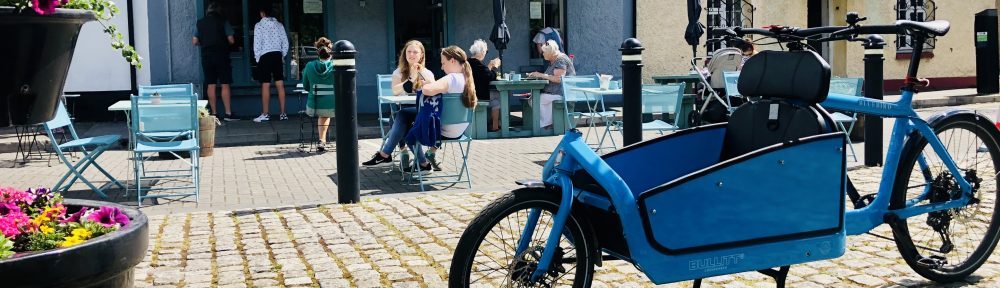
Cyclist.ie wishes Eamon Ryan TD, the new Minister for Climate Action, Communication Networks and Transport, the very best in his new role.

Eamon Ryan

Minister Ryan’s appointment comes on the back of the inclusion of some very progressive sustainable transport commitments in the agreed Programme for Government (PfG), especially in regard to cycling and walking. On funding, the new government has committed to:

… an allocation of 10% of the total transport capital budget for cycling projects and an allocation of 10% of the total capital budget for pedestrian infrastructure. The Government’s commitment to cycling and pedestrian projects will be set at 20% of the 2020 capital budget (€360 million) per year for the lifetime of the Government. (p13)

This is potentially game-changing when one considers that the spend on cycling in 2018 was just €12.64 million (or less than 2% of the transport budget) – see Cyclist.ie Pre-Budget Submission 2020. It opens up the feasibility of funding high quality cycling infrastructure in all of our cities and towns, and providing greenway infrastructure connecting into the heart of our built-up areas, and schools, sports grounds, shops and other destinations.

The new emphasis on cycling and walking in the PfG comes at a time when the Department of Transport, Tourism and Sport (DTTAS) – as it was called up until a few days ago – is preparing a new Sustainable Mobility Policy (SMP). Cyclist.ie responded to the public consultation on the SMP early in 2020 – see Submissions on New Sustainable Mobility Policy – and we are awaiting the Department’s analysis of the submissions received. It is timely for a new Minister with a low carbon vision of mobility to take office when a new plan is being drafted.

The other point to highlight is the need for the new Minister to create the structures to enable several government departments, a handful of state agencies, and all 31 local authorities (LAs) to be aligned in their policies around walking and cycling promotion. One of the failings in the implementation of the ambitious 2009 National Cycle Policy Framework (NCPF) was the inaction on ensuring good coordination and cooperation between all bodies.

It is essential that Minister Ryan makes sure there is strong alignment between the key departments of Health (Minister Stephen Donnelly), Housing, Local Government and Heritage (Minister Darragh O’Brien), Education (Minister Norma Foley), Social Protection, Community and Rural Development and the Islands (Minister Heather Humphreys), and Children, Disability, Equality and Integration (Minister Roderic O’Gorman) so that a new culture of active travel can emerge, and become part of everyday life in Ireland. Additionally, local authorities are crucial actors because they will be responsible for so much of the change, but their expertise on cycling development varies from strong to weak.

The changes are already underway with COVID-19 prompting local authorities to reallocate space for people on foot and bikes – see for example Dublin City Covid Mobility Programme. This process is being facilitated by funding from the National Transport Authority and by an update to DMURS (the Design Manual for Urban Roads and Streets) entitled Interim Advice Note COVID-19 Pandemic Response.

The opportunity to be seized by the Minister now is to harness the public appetite for change and lead the way in transforming our cities and towns into the healthy, convivial and economically vibrant places they need to be.

We wish the Minister the very best of luck.

(This article previously appeared on the Cyclist.ie website.)

PRESS RELEASE Cyclist.ie Welcomes the Programme for Government Commitment to Active Travel

Cyclist.ie, the Irish Cycling Advocacy Network, has been calling for a revolution in the funding of cycling and walking for many years. We are seeking a 10% allocation for cycling from our government’s transport budgets.

We are delighted to see that the initial figures emerging from the government formation talks appear to have recognised this urgent need to invest in ‘active travel’ (walking and cycling) by allocating €360 million per annum towards cycling and walking schemes [1]. Cyclist.ie welcomes this commitment.

Cyclist.ie has consistently highlighted the multiple benefits of investing in cycling – across economic, societal and environmental headings. On the public health side, regular cycling for everyday journeys builds exercise into our busy lives and it can be easier to maintain compared to recreational physical activity. Economically, each kilometre driven by a car incurs an external cost of €0.11, whereas cycling and walking bring benefits of €0.18 and €0.37 per kilometre, respectively (see New study reveals the social benefits of cycling and walking in the EU). On the emissions reduction front and responding to the Paris Climate Agreement, cycling and walking are an essential part of the solution in decarbonising our mobility system and hence are a critical part of the overall transport mix. This has been recognised in many progressive countries in North West Europe since the mid 1970s.

It is estimated that spending on cycling currently amounts to less than 2% of transport capital spending, as shown in Cyclist.ie’s 2020 Budget submission. Meanwhile the Third Report and Recommendations of the Citizens’ Assembly, the Joint Oireachtas Committee on Climate Action [https://data.oireachtas.ie/ie/oireachtas/committee/dail/32/joint_committee_on_climate_action/reports/2019/2019-03-28_report-climate-change-a-cross-party-consensus-for-action_en.pdf] and the 2019 Climate Action Plan all endorsed the spending of 10% of the transport budget on cycling.

Our expectations are that this funding will be spent on high quality cycling infrastructure in our towns and cities so that we can grow cycling to levels common in many continental countries. We also urgently need to redress the gender balance in cycling (currently only 27% of all persons commuting are female, as per Census 2016 data). As Dr. Damien Ó Tuama, National Cycling Coordinator with Cyclist.ie summed it up, “we need to renormalise cycling to the shops, to school, to work and for other daily activities”.


Kissing Gates – Time to Kiss Them Goodbye

Since the lockdown in mid-March, one of the key messages from government has been the need for social distancing.  People were advised to keep a minimum of 2m away from others. The #ChangeOurStreet campaign started in reaction to lack of space for walking and cycling in many of our urban areas. With good weather and time on their hands, there has been a huge increase in the number of people walking and cycling.

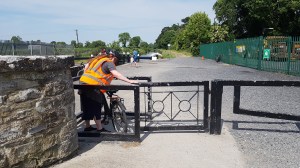
Photo 1: Kissing Gate at Killmacreddock, near Leixlip

In north Kildare, people are drawn to the the Royal Canal Greenway to exercise. However, kissing gates control access to the greenway at a number of locations. A kissing gate consists of a semi-circular, square or V-shaped enclosure on one side and a hinged gate that swings between two shutting posts, it allows one person at a time to pass through but keeps livestock out. The name derives from the fact that the hinged part touches – or ‘kisses’ – both sides of the enclosure rather than being securely latched like a normal gate. That hasn’t stopped many clinging to a more romantic notion: that the first person to pass through would have to close the gate to the next person, providing an opportune moment to demand a kiss in return for entry.


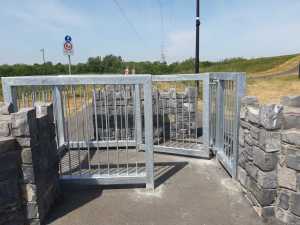
Photo 2: New Kissing Gate at Dodder Greenway, Firhouse Road, Tallaght 

Whatever the origin of the name, kissing gates are not in accordance with Rural Cycleway Design, the Irish design standard. They prevent or make passage difficult for many cyclists  with non-standard bikes such as  tag-alongs, trishaws, cargo bikes and bikes with panniers from accessing greenways and parks. However, this has not prevented local authorities or Waterways Ireland from approving their use.

In the post-Corona world, they are a cause for concern as kissing gates cannot be used without moving the gate by hand. As a result, one infected person could spread the virus to several hundred. It is regrettable that in the past local authorities including Kildare County Council installed such features. It is even worse that in recent days South Dublin County Council has installed one at the entrance to the Dodder Greenway in Tallaght.  It gave the excuse that there was a  need to stop scrambler motor bikes and that the decision was taken earlier in the year. You would think that someone in local authorities would assess the risk from kissing gates, kiss them goodbye and install bollards in their place.


Press Release – Provide Safe Space for Pedestrians and Cyclists during the Current Crisis

The Irish Pedestrian Network and Cyclist.ie call on the national government to provide safe, usable space across the country for people to shop, exercise and commute by walking and cycling during the Covid-19 crisis as a matter of urgency.

While current lock-down restrictions are in place until May 5th, the Minister for Health Simon Harris has stated that social distancing measures may stay in place to some degree until a coronavirus vaccine has been found. A substantial percentage of Irish people shop on foot or by cycling, and physical exercise is vitally important to both physical and mental health.

The Irish Pedestrian Network and Cyclist.ie propose that while motor traffic is reduced, space on streets must be reallocated to walking, running, cycling and playing to ensure safe social distancing within communities – a reallocation that is already taking place internationally.

Speaking for the Irish Pedestrian Network Ailish Drake says, “The New Zealand government has empowered local communities to create more social distancing space by providing 90% funding for new footpaths and widen existing ones, and to create pop-up bike lanes. These measures can be put in place in a matter of hours or a few days using paint, blocks or planters.”

Damien Ó Tuama spokesperson for Cyclist.ie, the Irish Cycling Advocacy Network, says,
“Over sixty towns and cities worldwide, in recognition of this new reality, have quickly installed low-cost temporary measures by using cones to widen footpaths and repurposing full vehicle lanes to cycle lanes. Dublin has now joined Berlin, Washington DC and London in reallocating road space to ensure safer social distancing is possible. We want other councils to do the same.”

The Irish Pedestrian Network and Cyclist.ie welcome efforts by many local Councillors and TDs in seeking additional space for social distancing across Irish cities and in particular the progress made in Dublin where Dublin City Council will begin implementing emergency distancing measures from Monday 20th April.

The IPN and Cyclist.ie now call on the government to implement a nationwide program as follows:

      1.   Make social distancing easier for those walking or cycling to shops or essential work
       2.   Automated pedestrian crossings so people do not have to manually press signal buttons.
       3.   Introduction of a default speed limit of 30km/h on all urban and suburban streets
       4.   A proportionate reallocation of road space to pedestrians and cyclists, to make walking and cycling safer for those who are exercising within their 2km zone, especially those with prams or wheelchairs
       5.   Local authorities to prioritise temporary widening of footpaths, pop-up cycle lanes, quietways in cities and/or closing road lanes and specific streets to motor traffic (for example: by the temporary application of DMURS standards to existing streets)
       6.   New space to be allocated fairly and with consideration of universal needs across city centre, suburbs, towns and villages to avoid people ‘flocking’ to centralised areas
       7.   Dedicated teams in each local authority to enable local residents and interested groups to plan and design temporary footpaths and cycle lanes in their locality
       8.   Rapid implementation of said routes with a design strategy to clearly indicate new routes to users and motorists.

Orla Burke, spokesperson for Pedestrian Cork explains, “Families in Cork, denied the opportunity to drive to their favourite walking spots, are coming face-to-face with the poor provision for walking in their immediate neighbourhoods. Quick wins are available to our councils but this requires thoughtful leadership. This could be a time for simple yet effective improvements to facilitate walking. We call on our local authorities to rise to the challenge of Covid-19 make our streets safe for all.”

Anne Cronin of Cycle Bus Limerick added, “For children that live in the city or suburbs, jumping on their bike with a parent, is their only way to connect with a space outside of their home. Many children are forced to cycle on the road as opposed to the footpath and therefore are at risk without segregation. The increase in the numbers of children cycling in our city is remarkable at the moment and children should be protected and supported to remain doing so.”

Ailish Drake added that “these temporary actions in response to the Covid-19 emergency, would be strategic in creating a positive culture change to make our towns and cities more liveable and contributing to a much needed boost in footfall required to aid the economic recovery when we move beyond the current crisis. This is in line with current government policy for both urban and rural regeneration development funds (URDF & RRDF).”

END


The Irish Pedestrian Network is a national advocacy group working to deliver a public realm that is inclusive and ambitious for all. The Network has rapidly grown since its foundation in 2019, and now has affiliated groups in Dublin, Limerick and Cork. Twitter @IrishPedestrian

Maynooth Cycling Campaign is a member of Cyclist.ie, the Irish Cycling Advocacy Network.


Is it Time to Support Health Services People by Reducing Speed Limits

Professor John Crown has called for lowered speed limits during this COVID-19 emergency via social media (Twitter, Mar 20). On behalf of people who walk and cycle every day, we back him 100%. As he said, soon our Emergency Departments will likely be busy enough.

Frontline healthcare professionals have to self-isolate outside of work, both to protect themselves and us. Many are choosing alternatives to public transport to get to and from work. Cycling provides social distancing, daily exercise, and mental health benefits; all of which our doctors, nurses, carers, porters, and cleaners need.

Empty streets mean people are staying home. But we are deeply concerned by countrywide reports of people driving faster and ignoring speed limits. They are putting people walking and cycling at risk of being patients in our EDs.

The research is stark: collisions at 50km/h are five times more likely to be fatal than at 30km/h.

As Prof Crown says, we need lower speed limits, now.

Party Rankings on Cycling Policies – Check Them Out!

We are urging all cyclists to get out and vote on Saturday for the

political parties that have promised to make a difference for everyday

cyclists. Check out our comparative ratings of the political party

manifestos above, and think about how you cast your vote! These

ratings are based simply on what the various parties have outlined in

their manifestos in relation to proposed investment and policies to

grow cycling in Ireland. **YOU BIKE – YOU VOTE!**

Matrix