Cyclist.ie has stated that it is broadly welcomes the recently announced €88m stimulus funding for active travel. If Cyclist.ie welcomes the funding, it should give credit to the Minister where credit is due. As Cyclist.ie did not name the Minister responsible, this article will name him – so thank you Minister Shane Ross, or rather former Minister Ross. The announcement of 2020 funding was made in October 2019 by the then Minister Shane Ross. Yes, he may have got mixed up over the details of the funding of cycling, but he is responsible for the funding allocation.
Cyclist.ie states that cycling campaigners around the country need to try to ensure that the monies are spent wisely by the local authorities as there are a number of listed projects that are of dubious benefit to cyclists and pedestrians. It does not explain how the campaigners are supposed to do this considering that most local authorities have no Cycle Forums and a lot of the proposed schemes will have no drawings to examine. Cyclist.ie states that there are number of dubious projects but gives no indication if it is a big number or small number.
In relation to cycling schemes, the current Minister invited local authorities to submit proposals for active travel schemes with the result that in most local authorities, schemes were proposed by road engineers. Cyclist.ie did urge caution but it is unclear exactly who should be cautious – cyclists, the Minister, local authorities? Cyclist.ie is on record as being in favour of the re-education of road engineers. It is contradictory if on the one hand, Cyclist.ie want road engineers to be re-educated and on the other hand it welcomes their proposals for expenditure of €88 million which includes dubious schemes. In Kildare, a number of the proposed cycle schemes actually worsen conditions for cyclists.
In South Dublin, Kildare, Meath and Wicklow, local authorities have minimal allocations for cycling, with most funds being spent on pedestrian improvements such as footpaths and crossings. This confirms the necessity of Cyclist.ie to continue to monitor the expenditure on walking and cycling separately. It is too easy for councils to combine the two modes and allocate significantly more for walking than cycling schemes as the latter are much more controversial.
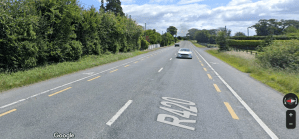
Cyclist.ie did criticise the proposal on greyways. The attempt to convert hard shoulders to cycling infrastructure was tried five or six years ago and was soon abandoned – presumably on the grounds that they did nothing to increase the level of cycling. In 2020, the idea was revived with no less than seven counties proposing greyways. Now you can believe that it was random chance that seven counties happened to think of the concept of hard shoulder conversion at the same time. An alternative more realistic explanation is that officials in the Department of Transport were behind the idea of hard shoulder conversions – not because it was an effective method of increasing cycling but because it was an ineffective method of doing so. Just because we have a new Minister for Transport doesn’t mean that the Department officials, who were in charge when cycling got just 2% of transport funding, have thrown in the towel. They haven’t gone away you know!
As for the new team of politicians in charge of the Department of Transport, it was never a realistic possibility that there would be a sea-change in management in Kildare Street. We should give them at least a year, if not two, before we judge them.
July Stimulus Funding: Response to Projects & Proposed Motions in relation to Parson Street
The Department of Transport/National Roads Authority has allocated €55M to local authorities to promote increased walking and cycling.
It has to be said that Maynooth Cycling Campaign is underwhelmed by some of the approved projects and the amount of funding which Kildare has received as a result, compared to similar councils in Wicklow, Meath and Fingal.
When the UK Department of Transport offered funding to their local authorities, it pointed out that filtered permeability was the cheapest and easiest method of improving conditions for pedestrians and cyclists. They also informed the local authorities that work would have to be completed within three months. In Ireland, nearly six months after the outbreak and after traffic levels has increased to close to pre-Covid-19 levels, nothing in Kildare has been implemented so far.
The proposed schemes are as follows:
1. Parson Street – Covid Funding (temp works) €50,000 – Work entails trialling traffic management & shared space for cycling.
Maynooth Cycling Campaign strongly supports this measure and is opposed on health and safety grounds to the retention of two lanes of motorised traffic. In general, we support Part 8 public consultation and approval by elected councillors but this measure stems from the global pandemic. As the works are temporary and it is more than five months since the lockdown was announced, it does not appear that bringing this proposal to Part 8 is treating the issue as an emergency.
2. Rathcoffey/Beaufield/Newtown – Covid Funding (temp works) €50,000 – Work entails trialling traffic management & reallocation of road space to cycling (& walking)
Maynooth Cycling Campaign strongly supports this measure.
3. Dublin Road – Covid Funding (temp works) €10,000 – Work entails trialling segregated cycle lanes.
Maynooth Cycling Campaign strongly supports this measure.
4. Mill Street – Covid Funding (temp works) €15,000 – Work entails reallocation of road space from cyclists to pedestrians, and cyclists “taking the lane”
Mill Street is a key transport corridor. The Rye Bridge is particularly narrow with inadequate footpaths and pedestrians stepping off the footpath onto the cycle path. It is proposed to improve conditions for pedestrians at the expense of cyclists. Maynooth Cycling Campaign recommends that pedestrians and cyclists continue to share space as the consequences of a pedestrian/cyclist collision is significantly less rather than the consequences of a cyclist/vehicle collision.
5. Celbridge Road – Covid Funding (temp works) €15,000 – Work entails an additional entrance to the Gaelscoil and indicative cycle lanes on Celbridge Road.
Maynooth Cycling Campaign supports the opening of an additional entrance but does not support indicative cycle lanes on the Celbridge Road. The Celbridge Road is a regional road which is used by all forms of traffic including HGVs and is above the AADT threshold of 2,000 vehicles per day which Irish and international guidance recommends for sharing. Indicative cycle lanes on this type of road are only suitable for “brave” cyclists and are not AAA standard – for all ages and abilities. Paint does not safeguard vulnerable road users.
6. Main Street – Covid Funding (temp works ) €15,000 – Work entails worsening conditions for pedestrians and cyclists.
Maynooth Cycling Campaign supports the reallocation of space for business but is opposed to worsening conditions for pedestrians and cyclists. On Main Street, there is provision for two-three lanes of live traffic and two parking lanes. Cycle facilities are poor quality and discontinuous. In contrast to what the Council claims, the cycle facilities are well used for both north south and east west movement. The Design Manual for Roads and Streets (DMURS) established a road user hierarchy with pedestrians at the top followed by cyclists and with private cars last. Despite this, the proposal is to increase space for adjacent cafes and restaurants by removing cyclists from dedicated (albeit poor quality and discontinuous) tracks and provide shared space between pedestrians and cyclists. Shared space is a low quality solution – bad for both pedestrians and cyclists. Maynooth Cycling Campaign supports the allocation of additional space for businesses but instead recommends that the cycle lanes should replace the the limited number of parking spaces . There is ample room where there is two lanes of traffic ie between Straffan Road and the Old Dunboyne Road. A detailed design is required for the section between Straffan Road and Mill Street because 1990s design prioritised three traffic lanes. Provision would also have to be made for business deliveries and disabled parking using the lanes or alternatives.
7. & 8. Maynooth Town Centre & Celbridge Road Design – permanent works (longer term)
Maynooth Cycling Campaign welcomes these proposals but will reserve an opinion on them until we get an indication of what is proposed.
Maynooth Cycling Campaign strongly supports trials where feasible. They are widely used internationally to convince politicians and communities of the overall benefit of active travel schemes. The vast majority of them subsequently were made permanent and changed the minds of many of, though not all, former opponents.The trials should be given a fair chance, If they don’t work, they can be scrapped but if they are a success there will be multiple benefits to road safety, air quality, physical and mental health, and the climate crisis.
So in summary, of the six Covid-19 measures, Maynooth Cycling Campaign supports the three trials and half the Celbridge Road proposal. The two other proposed measures will worsen conditions for cyclists.
Greyways – An Irish Solution to an Irish Problem
It is with some concern that that we read about “Greyways” in the details of the government’s July Stimulus package. We googled “Greyways” and found no reference to Greyways pertaining to cycle infrastructure. There is also no reference to Greyways in the National Cycle Manual, the Design Manual for Urban Road and Streets or Rural Cycleway Design. So it appears to be yet another Irish solution to an Irish problem. Lack of quality cycle infrastructure is not an Irish problem – it is a world wide problem in many if not most countries.
Converting hard shoulders to cycle infrastructure is not a recent idea. Back in 2012-13, the Department of Transport funded a number of such schemes. An example was the R420 between Tullamore and Clara in Offaly.
As far as I am aware, one of the requirements for the scheme was that local councils had to include counters to measure the effectiveness of the scheme but there appears to never have been any publication of the results. Nevertheless, although there was no official announcement of its failure, the initiative was soon abandoned and the Department made clear that they were not going to fund such infrastructure in the future.
The July Stimulus package claims:
“This would provide better and safer cycle facilities, between towns and villages, facilitate modal shift and also help to reduce vehicle speeds because of reduced carriageway widths. “
The addition of cycle logos has been proven not to protect vulnerable road users. While such hard shoulders are used by road cyclists, most people perceive them not to be safer especially where the speed limit is 80 or 100 km/hr? They also do nothing to facilitate modal shift. They may help to reduce vehicle speeds of the majority of drivers but what is the evidence that they reduce the vehicle speed of the fastest drivers? We may be premature in jumping to conclusions about the quality of proposed infrastructure but we will wait and see.
CHAIRPERSON’S ANNUAL REPORT – SUMMARY (Mar 2020)
Kildare County Council
• Submission on LIHAF Maynooth Ring Road (Jun 2019)
• Submission on Climate Adaptation (Jul 2019)
Public Participation Network
• Elected as PPN Community representative on Transportation SPC
• Meeting on PPN Linkage Groups (Feb 2020)
Attendance at Conferences/Meetings
• Velo-City in Dublin (Jun 2019)
• Cyclist.ie Council Meeting (Oct 2019)
• Cyclist.ie Council Meeting (Mar 2020)
• A Just Transition in Maynooth University (February 2020)
Ongoing Commitments
• Maynooth Community Council – Attendance at most monthly meetings
• Maynooth Newsletter –monthly article submitted
• Monitor bike/scooter parking at Maynooth Schools
Miscellaneous
• Application to Department of Community Development for purchase of Trishaw (Nov 2019)
• Accepted an invitation to join the Board of Dublin Cycling Campaign CLG (Jan 2020)
• Liaison with local nursing homes re Trishaw (Feb 2020)
WEB PRESENCE (Oct 2018 – Mar 2019)

CYCLIST.IE, IRISH CYCLING ADVOCACY NETWORK
• Vice-Chair of Cyclist.ie
• Lead Author on Submission to Joint Oireachtas Committee on Transport which resulted in appearance of cycling groups in front of Committee (2019)
• Meetings with Cycling Ireland (Sept & Feb 2020)
• Meeting with Department Transport, Tourism and Sport re Greenways (Feb 2020)
• Member of Working Group on Transport Funding
• Lead Author on Cyclist.ie’s Submission on Congestion for the DTTAS Public Consultation on Sustainable Mobility (Feb 2020)
Gerry Dornan,
Chair Maynooth Cycling Campaign
Model for Cycling in Rural Ireland now needs Cash Injection
Today, Clonakilty is best known for its black pudding and its characteristic Irish architecture. It possesses no greenways or cycle lanes but despite this, the people of Clonakilty have come together as a community to promote cycling in a way that would put to shame government supported SmarterTravel towns such as Westport or Dungarvan. It holds an annual Bike Festival (just over) which went global this year. It has its own community bike workshop ‘The Bike Circus’ which also runs an active apprenticeship program. The town has a chapter of Cycling without Age/Wind in Your Hair and has its own Trio E-bike which they use to bring out elderly and sick from hospital or nursing homes. The most remarkable aspect of the cycling culture of the town, however, is that they have their own bike share with almost no financial assistance from Cork County Council or the Department of Transport, Tourism and Sport.
Tom O’Donovan of O’Donovan’s Hotel was one of the founders who established the Clonakilty Bike Share 6 years ago with some 60 bikes. He recalls that Cork County Council refused to give them public space for bike hubs so a number of hotels offered a section of their car parking area. With contributions from the hotels and private local sponsors and a small financial contribution from government bodies, they purchased bicycles, paid for parking racks and developed a website through which people could book and pay for renting. Most of the work was carried out by community volunteers so any money raised from renting was reinvested in the scheme. While the bike scheme originated in Clonakilty, it soon spread out to hotels in a number of locations across West Cork as far as Courtmacsherry and Rosscarbery. The scheme allowed users to stay overnight in different places and ensured that more money was retained in the local community than from individual day trippers.
Clonakilty also procured funding to erect directional signage designating a number of nearby cycling routes along quiet roads. Although funding has been available from late 2018 the County Council Area Engineer refuses to erect the signage as he is concerned about the legal consequences to Cork County Council of encouraging cycling on quiet roads. (Apparently, he has no concerns about the consequences to the Council of cyclists travelling on heavily trafficked national or regional roads). The Area Engineer and his Senior Engineer, want an independent safety assessor to tell them that it is safe before they agree to erect the signage. If they have such doubts about the safety of the roads, it is potentially negligent for them not to alert the public in general and cyclists in particular as to the nature of hazard and the risks of exposure.
The Clonakilty bike share was already facing increased maintenance costs due to an ageing fleet of bikes. Now, the rising cost of insurance is the straw that breaks the camel’s back and Clonakilty has been forced to shelve its bike share. Clonakilty is a model for a small community based cycling town. At a time when
(1) A new Programme for Government prioritising cycling has been agreed
(2) Over €1 million has been invested in bike share schemes in Cork, Limerick and Galway
(3) Due to Covid-19, the health authorities urge people to walk or cycle where possible,
4) The NTA are offering funding to encourage active travel and
5) Cork City proposes to expand its bike share,
it is ironic that the Clonakilty bike share would be allowed to fail. While West Cork politicians have been vocal in their support, Clonakilty has received almost no state funding. Clonakilty’s most famous cyclist is of course Michael Collins who was born nearby. Looking down from heaven (or up from the other place if that is your politics), what must he think of Cork County Council and current councillors.
Programme for Government 2020
This is Maynooth Cycling Campaign’s response to the section of the Programme for Government which impacts on cycling. It is divided into five parts.
1. Financial Commitment
The Government will commit to an allocation of 10% of the total transport capital budget for cycling projects and an allocation of 10% of the total capital budget for pedestrian infrastructure. The Government’s commitment to cycling and pedestrian projects will be set at 20% of the 2020 capital budget (€360 million) per year for the lifetime of the Government.
The total spend on walking and cycling infrastructure includes committed funding from the Department of Transport, Tourism and Sport for active travel, greenways and an agreed pedestrian and cycling allocation from the Bus Connects programme.
Additional funding to meet the annual ceiling will be provided through the Recovery Fund, with a focus on jobs-intensive infrastructure.
The first sentence is straight forward, clear and unambiguous except for the reference to the total transport capital budget rather than the Land Transport capital budget. The former includes investment in other areas such as marine, civil aviation and tourism – it would seem unfair to impact on them but it is thought that this was just a minor error in the text. The second sentence sets the financial commitment at €360 Million per year for the lifetime of the next government ie 20% of the 2020 budget allocation. Cyclist.ie was looking for a straight percentage which would increase if overall capital expenditure went up and would go down if overall capital expenditure was reduced. The one area of possible concern is what percentage of Bus Connect will apply to cycling. Bus Connect has the potential to swallow up a lot of the funding intended for cycling depending on motives.
2. We will:
- Expand and enhance the expertise on active travel needed to dramatically improve infrastructure and participation both in the NTA and local authorities, including by establishing Regional Cycle Design Offices, co-located in the seven Regional Design Offices for roads, to support local authorities.
- Dramatically increase the number of children walking and cycling to primary and secondary school by mandating the Department of Transport to work with schools across Ireland, local authorities, the Green- Schools programme and local initiatives, including Cycle Bus and School Streets.
- Widen the eligibility of the Bike to Work scheme. We will provide an increased proportionate allowance for e-bikes and cargo bikes.
- Ramp up the Cycle Right programme to ensure that all children are offered cycling training in primary school.
- Conduct a review of road traffic policy and legislation to prioritise the safety of walking and cycling.
While the additional measures listed do not specify any particular commitment or targets, they are all measures that cyclist campaigners would welcome. Linking the implementation of cycle network plans to a suitably qualified Cycling Officer with clear powers and roles is a major advance. In the 2009 National Cycling Policy Framework, the only task of the Cycling Officer was to set up a Cycle Forum in a local authority. The reference indicates movement towards Cyclist.ie policy, namely that the appropriate level for a Cycling Officer is Director of Services. The emphasis on travel to school and school streets is also warmly welcomed. Travel to school is important as it ingrains good behaviour at a young age. The promotion of Cycle Buses is a little surprising as Cycle Buses are a short term reaction to the absence of quality infrastructure and it is hoped that Cycle Buses will have a short life. Cyclist.ie has long campaigned for increased support for the purchase of E-bikes and cargo bikes, comparable to the support for the purchase of E-cars. A review of road traffic policy and legislation to prioritise the safety of walking and cycling suggests that the issue of enforcement may finally be addressed.
3. Greenways
We will lead the development of an integrated national greenways strategy. This has the potential to transform modal shift and improve air quality and public health.
This commitment to cycling will enable us to achieve the huge ambition of developing an integrated national network of greenways to be used by commuters, leisure cyclists and tourists. We will continue the coordinated approach between central government, local authorities, and agencies to deliver on this ambition.
The reference to a national greenways strategy is welcome as in recent years the DTTAS had moved away from references to a “national” network. The Programme states that a national greenway strategy has the potential to transform modal shift and improve air quality and public health. In theory, this is correct but in practice, conditions imposed by local authorities and by bodies such as Waterways Ireland on widths, surfacing, lack of lighting and access have the effect of suppressing demand by both utility and recreational cyclists. Furthermore, to transform modal split, provision for cycling will be required between proposed greenways and adjacent towns and villages. In the past, proposed greenways have excluded such links.
4. Transport Infrastructure
In relation to new transport infrastructure, the Government is committed to a 2:1 ratio of expenditure between new public transport infrastructure and new roads over its lifetime. This ratio will be maintained in each Budget by the Government. In the event of an underspend on roads, this will not impact on public transport spending.
Essential road and public transport maintenance and upkeep budgets will be fully protected to ensure continued public safety and connectivity.
We will develop and implement the existing strategies for our cities, such as the Greater Dublin Area Transport Strategy, the Galway Transport Strategy, the draft Cork Metropolitan Area Transport Strategy, as well as strategies being developed for Waterford and Limerick, and other projects progressing through planning.
We are committed to maintaining the existing road network to a high standard and funding safety improvements.
We will continue to invest in new roads infrastructure to ensure that all parts of Ireland are connected to each other.
The commitment to rebalance transport investment to 2:1 between public transport and roads is warmly welcomed. It is unclear what the sentence “In the event of an underspend on roads, this will not impact on public transport spending” means as there is unlikely to be any underspend on roads. If it merely means that underspend on roads will not be transferred to public transport and active travel, that is reasonable as long as underspend on public transport and active travel will not be transferred to roads, once investment on active travel has been ramped up to the levels agreed.
It is right and proper that essential road and public transport maintenance and upkeep budgets will be protected. However, as the cost of essential maintenance is questionable, it will require close examination to ensure that essential road maintenance budgets are not suddenly inflated. Old habits die hard and one of the big challenges for the new Ministers will be to ensure that their Department is singing off the one hymn sheet!
The undertaking to develop the existing transport strategies in Cork, Galway and Limerick will be warmly welcomed by our colleagues in the regional cities as the current transport strategies are based on negligible increases in levels of cycling. This clause has the potential to enable the cities to develop systems fit for the 21st century with walking and cycling at the heart of their transport strategies.
5. Carry out a comprehensive review of PPNs and LECPs, to ensure that they are fit for purpose for climate action and community development
This final clause is generally overlooked by cycling advocates as it is not centrally concerned with cycling per se but it also has great potential to focus on local authorities which are “half-hearted” in their enthusiasm for public participation.
Conclusion
The Programme for Government has been described as like a visit from Santa. we would hope that it will work out that way. However, we recall a union leader who promised his members that a government pay award would be like “getting money from a cash dispenser” but things did not quite turn out as thought. While the Programme holds out great potential for Ireland being a leader rather than a laggard in cycling and walking, we stopped believing in Santa a long time ago. We wish the new Transport Ministers, senior and junior well and look forward to working closely with them in the future.
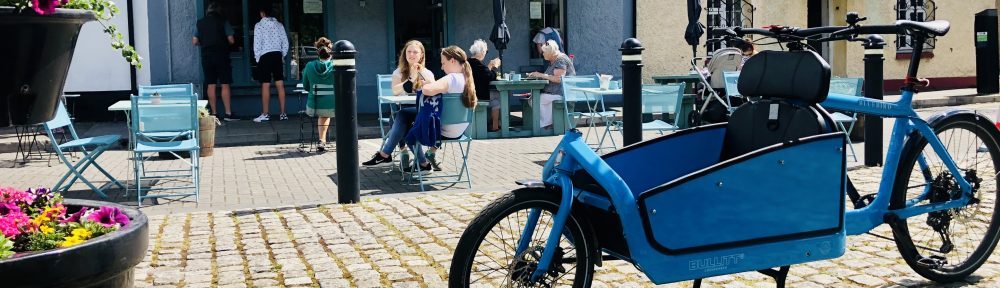
Cyclist.ie wishes Eamon Ryan TD, the new Minister for Climate Action, Communication Networks and Transport, the very best in his new role.
Minister Ryan’s appointment comes on the back of the inclusion of some very progressive sustainable transport commitments in the agreed Programme for Government (PfG), especially in regard to cycling and walking. On funding, the new government has committed to:
… an allocation of 10% of the total transport capital budget for cycling projects and an allocation of 10% of the total capital budget for pedestrian infrastructure. The Government’s commitment to cycling and pedestrian projects will be set at 20% of the 2020 capital budget (€360 million) per year for the lifetime of the Government. (p13)
This is potentially game-changing when one considers that the spend on cycling in 2018 was just €12.64 million (or less than 2% of the transport budget) – see Cyclist.ie Pre-Budget Submission 2020. It opens up the feasibility of funding high quality cycling infrastructure in all of our cities and towns, and providing greenway infrastructure connecting into the heart of our built-up areas, and schools, sports grounds, shops and other destinations.
The new emphasis on cycling and walking in the PfG comes at a time when the Department of Transport, Tourism and Sport (DTTAS) – as it was called up until a few days ago – is preparing a new Sustainable Mobility Policy (SMP). Cyclist.ie responded to the public consultation on the SMP early in 2020 – see Submissions on New Sustainable Mobility Policy – and we are awaiting the Department’s analysis of the submissions received. It is timely for a new Minister with a low carbon vision of mobility to take office when a new plan is being drafted.
The other point to highlight is the need for the new Minister to create the structures to enable several government departments, a handful of state agencies, and all 31 local authorities (LAs) to be aligned in their policies around walking and cycling promotion. One of the failings in the implementation of the ambitious 2009 National Cycle Policy Framework (NCPF) was the inaction on ensuring good coordination and cooperation between all bodies.
It is essential that Minister Ryan makes sure there is strong alignment between the key departments of Health (Minister Stephen Donnelly), Housing, Local Government and Heritage (Minister Darragh O’Brien), Education (Minister Norma Foley), Social Protection, Community and Rural Development and the Islands (Minister Heather Humphreys), and Children, Disability, Equality and Integration (Minister Roderic O’Gorman) so that a new culture of active travel can emerge, and become part of everyday life in Ireland. Additionally, local authorities are crucial actors because they will be responsible for so much of the change, but their expertise on cycling development varies from strong to weak.
The changes are already underway with COVID-19 prompting local authorities to reallocate space for people on foot and bikes – see for example Dublin City Covid Mobility Programme. This process is being facilitated by funding from the National Transport Authority and by an update to DMURS (the Design Manual for Urban Roads and Streets) entitled Interim Advice Note COVID-19 Pandemic Response.
The opportunity to be seized by the Minister now is to harness the public appetite for change and lead the way in transforming our cities and towns into the healthy, convivial and economically vibrant places they need to be.
We wish the Minister the very best of luck.
(This article previously appeared on the Cyclist.ie website.)
PRESS RELEASE Cyclist.ie Welcomes the Programme for Government Commitment to Active Travel
Cyclist.ie, the Irish Cycling Advocacy Network, has been calling for a revolution in the funding of cycling and walking for many years. We are seeking a 10% allocation for cycling from our government’s transport budgets.
We are delighted to see that the initial figures emerging from the government formation talks appear to have recognised this urgent need to invest in ‘active travel’ (walking and cycling) by allocating €360 million per annum towards cycling and walking schemes [1]. Cyclist.ie welcomes this commitment.
Cyclist.ie has consistently highlighted the multiple benefits of investing in cycling – across economic, societal and environmental headings. On the public health side, regular cycling for everyday journeys builds exercise into our busy lives and it can be easier to maintain compared to recreational physical activity. Economically, each kilometre driven by a car incurs an external cost of €0.11, whereas cycling and walking bring benefits of €0.18 and €0.37 per kilometre, respectively (see New study reveals the social benefits of cycling and walking in the EU). On the emissions reduction front and responding to the Paris Climate Agreement, cycling and walking are an essential part of the solution in decarbonising our mobility system and hence are a critical part of the overall transport mix. This has been recognised in many progressive countries in North West Europe since the mid 1970s.
It is estimated that spending on cycling currently amounts to less than 2% of transport capital spending, as shown in Cyclist.ie’s 2020 Budget submission. Meanwhile the Third Report and Recommendations of the Citizens’ Assembly, the Joint Oireachtas Committee on Climate Action [https://data.oireachtas.ie/ie/oireachtas/committee/dail/32/joint_committee_on_climate_action/reports/2019/2019-03-28_report-climate-change-a-cross-party-consensus-for-action_en.pdf] and the 2019 Climate Action Plan all endorsed the spending of 10% of the transport budget on cycling.
Our expectations are that this funding will be spent on high quality cycling infrastructure in our towns and cities so that we can grow cycling to levels common in many continental countries. We also urgently need to redress the gender balance in cycling (currently only 27% of all persons commuting are female, as per Census 2016 data). As Dr. Damien Ó Tuama, National Cycling Coordinator with Cyclist.ie summed it up, “we need to renormalise cycling to the shops, to school, to work and for other daily activities”.
Kissing Gates – Time to Kiss Them Goodbye
Since the lockdown in mid-March, one of the key messages from government has been the need for social distancing. People were advised to keep a minimum of 2m away from others. The #ChangeOurStreet campaign started in reaction to lack of space for walking and cycling in many of our urban areas. With good weather and time on their hands, there has been a huge increase in the number of people walking and cycling.
Photo 1: Kissing Gate at Killmacreddock, near Leixlip
In north Kildare, people are drawn to the the Royal Canal Greenway to exercise. However, kissing gates control access to the greenway at a number of locations. A kissing gate consists of a semi-circular, square or V-shaped enclosure on one side and a hinged gate that swings between two shutting posts, it allows one person at a time to pass through but keeps livestock out. The name derives from the fact that the hinged part touches – or ‘kisses’ – both sides of the enclosure rather than being securely latched like a normal gate. That hasn’t stopped many clinging to a more romantic notion: that the first person to pass through would have to close the gate to the next person, providing an opportune moment to demand a kiss in return for entry.
Photo 2: New Kissing Gate at Dodder Greenway, Firhouse Road, Tallaght
Whatever the origin of the name, kissing gates are not in accordance with Rural Cycleway Design, the Irish design standard. They prevent or make passage difficult for many cyclists with non-standard bikes such as tag-alongs, trishaws, cargo bikes and bikes with panniers from accessing greenways and parks. However, this has not prevented local authorities or Waterways Ireland from approving their use.
In the post-Corona world, they are a cause for concern as kissing gates cannot be used without moving the gate by hand. As a result, one infected person could spread the virus to several hundred. It is regrettable that in the past local authorities including Kildare County Council installed such features. It is even worse that in recent days South Dublin County Council has installed one at the entrance to the Dodder Greenway in Tallaght. It gave the excuse that there was a need to stop scrambler motor bikes and that the decision was taken earlier in the year. You would think that someone in local authorities would assess the risk from kissing gates, kiss them goodbye and install bollards in their place.
#ChangeOurStreets – Open Letter to Kildare County Council
Make Walking And Cycling Safer To Go To Work, To Shops And Pharmacies, To Volunteer And To Exercise
Dear Mr. Carey,
We are an alliance of Kildare groups and residents, led by Maynooth Cycling Campaign, ShamrockSpring and Kildare Environmental Network. We live, work, trade or shop in Kildare. We want our Council to urgently #ChangeOurStreets by reallocating space for people on foot and on bikes during this long COVID-19 pandemic and beyond.
We want to express sympathy with those who have died of or have been affected by COVID-19, their families, friends, and colleagues. Using our experience as vulnerable street and road users to help ease social anxieties around social distancing, we wish to give support to people with an added reason to walk or cycle.
The World Health Organisation (WHO) says that “whenever feasible, consider riding a bicycle or walking to provide physical distancing and daily physical activity” during the COVID-19 emergency. We want safer streets for all ages and all abilities in our ‘new normal’. We are supported by doctors, nurses, health professionals, resident associations, community groups, businesses and associations.[1]
We have two suggestions to reduce preventable deaths and injuries, and create pedestrian- and cycle-friendly streets:
- Reallocate road space to people walking and cycling.
- Temporarily lower the speed limit to 30 km/h in urban areas.
We ask that
- Kildare County Council arranges a Transport SPC meeting as a matter of urgency and
- The agenda be devoted to #ChangeOurStreets.
COVID-19 Impacts on the Use of Public Space
- An increasing number of Kildare residents live in apartments without access to a private garden. Over 9% of households in Kildare do not have access to a car. Children need 60 minutes of daily exercise. Access to green and blue spaces has detectable mental and physical health benefits.
- There is an increase in individuals and families walking and cycling in their local areas, whether for exercise, wellness or essential journeys.
- Healthcare workers and other essential workers have reported incidents of feeling unsafe while walking or cycling to work.
- There is a lack of space for social distancing across the county for people walking and cycling. Narrow footpaths and narrow painted cycle lanes do not provide the space to adhere to HSE social distancing guidelines.
- There are road safety issues with the reduced vehicle traffic. Most significant of which is speeding but also red light breaking and phone use by motorists.
- People queuing outside shops that have in-store limits, are lining up on narrow footpaths next to wide roads with multiple parking and driving lanes.
- Public transport numbers are down as people stay home. There is a risk that levels of private car traffic may increase sharply in the intervening period before a vaccine is found and widely distributed.
- With an increase in unemployment, and good summer weather ahead, the bicycle offers an affordable transport option to many who may not have considered cycling to date.
- The demand for parking has drastically reduced.
- Kildare County Council has closed or restricted access to playgrounds, skateparks and outdoor gyms, even to people living within 5 km. Residents of places with natural beauty are concerned that people in groups are travelling by car to these pleasant places for exercise.
Make Safer Streets for All – Reallocating Road Space to People Walking and Cycling
Expedient, wide-ranging action will reconfigure Kildare’s public spaces to decrease public health risk, social anxiety and the risk of increased traffic levels as the restrictions begin to be lifted over the coming months and years.
These types of measures have already been rolled out internationally, especially in the German capital Berlin. In Ireland, Dublin City council has already started to reallocate road space.
We ask Kildare County Council to implement temporary measures, including:
- Install temporary cycle lanes along the key traffic routes where feasible.
- Example: Main Street Newbridge, Main Street Celbridge, Newbridge Road Naas and Dublin Road Maynooth
- Widen or introduce footpaths using cones on busy streets, outside lines of shops or areas with queues, or thoroughfares to shops and essential businesses. This may need the reallocation of space from on-street parking and loading bays.
- Example: SuperValu Main Street South, Naas.
- Temporary use of cones, bollards and planters to filter through-traffic in housing estates, and so make roads safe for children playing and people exercising.
- Examples: Laurence’s Avenue and Rail Park Maynooth, and Monread Naas.
- Automate pedestrian signal crossings during daylight hours and increase pedestrian crossing times in urban areas. Add signage to prevent people pressing the buttons.
- Example: as Greystones Municipal District and other councils have done.
- Temporary suspension of extra lanes alongside roads with shared walking / cycling facilities or narrow footpaths. Turn the extra lane into a barrier / cone-protected cycle lane and, if shared facilities are present, temporarily designate the shared facilities as pedestrian-only.
- Examples: New Caragh Road Naas adjacent to the Newbridge Road.
- Removal of turn right lanes where footpaths are narrow and/or there is no cycle facility.
- Example: New Caragh Road Naas adjacent to Newbridge Road
- Revise traffic management arrangements in order to change a two-way road with no cycle facilities with a one way road and two cycle lanes (one a contra-flow cycle lane).
- Example Newtown Road, Maynooth
- Temporary pedestrianisation of roads and creating ‘quiet streets’ to connect residences and essential destinations
Lower the Speed Limits
In relation to urban areas, we request the introduction of a temporary blanket 30 km/h speed limit on all local and regional roads during the pandemic. In addition, the speed limit should be reduced on roads with 60 km/h areas to 50 km/h and 80 km/h to 60 km/h. This will make walking and cycling more pleasant, reduce the risk of collisions, and reduce the severity of injury on impact, should any collisions occur. Professor John Crown of St Vincent’s University Hospital has made a similar call.
The Isle of Man introduced a temporary speed limit island-wide to 40 mph at the end of March, following NHS doctors stating that this is the number one action to ‘lower the baseline’ of critical care admissions.
Brussels will introduce a city centre speed limit of 20 km/h from May 1 until the end of August. Milan’s ambitious Strade Aperte (Open Streets) plan has 20 km/h speed limits at its heart. This is to make living in urban areas more pleasant during the coronavirus.
#ChangeOurStreets – Make Safer Streets For All
The Minister for Health says that physical distancing measures will be with us until a vaccine is available. We know that this will, at least, be months from now.
In general, please:
- Keep stable or expand the resources budgeted for footpath and cycling schemes.
- Bringing forward of timelines for National Transport Authority cycling schemes.
- Include footpath widening as part of footpath repair schemes.
- Include reallocation of space as part of road maintenance schemes.
This COVID-19 crisis offers a unique opportunity to implement and trial low or zero-cost solutions for a more resilient, pleasant and accessible public realm in Maynooth and other urban centres in Kildare. We can create a liveable county with streetscapes designed with empathy and flexibility for the mental and physical wellbeing of all who live here.
[1] The Irish Heart Foundation, the Irish Cancer Society, the Association for Health Promotion Ireland and Irish Doctors for the Environment have called for safer space for all during and post COVID-19 restrictions.
We, the undersigned, strongly request that you consider, plan and implement these measures in the interests of public health and safety.
Supported By:
| 1 | Gerry Dornan | Maynooth | Maynooth Cycling Campaign | |||
| 2 | Deirdre Lane | Newbridge | ShamrockSpring | |||
| 3 | Aidan Farrelly | Clane | Councillor SD | |||
| 4 | Angela Feeney | Maynooth | Councillor Lab | |||
| 5 | Ann Connolly | Rathangan | Councillor FF | |||
| 6 | Bill Clear | Naas | Councillor SD | |||
| 7 | Carmel Kelly | Naas | Councillor FF | |||
| 8 | Chris Pender | Newbridge | Councillor SD | |||
| 9 | Ciara Galvin | Celbridge | Councillor Lab | |||
| 10 | Fiona McLoughlin Healy | Newbridge | Councillor Ind | |||
| 11 | Joe Neville | Leixlip | Councillor FG | |||
| 12 | Padraig McEvoy | Clane | Councillor Ind | |||
| 13 | Paul Ward | Kilcock | Councillor FF | |||
| 14 | Peggy O’Dwyer | Newbridge | Councillor FG | |||
| 15 | Peter Hamilton | Maynooth | Councillor GP | |||
| 16 | Rob Power | Newbridge | Councillor FF | |||
| 17 | Tim Durkan | Maynooth | Councillor FG | |||
| 18 | Vanessa Liston | Celbridge | Councillor GP | |||
| 19 | Vincent Martin | Naas | Councillor GP | |||
| 20 | Bernard Durkan | Maynooth | TD FG | |||
| 21 | Cathal Berry | Curragh | TD Ind | |||
| 22 | Catherine Murphy | Leixlip | TD SD | |||
| 23 | James Lawless | Naas | TD FF | |||
| 24 | Patricia Ryan | Monasterevin | TD SF | |||
| 25 | Castledawson Residents Association | Maynooth | Community Organisation | |||
| 26 | Celbridge Community Council | Celbridge | Community Organisation | |||
| 27 | Cottage Market Newbridge | Newbridge | Community Organisation | |||
| 28 | Kilcock 4 Climate Action | Kilcock | Community Organisation | |||
| 29 | Kilcock Tidy Towns | Kilcock | Community Organisation | |||
| 30 | Kildare Environmental Network | Newbridge | Community Organisation | |||
| 31 | Maynooth SEC | Maynooth | Community Organisation | |||
| 32 | Maynooth Sustainable Energy Community | Maynooth | Community Organisation | |||
| 33 | Maynooth Tidy Towns | Maynooth | Community Organisation | |||
| 34 | Naas Neighbourhood Greenways | Naas | Community Organisation | |||
| 35 | Newbridge Tide Towns | Newbridge | Community Organisation | |||
| 36 | Niamh FitzGibbon | Naas | Community Organisation No Planet B | |||
| 37 | Ruby Jo Cowdell | Naas | Community Organisation No Planet B | |||
| 38 | Ann Scully | Monasterevin | Member SEAI, Monasterevin, Mercy Sisters | |||
| 39 | Corey Rothwell | Athy | Member of XR | |||
| 40 | Dr. Joe Larragy | Maynooth | Member (Chair) of Maynooth Green Campus | |||
| 41 | Dr. Liz Cullen | Kilcullen | Member of FEASTA | |||
| 42 | Mary Murphy | Monasterevin | Member (Treasurer) Monasterevin Sustainable Energy Community CLG | |||
| 43 | Nuala Cooke | Monasterevin | Member (Secretary) Monasterevin Sustainable Energy Community CLG | |||
| 44 | Patricia Delvin | Monasterevin | Member of XR | |||
| 45 | Suzanne Murphy | N/A | Member of Kildare Communities for Climate Action | |||
| 46 | John Sweeney, Emeritus Professor MU | Maynooth | Individual | |||
| 47 | Dr. Lorna Gold | Maynooth | Individual | |||
| 48 | Dr. Bernard Healy | Newbridge | Individual | |||
| 49 | Dr. Colm Humphries | Maynooth | Individual | |||
| 50 | Dr. Deirdre McGowan | Maynooth | Individual | |||
| 51 | Dr. John Murray | Maynooth | Individual | |||
| 52 | Dr. Jonivar Skullerud | Maynooth | Individual | |||
| 53 | Dr. Mette Lebech | Maynooth | Individual | |||
| 54 | Dr. Michael Quinn | Maynooth | Individual | |||
| 55 | Dr. Peter and Frances Kiely | Maynooth | Individual | |||
| 56 | Aaron Daly | Naas | Individual | |||
| 57 | Adrian Dornan | Maynooth | Individual | |||
| 58 | Adrian Freeman | Newbridge | Individual | |||
| 59 | Alan Kelly | Maynooth | Individual | |||
| 60 | Ali Sheridan | Maynooth | Individual | |||
| 61 | Andy Hagan | Maynooth | Individual | |||
| 62 | Ann Behan | Monasterevin | Individual | |||
| 63 | Ann Burns | N/A | Individual | |||
| 64 | Ann Greaney | Dublin | Individual | |||
| 65 | Anne B. Ryan | Celbridge | Individual | |||
| 66 | Annie Byrne | Maynooth | Individual | |||
| 67 | Aoife Hynes | N/A | Individual | |||
| 68 | Ashleigh Connors | Maynooth | Individual | |||
| 69 | Azucena Bermúdez | Newbridge | Individual | |||
| 70 | Barbara Connolly | Celbridge | Individual | |||
| 71 | Ben Patel | Kildare | Individual | |||
| 72 | Bernard Fitzpatrick | Newbridge | Individual | |||
| 73 | Bernard Gibney | Kildare | Individual | |||
| 74 | Brendan Lane | Newbridge | Individual | |||
| 75 | Brendan Young | Celbridge | Individual | |||
| 76 | Brian Clark | Newbridge | Individual | |||
| 77 | Caroline Kuyper | Donegal | Individual | |||
| 78 | Christine Dunworth | Kilcock | Individual | |||
| 79 | Christine Dunworth | N/A | Individual | |||
| 80 | Ciarán Mather | Newbridge | Individual | |||
| 81 | Claire Doyle | Newbridge | Individual | |||
| 82 | Claire Minnock | N/A | Individual | |||
| 83 | Cliona Kelliher | Kilcullen | Individual | |||
| 84 | Conor Heneghan | N/A | Individual | |||
| 85 | Conor McHugh | N/A | Individual | |||
| 86 | Conor Winchcombe | N/A | Individual | |||
| 87 | Cormac Nugent | Athgarvan | Individual | |||
| 88 | Daniel Riordan | Athgarvan | Individual | |||
| 89 | Darina Glackin | Kilcock | Individual | |||
| 90 | Declan Crow | Monasterevin | Individual | |||
| 91 | Donna Cahill | Newbridge | Individual | |||
| 92 | Dorothy Guina Dornan | Maynooth | Individual | |||
| 93 | Dr Richard Webb | Wicklow | Individual | |||
| 94 | Dwayne Patel | Kildare | Individual | |||
| 95 | Elaine Hanlon | Naas | Individual | |||
| 96 | Elaine McGoff | Naas | Individual | |||
| 97 | Emer Conway | Clane | Individual | |||
| 98 | Ena-Mai Patel | Kildare | Individual | |||
| 99 | Evan Pereira | Athy | Individual | |||
| 100 | Evonne Boland | Newbridge | Individual | |||
| 101 | Fiona Masterson | Nass | Individual | |||
| 102 | Fionnuala Corcoran | Kilcock | Individual | |||
| 103 | Flora and Gavin McDonnell | Celbridge | Individual | |||
| 104 | Gerard Greally | Maynooth | Individual | |||
| 105 | Gerard Heraghty | Maynooth | Individual | |||
| 106 | Gerry Egan | Maynooth | Individual | |||
| 107 | Gerry Mullins | N/A | Individual | |||
| 108 | Giorgiana Goci | Kilcock | Individual | |||
| 109 | Grainne Madden | Maynooth | Individual | |||
| 110 | Grainne Roche | Maynooth | Individual | |||
| 111 | Imelda Brown | Naas | Individual | |||
| 112 | James Brown | Naas | Individual | |||
| 113 | Janet Buckley | Newbridge | Individual | |||
| 114 | Jeanette McLaughlin | Maynooth | Individual | |||
| 115 | Jennifer Whitty | Maynooth | Individual | |||
| 116 | Jenny McGrath | N/A | Individual | |||
| 117 | Jim Walsh | Maynooth | Individual | |||
| 118 | Joe Buckley | N/A | Individual | |||
| 119 | Joe Doyle | N/A | Individual | |||
| 120 | Joe O’Carroll | Naas | Individual | |||
| 121 | John Lyons | Maynooth | Individual | |||
| 122 | John McGrath | N/A | Individual | |||
| 123 | Jordan Family | Newbridge | Individual | |||
| 124 | Judith Brown | Calverstown | Individual | |||
| 125 | Karen Aguiar | Celbridge | Individual | |||
| 126 | Kieran Finnegan | Maynooth | Individual | |||
| 127 | Kitty Hayes | Newbridge | Individual | |||
| 128 | Laurie Mcdermott | Naas | Individual | |||
| 129 | Lia Liambock | Curragh | Individual | |||
| 130 | Lorna Ann | Naas | Individual | |||
| 131 | Lorriane Benson | Naas | Individual | |||
| 132 | Lyn Worrel | Kilcullen | Individual | |||
| 133 | Marie Geraldine Cullen | Maynooth | Individual | |||
| 134 | Mark Reid | Kilcullen | Individual | |||
| 135 | Martin Heraghty | Maynooth | Individual | |||
| 136 | Mary Comey | N/A | Individual | |||
| 137 | Mary Jennings | Maynooth | Individual | |||
| 138 | Mary O’Connor | Kildare | Individual | |||
| 139 | Mary Ronayne | Athgarvan | Individual | |||
| 140 | Matthew Kiely | Maynooth | Individual | |||
| 141 | Michael Connolly | Celbridge | Individual | |||
| 142 | Michael Kenny | Maynooth | Individual | |||
| 143 | Mike O Neill | Maynooth | Individual | |||
| 144 | Mireia Guardino Ferran | Maynooth | Individual | |||
| 145 | Mireille McCall. | Calverstown | Individual | |||
| 146 | Natalia Poliszczuk | Kilcock | Individual | |||
| 147 | Neasa Hogan | Maynooth | Individual | |||
| 148 | Nicky Leahy | Newbridge | Individual | |||
| 149 | Orla ONeil | Kilbellan | Individual | |||
| 150 | Pádraig Ó Murchú | Maynooth | Individual | |||
| 151 | Paul Cahill + Family | Maynooth | Individual | |||
| 152 | Paul Mahon | Derrinturn | Individual | |||
| 153 | Peter Kavanagh | Naas | Individual | |||
| 154 | Philip Brennan | Maynooth | Individual | |||
| 155 | Philip McGovern | Naas | Individual | |||
| 156 | Rachel Grimes-Doyle | Maynooth | Individual | |||
| 157 | Roisin Daly | Naas | Individual | |||
| 158 | Roisin Uí Bhroin | Athy | Individual | |||
| 159 | Ronan Maher | Newbridge | Individual | |||
| 160 | Rose McGarvey | Athgarvan | Individual | |||
| 161 | Rose Patel | Kildare | Individual | |||
| 162 | Ross Cadogan | Maynooth | Individual | |||
| 163 | Ruth Patel | Kildare | Individual | |||
| 164 | S e a n á n Ó C o i s t í n | Maynooth | Individual | |||
| 165 | Sean Bradley | Newbridge | Individual | |||
| 166 | Sean English | Naas | Individual | |||
| 167 | Shane O’Brien | Celbridge | Individual | |||
| 168 | Steven McCarthy | Maynooth | Individual | |||
| 169 | Teresa Redmond (Berrill) | N/A | Individual | |||
| 170 | Thelma Stronge | Celbridge | Individual | |||
| 171 | Theresa Bennett | Naas | Individual | |||
| 172 | Thomas Brady | Newbridge | Individual | |||
| 173 | Tom Kiely | Kilcock | Individual | |||
| 174 | Tom Mc Mahon | Maynooth | Individual | |||
| 175 | Tracie Patel | Kildare | Individual | |||
| 176 | Vaness Mack | Rathangan | Individual | |||
| 177 | Vincent O’Neill | Newbridge | Individual | |||
| 178 | Zoryana Pshyk | Newbridge | Individual | |||
| 179 | Orla Mathews | Maynooth | Individual | |||
| 180 | Katya Marcelle McKeon | Newbridge | Individual | |||
| 181 | Kitty Hayes | Newbridge | Individual | |||
| 182 | Darren Knight | Naas | Individual | |||
| 183 | Noëlla Due | Naas | Individual | |||
| 184 | Gavin Brannigan | Sallins | Individual | |||
| 185 | Peter Lane | Roseberry | Individual | |||
| 186 | Stiofán Na Mara | Newbridge | Individual | |||
| 187 | Karl Dalton | Naas | Individual |
CC Mr. Tadhg McDonnell, Director of Services for Transportation
The following supported were not named in the letter which was emailed to Mr. Peter Carey but are listed here as they wished to expressed support for #ChangeOurStreets.
| No. | Name | Location | Category |
| A | Luka Bloom | Newbridge | Individual |
| B | Brian Creggan | Maynooth | Artist |
| C | Maynooth Community Council | Maynooth | Community Org |
| D | Dr. C. O’Rourke | Maynooth | Individual |
| E | Fred Quinn | Maynooth | Individual |
| F | Maynooth Cycling Club | Maynooth | Organisation |