Since the lockdown in mid-March, one of the key messages from government has been the need for social distancing. People were advised to keep a minimum of 2m away from others. The #ChangeOurStreet campaign started in reaction to lack of space for walking and cycling in many of our urban areas. With good weather and time on their hands, there has been a huge increase in the number of people walking and cycling.
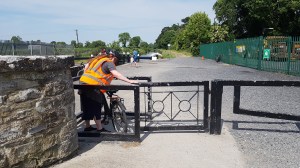
Photo 1: Kissing Gate at Killmacreddock, near Leixlip
In north Kildare, people are drawn to the the Royal Canal Greenway to exercise. However, kissing gates control access to the greenway at a number of locations. A kissing gate consists of a semi-circular, square or V-shaped enclosure on one side and a hinged gate that swings between two shutting posts, it allows one person at a time to pass through but keeps livestock out. The name derives from the fact that the hinged part touches – or ‘kisses’ – both sides of the enclosure rather than being securely latched like a normal gate. That hasn’t stopped many clinging to a more romantic notion: that the first person to pass through would have to close the gate to the next person, providing an opportune moment to demand a kiss in return for entry.
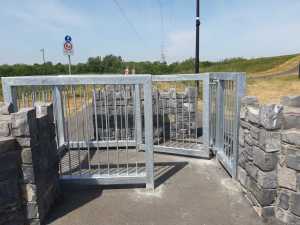
Photo 2: New Kissing Gate at Dodder Greenway, Firhouse Road, Tallaght
Whatever the origin of the name, kissing gates are not in accordance with Rural Cycleway Design, the Irish design standard. They prevent or make passage difficult for many cyclists with non-standard bikes such as tag-alongs, trishaws, cargo bikes and bikes with panniers from accessing greenways and parks. However, this has not prevented local authorities or Waterways Ireland from approving their use.
In the post-Corona world, they are a cause for concern as kissing gates cannot be used without moving the gate by hand. As a result, one infected person could spread the virus to several hundred. It is regrettable that in the past local authorities including Kildare County Council installed such features. It is even worse that in recent days South Dublin County Council has installed one at the entrance to the Dodder Greenway in Tallaght. It gave the excuse that there was a need to stop scrambler motor bikes and that the decision was taken earlier in the year. You would think that someone in local authorities would assess the risk from kissing gates, kiss them goodbye and install bollards in their place.
Make Walking And Cycling Safer To Go To Work, To Shops And Pharmacies, To Volunteer And To Exercise
Dear Mr. Carey,
We are an alliance of Kildare groups and residents, led by Maynooth Cycling Campaign, ShamrockSpring and Kildare Environmental Network. We live, work, trade or shop in Kildare. We want our Council to urgently #ChangeOurStreets by reallocating space for people on foot and on bikes during this long COVID-19 pandemic and beyond.
We want to express sympathy with those who have died of or have been affected by COVID-19, their families, friends, and colleagues. Using our experience as vulnerable street and road users to help ease social anxieties around social distancing, we wish to give support to people with an added reason to walk or cycle.
The World Health Organisation (WHO) says that “whenever feasible, consider riding a bicycle or walking to provide physical distancing and daily physical activity” during the COVID-19 emergency. We want safer streets for all ages and all abilities in our ‘new normal’. We are supported by doctors, nurses, health professionals, resident associations, community groups, businesses and associations.[1]
We have two suggestions to reduce preventable deaths and injuries, and create pedestrian- and cycle-friendly streets:
Reallocate road space to people walking and cycling.
Temporarily lower the speed limit to 30 km/h in urban areas.
We ask that
Kildare County Council arranges a Transport SPC meeting as a matter of urgency and
The agenda be devoted to #ChangeOurStreets.
COVID-19 Impacts on the Use of Public Space
An increasing number of Kildare residents live in apartments without access to a private garden. Over 9% of households in Kildare do not have access to a car. Children need 60 minutes of daily exercise. Access to green and blue spaces has detectable mental and physical health benefits.
There is an increase in individuals and families walking and cycling in their local areas, whether for exercise, wellness or essential journeys.
Healthcare workers and other essential workers have reported incidents of feeling unsafe while walking or cycling to work.
There is a lack of space for social distancing across the county for people walking and cycling. Narrow footpaths and narrow painted cycle lanes do not provide the space to adhere to HSE social distancing guidelines.
There are road safety issues with the reduced vehicle traffic. Most significant of which is speeding but also red light breaking and phone use by motorists.
People queuing outside shops that have in-store limits, are lining up on narrow footpaths next to wide roads with multiple parking and driving lanes.
Public transport numbers are down as people stay home. There is a risk that levels of private car traffic may increase sharply in the intervening period before a vaccine is found and widely distributed.
With an increase in unemployment, and good summer weather ahead, the bicycle offers an affordable transport option to many who may not have considered cycling to date.
The demand for parking has drastically reduced.
Kildare County Council has closed or restricted access to playgrounds, skateparks and outdoor gyms, even to people living within 5 km. Residents of places with natural beauty are concerned that people in groups are travelling by car to these pleasant places for exercise.
Make Safer Streets for All – Reallocating Road Space to People Walking and Cycling
Expedient, wide-ranging action will reconfigure Kildare’s public spaces to decrease public health risk, social anxiety and the risk of increased traffic levels as the restrictions begin to be lifted over the coming months and years.
These types of measures have already been rolled out internationally, especially in the German capital Berlin. In Ireland, Dublin City council has already started to reallocate road space.
We ask Kildare County Council to implement temporary measures, including:
Install temporary cycle lanes along the key traffic routes where feasible.
Example: Main Street Newbridge, Main Street Celbridge, Newbridge Road Naas and Dublin Road Maynooth
Widen or introduce footpaths using cones on busy streets, outside lines of shops or areas with queues, or thoroughfares to shops and essential businesses. This may need the reallocation of space from on-street parking and loading bays.
Example: SuperValu Main Street South, Naas.
Temporary use of cones, bollards and planters to filter through-traffic in housing estates, and so make roads safe for children playing and people exercising.
Examples: Laurence’s Avenue and Rail Park Maynooth, and Monread Naas.
Automate pedestrian signal crossings during daylight hours and increase pedestrian crossing times in urban areas. Add signage to prevent people pressing the buttons.
Example: as Greystones Municipal District and other councils have done.
Temporary suspension of extra lanes alongside roads with shared walking / cycling facilities or narrow footpaths. Turn the extra lane into a barrier / cone-protected cycle lane and, if shared facilities are present, temporarily designate the shared facilities as pedestrian-only.
Examples: New Caragh Road Naas adjacent to the Newbridge Road.
Removal of turn right lanes where footpaths are narrow and/or there is no cycle facility.
Example: New Caragh Road Naas adjacent to Newbridge Road
Revise traffic management arrangements in order to change a two-way road with no cycle facilities with a one way road and two cycle lanes (one a contra-flow cycle lane).
Example Newtown Road, Maynooth
Temporary pedestrianisation of roads and creating ‘quiet streets’ to connect residences and essential destinations
Lower the Speed Limits
In relation to urban areas, we request the introduction of a temporary blanket 30 km/h speed limit on all local and regional roads during the pandemic. In addition, the speed limit should be reduced on roads with 60 km/h areas to 50 km/h and 80 km/h to 60 km/h. This will make walking and cycling more pleasant, reduce the risk of collisions, and reduce the severity of injury on impact, should any collisions occur. Professor John Crown of St Vincent’s University Hospital has made a similar call.
The Isle of Man introduced a temporary speed limit island-wide to 40 mph at the end of March, following NHS doctors stating that this is the number one action to ‘lower the baseline’ of critical care admissions.
Brussels will introduce a city centre speed limit of 20 km/h from May 1 until the end of August. Milan’s ambitious Strade Aperte (Open Streets) plan has 20 km/h speed limits at its heart. This is to make living in urban areas more pleasant during the coronavirus.
#ChangeOurStreets – Make Safer Streets For All
The Minister for Health says that physical distancing measures will be with us until a vaccine is available. We know that this will, at least, be months from now.
In general, please:
Keep stable or expand the resources budgeted for footpath and cycling schemes.
Bringing forward of timelines for National Transport Authority cycling schemes.
Include footpath widening as part of footpath repair schemes.
Include reallocation of space as part of road maintenance schemes.
This COVID-19 crisis offers a unique opportunity to implement and trial low or zero-cost solutions for a more resilient, pleasant and accessible public realm in Maynooth and other urban centres in Kildare. We can create a liveable county with streetscapes designed with empathy and flexibility for the mental and physical wellbeing of all who live here.
[1] The Irish Heart Foundation, the Irish Cancer Society, the Association for Health Promotion Ireland and Irish Doctors for the Environment have called for safer space for all during and post COVID-19 restrictions.
We, the undersigned, strongly request that you consider, plan and implement these measures in the interests of public health and safety.
Supported By:
1
Gerry Dornan
Maynooth
Maynooth Cycling Campaign
2
Deirdre Lane
Newbridge
ShamrockSpring
3
Aidan Farrelly
Clane
Councillor SD
4
Angela Feeney
Maynooth
Councillor Lab
5
Ann Connolly
Rathangan
Councillor FF
6
Bill Clear
Naas
Councillor SD
7
Carmel Kelly
Naas
Councillor FF
8
Chris Pender
Newbridge
Councillor SD
9
Ciara Galvin
Celbridge
Councillor Lab
10
Fiona McLoughlin Healy
Newbridge
Councillor Ind
11
Joe Neville
Leixlip
Councillor FG
12
Padraig McEvoy
Clane
Councillor Ind
13
Paul Ward
Kilcock
Councillor FF
14
Peggy O’Dwyer
Newbridge
Councillor FG
15
Peter Hamilton
Maynooth
Councillor GP
16
Rob Power
Newbridge
Councillor FF
17
Tim Durkan
Maynooth
Councillor FG
18
Vanessa Liston
Celbridge
Councillor GP
19
Vincent Martin
Naas
Councillor GP
20
Bernard Durkan
Maynooth
TD FG
21
Cathal Berry
Curragh
TD Ind
22
Catherine Murphy
Leixlip
TD SD
23
James Lawless
Naas
TD FF
24
Patricia Ryan
Monasterevin
TD SF
25
Castledawson Residents Association
Maynooth
Community Organisation
26
Celbridge Community Council
Celbridge
Community Organisation
27
Cottage Market Newbridge
Newbridge
Community Organisation
28
Kilcock 4 Climate Action
Kilcock
Community Organisation
29
Kilcock Tidy Towns
Kilcock
Community Organisation
30
Kildare Environmental Network
Newbridge
Community Organisation
31
Maynooth SEC
Maynooth
Community Organisation
32
Maynooth Sustainable Energy Community
Maynooth
Community Organisation
33
Maynooth Tidy Towns
Maynooth
Community Organisation
34
Naas Neighbourhood Greenways
Naas
Community Organisation
35
Newbridge Tide Towns
Newbridge
Community Organisation
36
Niamh FitzGibbon
Naas
Community Organisation No Planet B
37
Ruby Jo Cowdell
Naas
Community Organisation No Planet B
38
Ann Scully
Monasterevin
Member SEAI, Monasterevin, Mercy Sisters
39
Corey Rothwell
Athy
Member of XR
40
Dr. Joe Larragy
Maynooth
Member (Chair) of Maynooth Green Campus
41
Dr. Liz Cullen
Kilcullen
Member of FEASTA
42
Mary Murphy
Monasterevin
Member (Treasurer) Monasterevin Sustainable Energy Community CLG
43
Nuala Cooke
Monasterevin
Member (Secretary) Monasterevin Sustainable Energy Community CLG
44
Patricia Delvin
Monasterevin
Member of XR
45
Suzanne Murphy
N/A
Member of Kildare Communities for Climate Action
46
John Sweeney, Emeritus Professor MU
Maynooth
Individual
47
Dr. Lorna Gold
Maynooth
Individual
48
Dr. Bernard Healy
Newbridge
Individual
49
Dr. Colm Humphries
Maynooth
Individual
50
Dr. Deirdre McGowan
Maynooth
Individual
51
Dr. John Murray
Maynooth
Individual
52
Dr. Jonivar Skullerud
Maynooth
Individual
53
Dr. Mette Lebech
Maynooth
Individual
54
Dr. Michael Quinn
Maynooth
Individual
55
Dr. Peter and Frances Kiely
Maynooth
Individual
56
Aaron Daly
Naas
Individual
57
Adrian Dornan
Maynooth
Individual
58
Adrian Freeman
Newbridge
Individual
59
Alan Kelly
Maynooth
Individual
60
Ali Sheridan
Maynooth
Individual
61
Andy Hagan
Maynooth
Individual
62
Ann Behan
Monasterevin
Individual
63
Ann Burns
N/A
Individual
64
Ann Greaney
Dublin
Individual
65
Anne B. Ryan
Celbridge
Individual
66
Annie Byrne
Maynooth
Individual
67
Aoife Hynes
N/A
Individual
68
Ashleigh Connors
Maynooth
Individual
69
Azucena Bermúdez
Newbridge
Individual
70
Barbara Connolly
Celbridge
Individual
71
Ben Patel
Kildare
Individual
72
Bernard Fitzpatrick
Newbridge
Individual
73
Bernard Gibney
Kildare
Individual
74
Brendan Lane
Newbridge
Individual
75
Brendan Young
Celbridge
Individual
76
Brian Clark
Newbridge
Individual
77
Caroline Kuyper
Donegal
Individual
78
Christine Dunworth
Kilcock
Individual
79
Christine Dunworth
N/A
Individual
80
Ciarán Mather
Newbridge
Individual
81
Claire Doyle
Newbridge
Individual
82
Claire Minnock
N/A
Individual
83
Cliona Kelliher
Kilcullen
Individual
84
Conor Heneghan
N/A
Individual
85
Conor McHugh
N/A
Individual
86
Conor Winchcombe
N/A
Individual
87
Cormac Nugent
Athgarvan
Individual
88
Daniel Riordan
Athgarvan
Individual
89
Darina Glackin
Kilcock
Individual
90
Declan Crow
Monasterevin
Individual
91
Donna Cahill
Newbridge
Individual
92
Dorothy Guina Dornan
Maynooth
Individual
93
Dr Richard Webb
Wicklow
Individual
94
Dwayne Patel
Kildare
Individual
95
Elaine Hanlon
Naas
Individual
96
Elaine McGoff
Naas
Individual
97
Emer Conway
Clane
Individual
98
Ena-Mai Patel
Kildare
Individual
99
Evan Pereira
Athy
Individual
100
Evonne Boland
Newbridge
Individual
101
Fiona Masterson
Nass
Individual
102
Fionnuala Corcoran
Kilcock
Individual
103
Flora and Gavin McDonnell
Celbridge
Individual
104
Gerard Greally
Maynooth
Individual
105
Gerard Heraghty
Maynooth
Individual
106
Gerry Egan
Maynooth
Individual
107
Gerry Mullins
N/A
Individual
108
Giorgiana Goci
Kilcock
Individual
109
Grainne Madden
Maynooth
Individual
110
Grainne Roche
Maynooth
Individual
111
Imelda Brown
Naas
Individual
112
James Brown
Naas
Individual
113
Janet Buckley
Newbridge
Individual
114
Jeanette McLaughlin
Maynooth
Individual
115
Jennifer Whitty
Maynooth
Individual
116
Jenny McGrath
N/A
Individual
117
Jim Walsh
Maynooth
Individual
118
Joe Buckley
N/A
Individual
119
Joe Doyle
N/A
Individual
120
Joe O’Carroll
Naas
Individual
121
John Lyons
Maynooth
Individual
122
John McGrath
N/A
Individual
123
Jordan Family
Newbridge
Individual
124
Judith Brown
Calverstown
Individual
125
Karen Aguiar
Celbridge
Individual
126
Kieran Finnegan
Maynooth
Individual
127
Kitty Hayes
Newbridge
Individual
128
Laurie Mcdermott
Naas
Individual
129
Lia Liambock
Curragh
Individual
130
Lorna Ann
Naas
Individual
131
Lorriane Benson
Naas
Individual
132
Lyn Worrel
Kilcullen
Individual
133
Marie Geraldine Cullen
Maynooth
Individual
134
Mark Reid
Kilcullen
Individual
135
Martin Heraghty
Maynooth
Individual
136
Mary Comey
N/A
Individual
137
Mary Jennings
Maynooth
Individual
138
Mary O’Connor
Kildare
Individual
139
Mary Ronayne
Athgarvan
Individual
140
Matthew Kiely
Maynooth
Individual
141
Michael Connolly
Celbridge
Individual
142
Michael Kenny
Maynooth
Individual
143
Mike O Neill
Maynooth
Individual
144
Mireia Guardino Ferran
Maynooth
Individual
145
Mireille McCall.
Calverstown
Individual
146
Natalia Poliszczuk
Kilcock
Individual
147
Neasa Hogan
Maynooth
Individual
148
Nicky Leahy
Newbridge
Individual
149
Orla ONeil
Kilbellan
Individual
150
Pádraig Ó Murchú
Maynooth
Individual
151
Paul Cahill + Family
Maynooth
Individual
152
Paul Mahon
Derrinturn
Individual
153
Peter Kavanagh
Naas
Individual
154
Philip Brennan
Maynooth
Individual
155
Philip McGovern
Naas
Individual
156
Rachel Grimes-Doyle
Maynooth
Individual
157
Roisin Daly
Naas
Individual
158
Roisin Uí Bhroin
Athy
Individual
159
Ronan Maher
Newbridge
Individual
160
Rose McGarvey
Athgarvan
Individual
161
Rose Patel
Kildare
Individual
162
Ross Cadogan
Maynooth
Individual
163
Ruth Patel
Kildare
Individual
164
S e a n á n Ó C o i s t í n
Maynooth
Individual
165
Sean Bradley
Newbridge
Individual
166
Sean English
Naas
Individual
167
Shane O’Brien
Celbridge
Individual
168
Steven McCarthy
Maynooth
Individual
169
Teresa Redmond (Berrill)
N/A
Individual
170
Thelma Stronge
Celbridge
Individual
171
Theresa Bennett
Naas
Individual
172
Thomas Brady
Newbridge
Individual
173
Tom Kiely
Kilcock
Individual
174
Tom Mc Mahon
Maynooth
Individual
175
Tracie Patel
Kildare
Individual
176
Vaness Mack
Rathangan
Individual
177
Vincent O’Neill
Newbridge
Individual
178
Zoryana Pshyk
Newbridge
Individual
179
Orla Mathews
Maynooth
Individual
180
Katya Marcelle McKeon
Newbridge
Individual
181
Kitty Hayes
Newbridge
Individual
182
Darren Knight
Naas
Individual
183
Noëlla Due
Naas
Individual
184
Gavin Brannigan
Sallins
Individual
185
Peter Lane
Roseberry
Individual
186
Stiofán Na Mara
Newbridge
Individual
187
Karl Dalton
Naas
Individual
CC Mr. Tadhg McDonnell, Director of Services for Transportation
The following supported were not named in the letter which was emailed to Mr. Peter Carey but are listed here as they wished to expressed support for #ChangeOurStreets.
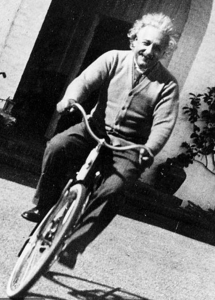
Albert Einstein knew a thing or two about science. In any language he would be classed as an ‘expert’! In these days of lockdowns and restrictions we are continually asked to ‘listen to the experts’. So what does Albert say about cycling and life. He says: ‘Life is like riding a bicycle. To keep your balance, you must keep moving’. Sound advice wouldn’t you say!
Well, it is good to know that the role of cycling in our lives is gaining greater recognition, with the spread of the Covid virus! Cities and governments are realising that a new reality needs to be recognised and ideally put in place. Cities like Paris are forging ahead with ambitious plans to change the way citizens and commuters move about, encouraging people to ‘get on their bikes’!
The World Economic Forum is an international body based in Geneva which has recently highlighted the French government proposals to promote cycling and walking post COVID, as well as proposals from other cities around the world. Check out the short video on this link, and then delve into the associated written posts for some great ideas that could inspire you to get active in changing our environment here in Ireland, and getting your town or city to recognise the need for radical change to how we move about.
Cycling is, and will continue to be, a critical part of moving to a new post Covid reality. As Cyclist.ie has argued in multiple submissions to government, the role that cycling can play in:
* Reducing the level of greenhouse gases * Improving the general and psychological health of people * Reducing congestion levels * Improving the design of public realm * Providing a real economic return on public investment must be taken on board by the any new government, and in turn by Local Authorities across the country
It’s time for all of us to build support for new green initiatives that help to grow cycling levels. It’s time for all of us, as cycling advocates, to push for the necessary changes by lobbying our public representatives and local authorities.
It’s Time to Make a Difference! Get On Yer Bike and Get Active!
(This article previously appeared on the Cyclist.ie website.)
NOTE If you like the NEW NORM with reduced traffic and more Kildare people walking and cycling, we invite you to email maynoothcycling@gmail.com (or Shamrock Spring at shamrockspring@gmail.com) to demonstrate your support for Change Our Streets. We will add your name to the list of supporters.
Make Walking And Cycling Safer To Go To Work, To Shops And Pharmacies, To Volunteer And To Exercise
Dear Mr. Carey,
We are an alliance of Kildare groups and residents, led by Maynooth Cycling Campaign and Kildare Environmental Network. We live, work, trade or shop in Kildare. We want our Council to urgently Change Our Streets by reallocating space for people on foot and on bikes during this long COVID-19 pandemic and beyond.
We want to express sympathy with those who have died of COVID-19, their families, friends, and colleagues. Using our expertise in road safety to help ease social anxieties around social distancing, we wish to give support to people with an added reason to walk or cycle.
The World Health Organisation (WHO) says that ‘whenever feasible, consider riding a bicycle or walking to provide physical distancing and daily physical activity’ during the COVID-19 emergency. In Ireland, we have seven exceptions to the ‘Stay at Home Order’, including exercising within 5 km from home.
We want safer streets for all ages and all abilities in our ‘new normal’. We are supported by doctors, nurses, health professionals, resident associations, community groups, businesses and associations. [Note: health professionals – to be finalised]
We have two requests to reduce preventable deaths and injuries, and create pedestrian- and cycle-friendly streets:
1. Reallocate road space to people walking and cycling. 2. Temporarily lower the speed limit to 30 km/h in urban areas.
We ask that Kildare County Council arranges a Transport SPC meeting as a matter of urgency and that the agenda be devoted to Change Our Streets. [Note: This paragraph to be finalised]
How COVID-19 Impacts on the Use Of Public Space
An increasing number of Kildare residents live in apartments with no access to a private garden. Over 9% of households in Kildare do not have access to a car. Children need 60 minutes of daily exercise. Access to green and blue spaces has detectable mental and physical health benefits.
There is an increase in individuals and families walking and cycling in their local areas, whether for exercise or essential journeys.
Healthcare workers and other essential workers have reported incidents of feeling unsafe while walking or cycling to work.
There is a lack of space for social distancing across the county for people walking and cycling. Narrow footpaths and painted cycle lanes do not provide the space to adhere to HSE social distancing guidelines.
There are road safety issues with the reduced vehicle traffic. Most significant of which is speeding but also red light breaking and phone use by motorists.
People queuing outside shops that have in-store limits, are lining up on narrow footpaths next to wide roads with multiple parking and driving lanes.
Public transport numbers are down as people stay home. There is a risk that levels of private car traffic may increase sharply in the intervening period before a vaccine is found and widely distributed.
With an increase in unemployment, and good summer weather ahead, the bicycle offers an affordable transport option to many who may not have considered cycling to date.
The demand for parking has drastically reduced.
Kildare County Council has closed or restricted access to playgrounds, skateparks and outdoor gyms, even to people living within 5 km. Residents of places with natural beauty are concerned that people in groups are travelling by car to these pleasant places for exercise.
Make Safer Streets for All – Reallocating Road Space to People Walking and Cycling Expedient, wide-ranging action will reconfigure Kildare’s public spaces to decrease public health risk, social anxiety and the risk of increased traffic levels as the restrictions begin to be lifted over the coming months and years.
These types of measures have already been rolled out internationally, especially in the German capital Berlin. In Ireland, Dublin City and Fingal County councils have started to reallocate road space.
We ask Kildare County Council to implement temporary measures, including:
Install temporary cycle lanes along the key traffic routes where feasible.
Example: Main Street Newbridge, Main Street Celbridge, Newbridge Road Naas and Dublin Road Maynooth
Widen or introduce footpaths using cones on busy streets, outside lines of shops or areas with queues, or thoroughfares to shops and essential businesses. This may need the reallocation of space from on-street parking and loading bays.
Example: SuperValu Main Street South, Naas.
Temporary use of cones, bollards and planters to filter through-traffic in housing estates, and so make roads safe for children playing and people exercising.
Examples: Laurence’s Avenue and Rail Park Maynooth, and Monread Naas.
Automate pedestrian signal crossings during daylight hours and increase pedestrian crossing times in urban areas. Add signage to prevent people pressing the buttons.
Example: as Greystones Municipal District and other councils have done.
Temporary suspension of extra lanes alongside roads with shared walking / cycling facilities or narrow footpaths. Turn the extra lane into a barrier / cone-protected cycle lane and, if shared facilities are present, temporarily designate the shared facilities as pedestrian-only.
Examples: New Caragh Road Naas adjacent to the Newbridge Road.
Removal of turn right lanes where footpaths are narrow and/or there is no cycle facility.
Example: New Caragh Road Naas adjacent to Newbridge Road
Revise traffic management arrangements in order to change a two way road with no cycle facilities with a one way road and two cycle lanes (one a contra-flow cycle lane).
Example Newtown Road, Maynooth
Temporary pedestrianisation of roads and creating ‘quiet streets’ to connect residences and essential destinations.
Lower the Speed Limits In relation to urban areas, we request the introduction of a temporary blanket 30 km/h speed limit on all local and regional roads during the pandemic. In addition, drop the speed limit on roads with 60 km/h areas to 50 km/h and 80 km/h to 60 km/h. This will make walking and cycling more pleasant, reduce the risk of collisions, and reduce the severity of injury on impact, should any collisions occur. Professor John Crown of St Vincent’s University Hospital has made a similar call.
The Isle of Man introduced a temporary speed limit island-wide to 40 mph at the end of March, following NHS doctors stating that this is the number one action to ‘lower the baseline’ of critical care admissions.
Brussels will introduce a city centre speed limit of 20 km/h from May 1 until the end of August. Milan’s ambitious Strade Aperte (Open Streets) plan has 20 km/h speed limits at its heart. This is to make living in urban areas more pleasant during the coronavirus.
Change Our Streets – Make Safer Streets For All The Minister for Health says that physical distancing measures will be with us until a vaccine is available. We know that this will, at least, be months from now.
In general, please: • Keep stable or expand the resources budgeted for footpath and cycling schemes. • Bringing forward of timelines for National Transport Authority cycling schemes. • Include footpath widening as part of footpath repair schemes. • Include reallocation of space as part of road maintenance schemes.
This COVID-19 crisis offers a unique opportunity to implement and trial low or zero-cost solutions for a more resilient, pleasant and accessible public realm in Maynooth and other urban centres in Kildare. We can create a liveable city whose streetscape is designed with empathy and flexibility for the mental and physical wellbeing of all who live here.
We, the undersigned, strongly request that you consider, plan and implement these measures in the interests of public health and safety.
CC Mr. Tadhg McDonnell, Director of Services for Transportation
Tune in – Tuesday’s meeting is devoted to Sustainable Transport solutions
We invite you to watch IN ADVANCE a short film (15mins) by Streetfilm https://vimeo.com/76207227 on Groningen best cycling city in the world.
Then from 7:00pm on Tuesday, we will meet on Zoom to discuss ways to #ChangeOurStreets to more sustainable future.
* What drives Dutch bike culture, socio-economic rewards of cycling, health effects of clean air and bonus lower noise pollution brings. * How complementing wider investment into cycling infrastructure can help create more value in future. * Lessons for Kildare
Much public and media discussion around the Green Party’s insistence on any future government committing to a minimum of 7% cuts in greenhouse gas emissions per annum appears to focus on the supposedly ‘unrealistic’ nature of these targets.
The former Minister for Climate Action Denis Naughten TD has, for example, been quoted as describing this reduction rate as “unsustainable and unachievable”. In so doing, Mr. Naughten appears to have forgotten that the government he represented fully signed up to the 2015 Paris Agreement, which commits Ireland to urgent and dramatic emissions cuts in line with the science and climate justice.
Prof Barry McMullin of An Taisce’s Climate Committee, noted: “It is thanks to political procrastination and predatory delay that today’s targets have become so challenging. Every year that vested interests and lobbyists, abetted by politicians with little care for science, have enabled inaction and delay on tackling the climate emergency has made effective action far more onerous than would have been necessary had we collectively acted in a timely manner. Sadly, we cannot simply turn the clock back and ‘start over’: we must deal with the much deeper crisis we have now created.”
Despite this reality, current media commentary continues to place the onus exclusively on the Green Party both to insist on the required emissions reduction pathway, and to explain in detail how this should be delivered on. An Taisce believes this is misleading and unhelpful. Rather than making a political “demand”, the Green Party is simply reflecting the overwhelming scientific consensus on the minimum steps needed to avoid catastrophic and irreversible climate change.*
[*Note that An Taisce is strictly non-party-political; these comments do not imply support or endorsement of any specific political party.]
Such targets, and the responsibility for measures to achieve them, do not ‘belong’ to any one party or group: they represent the clearest understanding of the scale of the challenge and the time frame within which global humanity, including here in Ireland, now has to respond.
The currently suggested figure of an overall emissions reduction compounding at a rate equivalent to at least 7% per year is based on the 2019 “Emissions Gap” Report from the UNEP (United Nations Environment Programme) which assessed the global average rate now required to maintain a plausible chance of limiting temperature rise within the 1.5°C goal of the Paris Agreement as being at least 7.6% from 2020 onward.
But it is critical to emphasise that this does not apply as an equal requirement for all countries.
For a relatively wealthy, high per-capita-emitting country like Ireland, the required annual reduction rate is now considerably higher, as this must reflect the “common but differentiated responsibilities and respective capabilities” between different countries.
Thus, it is An Taisce’s view not only that the suggested 7% per annum reduction rate is indeed the absolute minimum that must be included and actively endorsed by all partners in any proposed programme for government, but that the programme must commit to enshrining this in a new Climate Ambition Act, with full independent recourse by citizens to the courts to ensure enforcement, within the first hundred days of such a Government taking office.
Further, a restructured and rebalanced Climate Change Advisory Council, with appropriate expertise in physical climate science, ecological economics, international development and climate ethics, must be mandated to critically assess the further increase in mitigation ambition necessary for Ireland to play its fair share in this unprecedented global effort. This should be coupled to a properly scaled and resourced “national climate dialogue” process that gives the opportunity to every citizen to engage with and influence this immense national effort.
“We believe it is now incumbent on those parties and commentators who reject such commitments to declare openly and honestly whether they reject the science, or the ethics, or both”, added Prof McMullin.
In our view, you can’t claim to accept the expert diagnosis while rejecting the treatment path set out by those same experts. It is now beyond time to commit to “flattening the curve” on climate change, before our collective ability to respond is overwhelmed.
Where is the best place for congestion? – Thoughtful article on the pointlessness of trying to build your way out of road congestion. Very relevant to proposals to add another lane onto the M4.
The Irish Pedestrian Network and Cyclist.ie call on the national government to provide safe, usable space across the country for people to shop, exercise and commute by walking and cycling during the Covid-19 crisis as a matter of urgency.
While current lock-down restrictions are in place until May 5th, the Minister for Health Simon Harris has stated that social distancing measures may stay in place to some degree until a coronavirus vaccine has been found. A substantial percentage of Irish people shop on foot or by cycling, and physical exercise is vitally important to both physical and mental health.
The Irish Pedestrian Network and Cyclist.ie propose that while motor traffic is reduced, space on streets must be reallocated to walking, running, cycling and playing to ensure safe social distancing within communities – a reallocation that is already taking place internationally.
Speaking for the Irish Pedestrian Network Ailish Drake says, “The New Zealand government has empowered local communities to create more social distancing space by providing 90% funding for new footpaths and widen existing ones, and to create pop-up bike lanes. These measures can be put in place in a matter of hours or a few days using paint, blocks or planters.”
Damien Ó Tuama spokesperson for Cyclist.ie, the Irish Cycling Advocacy Network, says, “Over sixty towns and cities worldwide, in recognition of this new reality, have quickly installed low-cost temporary measures by using cones to widen footpaths and repurposing full vehicle lanes to cycle lanes. Dublin has now joined Berlin, Washington DC and London in reallocating road space to ensure safer social distancing is possible. We want other councils to do the same.”
The Irish Pedestrian Network and Cyclist.ie welcome efforts by many local Councillors and TDs in seeking additional space for social distancing across Irish cities and in particular the progress made in Dublin where Dublin City Council will begin implementing emergency distancing measures from Monday 20th April.
The IPN and Cyclist.ie now call on the government to implement a nationwide program as follows:
1. Make social distancing easier for those walking or cycling to shops or essential work 2. Automated pedestrian crossings so people do not have to manually press signal buttons. 3. Introduction of a default speed limit of 30km/h on all urban and suburban streets 4. A proportionate reallocation of road space to pedestrians and cyclists, to make walking and cycling safer for those who are exercising within their 2km zone, especially those with prams or wheelchairs 5. Local authorities to prioritise temporary widening of footpaths, pop-up cycle lanes, quietways in cities and/or closing road lanes and specific streets to motor traffic (for example: by the temporary application of DMURS standards to existing streets) 6. New space to be allocated fairly and with consideration of universal needs across city centre, suburbs, towns and villages to avoid people ‘flocking’ to centralised areas 7. Dedicated teams in each local authority to enable local residents and interested groups to plan and design temporary footpaths and cycle lanes in their locality 8. Rapid implementation of said routes with a design strategy to clearly indicate new routes to users and motorists.
Orla Burke, spokesperson for Pedestrian Cork explains, “Families in Cork, denied the opportunity to drive to their favourite walking spots, are coming face-to-face with the poor provision for walking in their immediate neighbourhoods. Quick wins are available to our councils but this requires thoughtful leadership. This could be a time for simple yet effective improvements to facilitate walking. We call on our local authorities to rise to the challenge of Covid-19 make our streets safe for all.”
Anne Cronin of Cycle Bus Limerick added, “For children that live in the city or suburbs, jumping on their bike with a parent, is their only way to connect with a space outside of their home. Many children are forced to cycle on the road as opposed to the footpath and therefore are at risk without segregation. The increase in the numbers of children cycling in our city is remarkable at the moment and children should be protected and supported to remain doing so.”
Ailish Drake added that “these temporary actions in response to the Covid-19 emergency, would be strategic in creating a positive culture change to make our towns and cities more liveable and contributing to a much needed boost in footfall required to aid the economic recovery when we move beyond the current crisis. This is in line with current government policy for both urban and rural regeneration development funds (URDF & RRDF).”
END
The Irish Pedestrian Network is a national advocacy group working to deliver a public realm that is inclusive and ambitious for all. The Network has rapidly grown since its foundation in 2019, and now has affiliated groups in Dublin, Limerick and Cork. Twitter @IrishPedestrian
Maynooth Cycling Campaign is a member of Cyclist.ie, the Irish Cycling Advocacy Network.
Professor John Crown has called for lowered speed limits during this COVID-19 emergency via social media (Twitter, Mar 20). On behalf of people who walk and cycle every day, we back him 100%. As he said, soon our Emergency Departments will likely be busy enough.
Frontline healthcare professionals have to self-isolate outside of work, both to protect themselves and us. Many are choosing alternatives to public transport to get to and from work. Cycling provides social distancing, daily exercise, and mental health benefits; all of which our doctors, nurses, carers, porters, and cleaners need.
Empty streets mean people are staying home. But we are deeply concerned by countrywide reports of people driving faster and ignoring speed limits. They are putting people walking and cycling at risk of being patients in our EDs.
The research is stark: collisions at 50km/h are five times more likely to be fatal than at 30km/h.
As Prof Crown says, we need lower speed limits, now.
Timely blog on cycle priority on roundabouts – the pros and cons. Important discussion on how the Dutch prioritise cycling over private cars in practice whereas in Ireland it is in theory.
Roundabouts are much safer than regular intersections. There is not much debate about that fact in the Netherlands. But when it comes to the priority rules on roundabouts the opinions differ sometimes. Why does cycling need to get the right of way over motor traffic on roundabouts? This guideline from the Dutch Ministry of Transport, “causes many unnecessary victims among people cycling”, a small minority of opponents claims. Is that true? Or do Dutch road safety experts, cycling advocates and most of the authorities maybe look at a bigger piture?
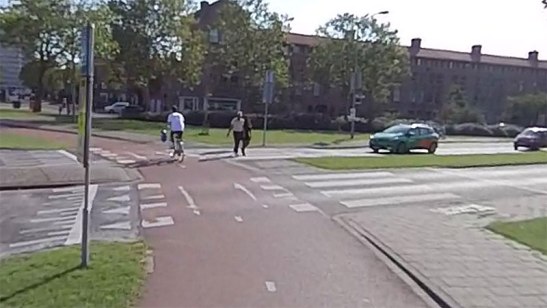
A pedestrian and a cyclist on a roundabout in ’s-Hertogenbosch, both have priority over the drivers who wait patiently for their turn.
Every now and then the discussion flares up about the priority of cycling on roundabouts. In the Netherlands the guidelines are clear: in the built-up area cycling must have priority over motor traffic and outside the built-up area…


 Maynooth Cycling Campaign